| 0:37 | Intro. [Recording date: September 16, 2026.] Russ Roberts: Today is September 16th, 2026, and my guest is author and Rabbi David Wolpe. He is the Max Webb Emeritus Rabbi at Sinai Temple in Los Angeles, and he's currently Scholar in Residence for the Maimonides Fund. Our topic for today is Tolstoy's short story--you could call it a novella--"The Death of Ivan Ilyich." David, welcome to EconTalk. David Wolpe: Thank you. I'm very happy to be here. |
| 1:05 | Russ Roberts: Now, you can't spoil this book because the title kind of gives it away. It opens with Ivan's funeral. He's going to die. And, like many great books, the plot is not so compelling. There's nothing dramatic about it. A man has a somewhat seemingly normal life, he gets sick, and he dies; and we watch that through Tolstoy's prose. That happens all the time: people die. And yet, there is something deeply haunting, and unbearable, and painful about this book. So, we're going to share our reactions to the book and talk about--I suppose we'll talk about death a little bit along the way because this book is sort of about death. Of course, it's also about life. David Wolpe: It is extraordinary how many different conversations you could have in a book that is about 50 pages. And, I'll start by saying that Tolstoy makes a really interesting choice. He does not start with Ivan Ilyich dying. He starts with people's reactions to his death. Russ Roberts: Yeah. David Wolpe: And, I could just imagine a modern editor looking at this book and saying, like, 'You should cut off that first part and just get to the dying.' But the truth is that it so parallels not only my experience--but, one thing that I want to make sure to say about the beginning is, when people hear about the death, their immediate reaction is, 'What does this mean in terms of my promotion?' And, there is a beautiful halakha--that is, a Jewish law--that when you know someone has died who left you money, you first say the blessing, 'HaTov v'haMeitiv,' which blesses God who is good and does good. And then, you say, 'Baruch Dayan HaEmet,' blessed be the righteous judge. In other words, the blessing that you say about death. Because, Judaism is realistic and knows you're going to have a moment of, 'Oh, I get the money,' and if you get rid of that in your mind, then you can fully inhabit the space of mourning. And, Tolstoy, with his usual acuity, points that out at the very beginning because the person who thinks about promotion also has moments of genuine sadness. Russ Roberts: The other thing, of course, these people are feeling--which, it's such a strange book because the first five or so pages are quite comical-- Russ Roberts: despite the subject matter. He's making fun of their human reactions. He says, "'Dead, he's dead,' each of them thought. 'But, I'm not.'" Russ Roberts: Which is, unfortunately, and often what human beings feel at a funeral in the face of death. We think about ourselves, often; and Tolstoy is very clear about that. David Wolpe: So, I mean, first of all, how often do you read the obituaries--if you read the obituaries--and say, 'Oh, well, it's okay because this person had congenital heart disease. I don't have that, so I'm okay.' We separate ourselves from death almost instinctively. And, he also captures the performative aspect of it. So, I'll read you this fragment of a sentence. It says, "Despite the unpleasant awareness of his own and this woman's falsity." That is, you can't--when you go into a shiva house, you have to be a certain way even if you don't feel that way inside. And, it reminds me of a great passage from a book that, well, I think I'll mention once or twice in this, Ernest Becker's Denial of Death. He has a section where the French writer, Alphonse Daudet, when he was young, went to a funeral, and he hears a cry--or maybe he hears his own cry, I don't remember--and he thinks, 'Wow, that would sound great at the theater.' Because, you're observing yourself even as you're acting, and part of Tolstoy's genius--and it's remarkable how many times in this book he does this--is he reminds you of how you really feel, not how you pretend you feel. Russ Roberts: And, the characters are often--the way of I think of it, this performative aspect--they're wearing a mask. Or, they're trying to wear a mask. You walk into a shiva house, which is the house of mourning where a Jew sits who has lost a loved one, will sit for seven days inside the house, and visitors come. And, when you enter a shiva house, you do put a mask on. Russ Roberts: It's not a mask necessarily of disguise, but you put your face in what you think it should look--how it should look. And, that's what happens numerous times in this book. And in fact, in the non-death scenes--and a serious chunk of the book is about Ivan's life, and his attitudes, and his actions--a life that Tolstoy doesn't think very much of and that Ivan has to confront on his deathbed. But, in those moments of life, Ivan is clearly doing what he thinks people like him should do, whether they're rich or have high status. There's nothing there. His life is so hollow, his essence is so hollow. And so, the people who open the book with their attitudes, their public faces versus their private thoughts--the public face is, 'Tut, tut, tsk, tsk.' Russ Roberts: Their private thoughts are, 'Hey, I could get his job now that he's gone.' Or, 'Someone will replace him, and then I could get that job.' Or, 'I'll get this money maybe.' Or, 'Maybe there's a way I can get that money,' says his widow. And, she very quickly, after mourning publicly with a false face, is worried about her own financial stability. David Wolpe: And, when you say that his life is hollow, it's important that people know that he is intelligent, and decent, and successful, and that makes the hollowness of his life that much more pointed. One thing that struck me very much in his description of the hollowness of Ivan Ilyich's life, because I have experienced this myself, is: he liked to feel that he had power and didn't use it. Russ Roberts: Yeah. David Wolpe: That is, he would be with people--and everyone, I think, who has been in any kind of boss situation feels good about themself, like, 'I could be a mean boss, but I'm not. I'm being nice to this person. And therefore I'm a nice person.' And, that's so--as Tolstoy says--it's so empty, and it's dark in a certain sense. |
| 8:31 | Russ Roberts: So, he's a judge in a good chunk of the book, and he holds power over a lot of people. And, he acts as if he does not wield it, but we as the reader see him, I think, a little less attractively. Russ Roberts: He enjoys not just not wielding the power; he enjoys holding it over the people, which is really despicable. Russ Roberts: He's a remarkably unlikeable husband. He very early in his marriage, which is very quickly a loveless marriage, he sees his wife as a burden, and he maximizes the amount of time he spends at work, so he doesn't have to be with her or the children. He's a terrible--he's a non-existent father. But, as you say, on the surface, from the outside especially, he has a very successful career, he has a nice living. He has a nice wife and children, and a beautiful home. And, we see him the way he cannot see himself. Russ Roberts: We see him honestly. And, only toward the end of the book--and we'll of course talk about this--does he begin to see that maybe his life wasn't what he thought it was. David Wolpe: And, some of this, I think, we have to zoom out and say that this was written later in Tolstoy's life after he repudiated the writing of novels. I mean, he writes Anna Karenina, which is one of the great masterpieces of world literature. And then, he repudiates it and says, 'I shouldn't have written it.' Then he wants to sort of strip down to the bare essence of what it means to be a human being, and he thinks the adornments of the novel are superfluous. And yet, he can't help himself, in a way, from writing these incredibly acute observations; and at least some people have seen in this something of a portrait of his own marriage, which was famously troubled. And, he paid attention to some of his kids, but not others. And, also, almost offhandedly, it says, 'And, in the course of this, two children died. And then another one dies.' And, in the narration, it's not dealt with at all. It's just like, 'And, he took a walk, and a kid died. He had breakfast, and a kid died.' And, that's also--Tolstoy lost a number of children--and I think it's just stunning to think how much of life Ivan Ilyich doesn't live. Russ Roberts: Yeah, of course. And, the wife is a minor character, but-- Russ Roberts: I have to read one quote from her. She's not terribly admirable. This is, again, in the very beginning when someone says, 'Did he suffer terribly? How was it?' And she says--I mean, you can barely read this with a straight face. In fact, I know an old joke which I won't say about that this is parodying. So, quote: "He screamed and screamed,"--this is her, this is the wife talking about Ivan when he's dying: He screamed and screamed not for minutes, but for hours on end. For three whole days, he screamed without stopping. It was unbearable. I honestly don't know how I endured it. You could hear him screaming through three closed doors. Oh, the things I was forced to endure. End of quote. So, just a couple things about that, then you can give your reaction. First of all, a little self-centered, right? David Wolpe: A little bit. Russ Roberts: He's suffering, and she's complaining about her challenges of trying to endure his screaming. His pain was so horrible, he screamed for three straight days. But, at the very end of the book, when he is going through these three days, we are told by the narrator, by Tolstoy, that it was two closed doors. So, see: it's bad enough that she's pushed herself two closed doors away from her husband without consoling him-- Russ Roberts: But, in her retelling, she makes it even worse. Meaning, it was so loud that three closed doors weren't sufficient. Russ Roberts: But, of course, we as the reader are thinking, 'Why weren't you comforting him?' David Wolpe: Yes. Yeah, which she really doesn't. I mean, there is that moment, if I remember, at the very end where some sympathy is restored. But, a lot of this is a sort of sotto voce power struggle between the husband and the wife until he gets beyond it, which is part of what the ending of the book is about. But, that's why I say, I mean, it really is--which is astonishing considering its brevity--it really is lots of novels in one. It's about illness, it's about death, it's about family. It's about the lies we tell ourselves. It's a critique of the kind of bourgeois life that Tolstoy rejected. And, all of this is contained in these few pages, and certainly much more. But, at least for me, and I suspect for you, it's really about the difficulty of coming to grips with one's own mortality. |
| 14:01 | Russ Roberts: Yeah, I'd say there's two things. That's the overwhelming theme: that, even though we all know rationally in our brains that death is inevitable, we often don't live our lives that way. And we also often don't want to face that; and a lot of the book is about that looking-away. Irvin Yalom has a book called, I think it's called Staring at the Sun. The sun is death. You can't look at the sun: you'd have to turn away. Russ Roberts: But, I think the other theme of the book, and it's below the surface, is what is a good life? And it's clear that this question has never crossed Ivan's mind--crossed his mind. And it's clear that Tolstoy judges him for that. Russ Roberts: I want to read one paragraph that I thought kind of captured this. There are many things that are negative about Ivan. We've mentioned he's not a great husband, he's not a great father. He's a poseur. He can be cruel, implicitly or explicitly, in his job. It's very mild, by the way. There's nothing heavy-handed in that. But, this paragraph I'm going to read--in a certain sense, it's such a mild criticism. But I think it really gets to the heart of the judgment of Tolstoy of this style of living that you alluded to earlier about the bourgeois existence. Here's the quote: In essence, of course, what one saw was what one always sees in the homes of not quite rich people, who make an effort to appear rich, and in so doing only come to look like one another. Damasks, ebony, flowers, carpets and bronzes, every dark and lustrous thing that all people of a certain kind procure in order to look like all people of a certain kind. Indeed, his home looked so much like every home of its sort that it wouldn't attract the least bit of attention. To him, however, it all seemed to be quite exceptional. End of quote. So, I think the judgment here is really a criticism of Rene Girard's idea of mimesis, this idea of imitating-- Russ Roberts: instead of living an authentic life. He lives to live like others rather than living his own life. David Wolpe: It reminds me of that wonderful quote from the critic Randall Jarrell about 'the herd of independent minds.' It's: everybody thinks they're being unique, but in fact they're exactly like everybody else. And, when you said he hasn't asked himself what a good life is, I think if you had approached him on the street and said, 'What's a good life?' he would say, 'Exactly what I'm living.' Russ Roberts: Yes. David Wolpe: Because, he's very pleased with his life for a long time, except at one point where he loses out on an opportunity to advance. But then he gets a better opportunity and advances, and everything is sunshine again because that's really all that it takes for him to be happy or unhappy. And in the meantime, as I said, just to mention it again, two of his children have died. That doesn't seem to make him unhappy. But, that he's passed over for preferment, that is unbearable to him. Russ Roberts: So, you know, the way Tolstoy summarizes his life, I think more than once, is 'pleasant.' Which seems like a positive word. Russ Roberts: Sometimes he calls it 'decent,' or 'decorous.' And it's clearly, in Tolstoy's vocabulary, an indictment, not praise. David Wolpe: Right, right. Yes. I mean, Tolstoy is one of those--like Nietzsche in a very different way--he's one of those uncompromising spirits who will not let you rest with what is nice. You know, it reminds me--do you know that great line from Into the Woods, Sondheim's Into the Woods: 'You're not good. You're just nice'? And, it's the same thing here, is: Ivan Ilyich is nice, but he has never grappled with anything deeper than the everyday of niceness and never been forced to. And when he would be forced to, he ignores it until the day when the onset of his illness is actually hanging up a screen, which I think is also symbolic. It's like, I'm putting up one of those masks in the house; and he falls, and then he starts to get sick. Russ Roberts: And, we never learn exactly what's wrong with him. Russ Roberts: And, part of the dark comedy of this book--which, there's not a lot of it, but in this case it is somewhat dark comedy--is that no doctor, no expert can quite diagnose him, which gives his wife the freedom to complain that, 'This is all his fault because he doesn't take his medicine, or he doesn't sit right,' or whatever it is. He doesn't follow the doctor's orders. We, of course, know that that has nothing to do with his problem. We know that medicine is flawed in the end of the 19th and early parts of the 20th century. And that he's just dying. And, that is uncertain, by the way, for quite a while, other than the fact that we know from the opening that he's going to die, but it's uncertain to him. He's always holding out hope. He's always evading the possibility. David Wolpe: Right. There is also in this, which you bring up, another theme of the novel, novelette, is the way doctors speak to patients-- Russ Roberts: Oh, my gosh-- David Wolpe: and patients want to be spoken to. Because the doctor is talking only about symptoms, and he basically wants to know--he's like, 'I'm a person, here. Am I going to live? Am I going to die? Am I going to suffer?' And they're, like, 'Well, the tests of the abdomen show,'--and so, there's that also, which again, because human nature hasn't changed, it persists to this day. So, there is also that. Russ Roberts: Yeah, and he hates them. Russ Roberts: And, part of the reason he hates them is that eventually, they come to remind him of the way he used to interact with supplicants in his court. That, it's really all about this deceptive non-communication that takes place in words, but doesn't help anyone understand what's going on. He keeps saying, 'Is it bad?' Russ Roberts: 'Am I going to die?' And, they won't answer him. And, that, of course, hasn't changed. |
| 21:11 | Russ Roberts: I wonder if you'd reflect for a minute: having been the Rabbi of a congregation for 26 years, you must have been in a lot of hospital rooms visiting a lot of sick people. And, you must have seen this both charade that takes place-- Russ Roberts: where the patient isn't told the truth. But, also, sometimes I'm sure there are people who demanded the truth and heard it. David Wolpe: Yeah. I would say I saw three different kinds of dying, and I'm not sure what the variable was. It did not necessarily seem to be the person's character beforehand. One was the person who dies, like the early Ivan Ilyich. That is, they deny: everything's going to be fine until the end. They don't really let in the reality that part of them know, and they pass away without--and everybody says, 'Oh, they were so positive even to the end,' but there's a certain falseness to their positivity that you feel. The second are people who confront the fact that they're dying and are crushed by it. And I have seen that more than once. And, they're crushed for all sorts of different reasons, but we'll get back to that, I suppose, when we get back to the actual book because I have something to say about why that is. And then the third, which are rare and beautiful, are the people who know, and confront, and accept it and die, in a way, like Ivan Ilyich does at the very end. I remember one person in particular who was a doctor who I think probably administered something to himself or had it administered to him, because the last time I visited him in the hospital, he said, 'Rabbi, it has been a great pleasure knowing you. I will not be seeing you again.' And, he said it very calmly, and the next day he was dead. So, there are such people who really--they know what's coming, and they accept it. But, at least, in this case with Ivan Ilyich, part of his pain is he realizes he hasn't lived his life; and I think that that's very hard. But, the other piece of this is, if you're going to read--people were making suggestions online about what we should see, one of the Kurosawa movies or so on--if you read the incredible, I think, and unbelievably insightful book, Denial of Death, by Ernest Becker, he feels that basically Freud was wrong: that the basic drive is not sex. That sex is an aspect of our denial of death, and everything that is bodily reminds us of our mortality. It's like, why does everything other than tears that comes out of you seem either faintly or very disgusting? Why should that be? Because the things that too powerfully remind you of your body remind you that your body is what decays and dies. Like, the French call orgasm le petit mort--the little death. Why? Because what reminds you more powerfully of your body than sex? And, sex and death are so tied. And, the reason I bring all this up is because the section of Ivan Ilyich's confrontation with death starts with his remembering the syllogism that he learned from Aristotle--about, basically, that Caius is mortal: Caius is a man, all men are mortal, therefore Caius is mortal--and he never realized it applied to him. Russ Roberts: It was about Caius. Why would it--? David Wolpe: It was about Caius. Russ Roberts: Yeah, that's an incredible passage. David Wolpe: It might be the most remarkable passage in the book, especially because the way he puts it is like Caius is an abstraction. But then he writes, if I can--he was Vanya--he's talking about himself. 'With Mama, with Papa, with Mitya and Volodya, with toys, the coachman, and Nanny, with all the joys in Greece and delights of childhood. Was it for Caius, the smell of the striped leather ball that Vanya loved so much, who had kissed his mother's hand like that? Was it for Caius, the silk folds of his mother's dress had rustled like that?' In other words, all the particulars, especially of his childhood, like, that's not supposed to be the person who dies-- Russ Roberts: Yeah-- David Wolpe: He's only beginning to realize that actually, death is real. He always knew it intellectually, but he's feeling it viscerally. It's different. |
| 26:01 | Russ Roberts: Yeah. The expression memento mori--which is: you should remember that you're mortal--this book is an exercise in that. It forces you to confront the reality that you're not Caius either, not just Ivan. And, I'm curious: in your experience of having to confront death in those hospital rooms, a doctor has to confront--depending on what kind of doctor you are--you have to confront death and see it. A rabbi is a little different because you're seeing somebody die who is not somebody who showed up in your emergency room-- Russ Roberts: They're somebody you might have known for a very, very long time. And, I'm curious, two things. If that changed you in any way that you can at least realize or talk about? And, whether you're glad that that was part of your life? A rabbi has a lot of challenges and lot of rewards. I'm curious whether being present in people's last moments, often surrounded by loved ones, I'm sure, is that a plus or a minus for you? David Wolpe: So, I'll tell you what made it more powerful was I've had both a brain tumor--I had a seizure and a brain tumor--and then later I had lymphoma. And, both times, after the operation for the brain tumor, the surgeon told me, 75% chance it was malignant. Which is basically--it's basically a death sentence. It turned out not to be malignant. For a long time, by the way, 'benign' was my favorite word in the English language. Russ Roberts: Yeah. David Wolpe: And, when I got lymphoma, the same thing. I didn't know if that meant I was going to die. And, both of those experiences taught me that thinking you're confronting death is different from actually confronting death. It's like your entire system goes into a different mode when you think--death is, after all, the end of everything that you know. It's not just the end of you. I mean, it's the end of your loved ones and books, everything disappears. Housman has a great poem about that. It's: Good people [orig. creatures], do you love your lives
And have you ears for sense?
Here is a knife like other knives,
That cost me eighteen pence.
I need but stick it in my heart
And down will come the sky,
And earth's foundations will depart
And all you folk will die.
["XXVI: Good Creatures Do You Love Your Lives," in the 1936 collection More Poems, by A. E. Housman] Because when you die yourself, it's like the rest of the world disappears. Russ Roberts: Yeah. David Wolpe: And so, that prepared me much more to go into a room and to know what that person was experiencing and to feel the fullness of it. I have to say, before I had the experience myself, I kept a critical distance, almost in the way Ivan Ilyich does. But, after those experiences, I know the terror and finality of genuinely confronting death. And, even though I started off in academics and I was never going to go to a synagogue because I didn't want to do that sort of stuff, I think it immeasurably deepened my understanding of the human experience to both go through it and to share it with other people. And, by the way, for those of you out there who are rabbis, I can't recommend highly enough getting very sick and recovering. Because it's really good for your rabbinic--yeah. And, that's, by the way, I mean, since when we're recording this, we're close to Yom Kippur, that's what Yom Kippur is supposed to do for you. It's supposed to confront you with your own mortality: Who will live and who will die? It's supposed to shock you into realizing whether you've lived or not. It's, like, Ivan Ilyich is a Yom Kippur book. Russ Roberts: Yeah, absolutely. David Wolpe: In a very powerful way. Russ Roberts: Yeah. David Wolpe: So, yeah, I think sitting at the deathbed and talking to people who are going to die is an unparalleled way of learning about what life is. Russ Roberts: Yeah. I remember just recently in Jerusalem, and the sirens would go off, meaning there was a missile coming from, often, Iran; and my wife would hustle us down the stairs. We don't have our own shelter, so we'd go next door. And, I wasn't hurrying. I'm older than my wife. That's part of the reason; there's maybe a lot of reasons. But, I struggled to hurry, and she would reprimand me afterwards, often during. Reasonably, by the way; I'm not proud of it. Russ Roberts: But, at the time, my attitude was, 'Yeah, I'm 71-years-old, I've had a good life. Maybe this will be the end, maybe, and that's okay.' Now, that's what I said to myself, but I have a feeling--and I know because occasionally there would be an especially loud boom when a missile either landed or was intercepted--most of the time intercepted--and I realized that some of that was just false bravado. David Wolpe: Yeah. Unless the threat is not theoretical, unless it's really imminent, like a loud boom, you don't get that rush of adrenaline that tells you, the animalistic fight or flight that tells you how you really feel. The one analogy that I'll use is, like, I fly all the time. I'm on a plane a couple times a month, and I don't have any anxiety about flying at all. I'll read, I'll eat, I'll sleep, whatever, on the plane. But, let that plane start hitting turbulence-- Russ Roberts: Yeah, good example-- David Wolpe: and all of a sudden, I realize underneath it, I do have anxiety about being 30,000 feet in the air. Russ Roberts: In a metal tube that shouldn't be suspended in the air. I know. Russ Roberts: My experience of that is a little turbulence is fine, and when it starts to intensify, I'm trying to will it to stop. I start by tightening my seatbelt, which reduces the sensory input, but it starts to get--the more it intensifies, the scarier it gets. Yeah. David Wolpe: And, I always remember, I don't remember which comedian said, 'That's why they call it terminals.' Russ Roberts: Oh. That's dark. Russ Roberts: But, you fly twice a month, so you can make that joke. David Wolpe: Yeah, right. Exactly. |
| 33:08 | Russ Roberts: I want to talk about--let's talk about the ending of the book. Not the literal ending, although we'll talk about that, too. Russ Roberts: But, the last--it's the last--almost half of the book is his decline. And, the only thing that gives him comfort is his interaction with his servant, whose name is Gerasim. Russ Roberts: And, he gets comfort because Gerasim will often hold his legs up higher than he can hold them himself propped on a pillow. Which, we get the impression it doesn't actually reduce the pain, but it's a placebo effect. He gets this psychological benefit of having a connection with another human being--which his whole life has been devoid of. And, there's this incredible passage--I'm not going to read the words here, the direct quote. But, he, at one point when he's suffering, he has a desire to be held like a child. To be comforted, wept over. He talks about he 'wishes someone was crying for him.' And, almost no one--there's some tears shed, but there's no sorrow. There's just emotion. Russ Roberts: And, he wants to be loved. And, you have the realization he's never been loved as an adult. This hunger for human contact, for kindness, but really just for any kind of connection is what the reader, I think, feels is what explains his comfort from this bizarre interaction with his servant, who is portrayed as a country bumpkin, as some kind of almost a simpleton, but clearly someone with a good heart. Russ Roberts: Who, when giving comfort or serving Ivan, he does it with a smile. He does it without condescension, he does it without lying. He's in many ways the only admirable person in the entire book, actually, now that I think about it. David Wolpe: Yeah. So, Tolstoy did idealize the peasants-- Russ Roberts: Yeah, true-- David Wolpe: in a certain way, and had that influence in his time even in Israel. A.D. Gordon was a devotee of Tolstoy, working the land and being a peasant, and so on. And, I think he presents Gerasim as the only person that actually understands what's going on. Russ Roberts: Correct--who is not a liar, who is honest. David Wolpe: Yes, he's not a liar. He knows that Ivan Ilyich is dying. And Ivan Ilyich, he finds comfort in the fact that the guy is telling the truth that he's dying. And also, that he will physically touch him, and hold him, and lift his legs. And, I think the implication is that he cleans him, bodily. Russ Roberts: Oh, yeah, for sure. David Wolpe: So, that is being taken care of, like you're taken care of when you're a baby. I mean, you imagine when you wipe a baby's bottom, you lift their legs. That's what you do. Russ Roberts: Oh. Yeah. David Wolpe: So, I think that he allows himself, maybe because Gerasim is a peasant, he allows himself to be taken care of by someone who he doesn't have to feel shame in front of. And, Gerasim's attitude is, 'Look, it's going to happen to all of us someday, so why shouldn't I take care of you? I hope somebody will take care of me.' And, it--it's incredibly helpful. And, I think I have also seen this: a lot of people, obviously, whom I know who are old and sick have caretakers, and many of them have basically the same attitude. Which is, this is not--it's not disgusting work or shameful work. It's sacred, and beautiful, and, 'I'm taking care of this human being who is dying, and I know that.' So, we should all be so lucky. Russ Roberts: Yeah, it reminds me of another aspect of Jewish law, which is the taking care of a person after their death. And, everything that you do for a person who has passed away--washing their body, accompanying them, keeping watch over them before the funeral, accompanying the body on the way to the funeral--this is called chesed shel emet, the kindness of truth. Or I would translate it as sincere kindness, because it can't be repaid. Russ Roberts: The person is gone. The figure of Gerasim doing these bodily care and just tending to Ivan is--part of the reason he's saintly, is for that reason. I'm not going to go into it, but you can read--the Christian version of this is a Flaubert short story. It's a wonderful story called "Saint-Julian the Hospitaller." And it's about a man who has done something terrible in his youth, and his desperate attempts in his life to redeem himself. And it ultimately ends with him taking care of someone in this very--in a way that we as the outsiders find difficult to observe because of the, as you say, the disgust we often feel for the body and its messiness. Anyway. David Wolpe: Yes. So, finally, we come to the revelation that is forced by pain and the imminence of death. I mean, in a way, it's really working up to this moment that he has to be--the only thing that will strip away the falsity of his life is the genuine confrontation with his own mortality; and I don't think he would have gotten there without the pain, and the disability, and so on, that forced him to recognize this is really death. If somebody had said to him, for example, 'Oh, you have a heart condition, you could drop dead at any moment,' I don't think we would have gotten the book that we did. It is the suffering--and I've seen this, too--suffering, and sometimes age and its disabilities, really bring people to recognize, 'Oh, I'm actually going to die.' Because, it strips away the denial of health to start with. It's, like, when you're young, your health is something that you think will never go away, and the gradual disabling of the body as you get older makes you realize, 'Oh, if this can happen, then maybe death could really happen.' |
| 40:14 | Russ Roberts: Yeah. Before we get to the very ending, I want to give one more example of his failure to confront himself. His lack of self-awareness really runs through the book until the very, very end. I think he's talking about the doctors, and he thinks, he doesn't say it out loud--I don't think he says it out loud, I think it's in his head, yeah--'Will you really never feel ashamed for lying to my face?' David Wolpe: Right. Yes, yes. Russ Roberts: It's Tolstoy telling us what Ivan is thinking, but it's also Tolstoy telling us what he's thinking. Russ Roberts: Which is, this man has lied his whole life to people's faces about what he feels, what he's doing to them in his role as a judge, and he can't recognize it in himself. He can see it in others. It's a beautiful example of the power of third person narration that we get to see--in this case, he flips it to first person because we hear the thought in his head. But, what he's telling us is he doesn't really get it. David Wolpe: Yes. It's true, yeah. I mean, the distance that one has from one's self, it often comes out in the way in which you accuse other people of doing what you do. Russ Roberts: Yeah. David Wolpe: I mean, we know this. This is an old psychological trope, that the Hasidic Rabbi said that you should see other people as a mirror. And here, he has spent his whole life not really telling the truth, but acting as the carrier of the common assumptions of the world. Russ Roberts: Yeah. David Wolpe: And, the only thing that breaks the common assumptions of the world is that you are highly individual when you're dying. Not everybody is dying, only you are dying, and that's one of the things that he realizes. It's that whatever the people around him say or feel, or whatever, you're dying alone. It's just you. And, that's also a jarring, even if you know it intellectually, when it actually happens. We always say, 'You're born alone, you die alone,' but that doesn't actually-- Russ Roberts: Meaningless, yeah. David Wolpe: Yes. Then you feel that you're actually dying alone. Yeah, it's very powerful. Russ Roberts: And the--I was going to say I've never died, but I have lost people close to me. Russ Roberts: And, you have a similar out-of-body experience, which is your parent, your father, your mother dies. In my case, I've lost both of them now. And, your world is shattered, rocked. Everything in front of you that you're seeing is unreal, surreal. And, these other people who didn't lose their father-- Russ Roberts: seem to be going through their life as if nothing had happened. Russ Roberts: But, my father died. How can you be so--not callous--just insensitive? Russ Roberts: And, just to go about your normal business? And, of course, what we want desperately who have suffered a loss is to go about our business like that. Russ Roberts: We're not allowed to. Our emotions don't allow it. In the case of Jewish law, we have a whole set of strictures that stop us from having a normal life for at least 11 months. In the case of a parent, we have to say the Mourner's Kaddish for our parents. And so, we're forced, in the case of Jewish law, to not revert to the normal life. David Wolpe: Right, it's a great point. Russ Roberts: But, we desperately want it because we know what it's like, we had it before. Russ Roberts: And, we've watched these insensitive people somehow; and you walk by them, and you want to shake them. Russ Roberts: You want to grab them and say, 'Don't you realize I've lost my father?' And, you know that-- David Wolpe: I was going to say, the Talmud has a great phrase in a different context for that, ha-olam kayam: al hadin, the world just goes on its way. Russ Roberts: Yeah. David Wolpe: It's like it's indifferent to your--one of the ways rabbis come up against this is when we're planning a funeral, I have to say to the family, like: Your speech can't be too long because people there, they're taking time out of their normal day to go to this funeral. You don't want them looking at their watches saying, 'When do I get back to?' Russ Roberts: Yeah. David Wolpe: And, I can see--like, it's jarring because they're feeling like, 'This is the worst thing that has ever happened to me, and I have to worry that they need to get back to work?' Russ Roberts: Right. 'I need to process this, I need to get this out of my system.' Russ Roberts: 'And, you're telling me I've got to take their situation into account?' David Wolpe: Into account, which is very, very hard. By the time this comes out, it will have already been published because it'll be published later this week, but I just wrote an article for The Free Press about the Unetanah Tokef, the prayer that says who shall live and who shall die? And a poem by a woman named Charlotte Delbo, who was in the French resistance. And, she writes this, basically--I won't give you the poem; it's about eight or nine lines. But she says: 'I saw so much death and so many people died, so you have to do something with your life.' Like, 'Learn a dance step,' she says. Like, something. And, I think that that's part of what Tolstoy wants the reader to get from the book, is this will happen to you, and you don't want to come to this moment of death thinking, 'I actually just skimmed the surface of life, and I never felt anything real.' And, that's the recognition that he comes to, which is so painful. And, also, the recognition that you mentioned, which is that no one else will be in the situation that you're in, and that also is just unfathomable. And, death itself is unfathomable, which is why people will say, 'Oh, I just spoke to him yesterday.' Russ Roberts: Right. David Wolpe: As though people who speak yesterday don't die today, but they do. Russ Roberts: Every day, every day, every day. David Wolpe: But, they do. Russ Roberts: Yeah. And, I have to mention one of my favorite lines, which is, 'No one on their deathbed ever wished they had spent more time at the office.' And, of course, this is what happens to Ivan Ilyich. |
| 47:13 | Russ Roberts: I want to read--he's close to death at this point in the story, and here's what Tolstoy says. And, I think this is--I mean, it's heartbreaking. And suddenly it would occur to him, 'Maybe I did not live as I ought to have lived.' But then, he would say to himself, 'How could that be if I did everything correctly?' With that, he would dismiss the one and only solution to the whole riddle of life and death. It is something entirely inconceivable. Close quote. So, Ivan, he's followed all the rules-- Russ Roberts: He's risen in the ranks. He's taken care of his family--whether he's nice to them or not, it's not really relevant. He likes to play bridge, by the way: he enjoys it. That's his highest pleasure, is to play bridge. Which is, again, I have nothing against bridge or the companionship of four people playing bridge. But, Tolstoy evidently doesn't think much of it; I think we can say that. But, he's done everything, quote, "correctly." So, he can't figure out why he is bereft at the end of his life. It's impossible. He has done great. He's led an exemplary life. But it's only exemplary by the standards of his superficial society that he's chosen to join and be partners with. So, this idea--and I'm reminded of the ending of Mary Oliver's poem "The Summer Day": 'Tell me, what is it you plan to do with your one wild and precious life?' And, Ivan Ilyich has made a choice. And he made the wrong choice in Tolstoy's view. David Wolpe: It's a great--it's exactly right. And, he says, like, 'I can't believe that I didn't really live it.' And, it's only at the very end that he starts to accept--after those three days of howling that you mentioned earlier--that he comes in some way to the other side, and there is an acceptance and even a joy in that moment. But, I think maybe one of the ways of understanding this is that--you know, I once, I think just after I graduated from rabbinical school, I was invited to speak at an AA [Alcoholics Anonymous] meeting. I had never gone to an AA meeting, and they said, 'You'll give a little opening.' It was a Jewish Alcoholics Anonymous meeting. Russ Roberts: This is Alcoholics Anonymous, yeah. David Wolpe: Alcoholics Anonymous. They said, 'You'll give a little opening talk, and then you will shut up, and you will listen to what goes on there.' And, I did, and I listened to what went on there. And one person said--and this was 30-some years ago--one person said, 'I started drinking when I was 18, and I stopped when I was 35, and at 35, I had the maturity of an 18-year-old because in between, I had felt no pain.' And, I think that that's part of what Tolstoy is saying about Ivan Ilyich. It isn't until he genuinely feels pain--that he doesn't skate through life but he feels the pain of life with those three day of howling--that he can get to the other side. Because if you always anesthetize yourself, whether if not through drink then through-- Russ Roberts: Whatever-- David Wolpe: pleasantries and surface, and so on-- Russ Roberts: Money-- David Wolpe: Yes, money-- Russ Roberts: Greed, ambition, whatever. Yeah. David Wolpe: You don't see the pain of life. And, by the way, I think that that's part of the glory and difficulty of Israeli society, is: it's very, very, very hard to anesthetize yourself if you live in Israel. It is much, much easier to anesthetize yourself if you live in America. Russ Roberts: Yeah. This episode hasn't aired yet, but it will by the time ours--this one's released--a conversation I had with Meghan O'Gieblyn. And, in that conversation, I mentioned, as I often have on the program, that there are four ways to grow up and become a little more self-aware that you're not the center of the universe: religion, therapy, meditation, reading literature, great books. And, I told her that, and her answer was, her response was, 'And, suffering.' She's something of a religious--her religious journey is complicated, but she has been a Christian. I don't know what she is now. I'm not sure what she'd say she is now. Russ Roberts: But, suffering--and we've had a number of episodes about this, with Paul Bloom, for example--suffering, as long as you don't die heightens--well, it does all kinds of things. I was going to mention this earlier, this documentary of World War I veterans saying, 'I wouldn't have missed it for the world.' It was horrible, they saw horrible things. They've lost feet because of infection and suffered pain. And, of course, that's true as long as you don't get killed. Russ Roberts: It heightens your sense of life. And Israel, paradoxically, has a very high measured happiness level, despite all the challenges of living here, and war, and terrorism, and so on. And, some have speculated it's because it heightens your--as long as you don't die--your--life is a lot more vivid here. Russ Roberts: It's a lot more intense. People will often say to me, 'Well, when you moved to Israel five years ago, you didn't expect to go through this,' meaning the war and so on. And, I always say--unfortunately, it's weird, it's like the World War I veteran--I literally say, 'I wouldn't have missed it for the world.' Russ Roberts: I'm glad I'm here. And, when I go to the United States or other places, I'm struck by how calm and pleasant things are, to use a Tolstoyan word, in my translation at least. Russ Roberts: I, by the way, read the translation--this is a lovely little book called Lives and Deaths: Essential Stories. It's Pushkin Press, and it's translated from the Russian by Boris Drayluk. It has a wonderful story in it called "Pacesetter: The Story of a Horse" that's a masterpiece. And, I should reference the other episode we did on a Tolstoy short story, which was "Master and Man," which also romanticizes the peasant as the real hero, but it's an incredible masterpiece. We'll have links to all those, and we'll link to your story, to your essay when it comes out. |
| 54:16 | Russ Roberts: I want to make a claim about the ending, but I want you to give me your understanding first. First, I want to read another quote. It says, again, we're very near the end of the book, But, more terrible than his physical suffering was his moral suffering, the source of his greatest torment. His moral suffering stemmed from the question that occurred to him that night as he looked at Gerasim's sleepy, good-natured face with its high cheekbones. 'Could my whole life, my whole conscious, life have been wrong?' End of quote. And, that's a variation on the earlier statement that he may not have lived as he ought to have lived. Russ Roberts: And, of course, here at Shalem College, we spend a lot of time talking about how one should live. Any serious human being, I believe, should confront that question, and Tolstoy was obsessed with it. Obviously, many of his fictions, his fictions and his nonfiction: How should a person live? And, I think we get, in my view, it's not obviously correct, but I think he gives an answer to that question in the ending, but first I want to hear your interpretation. How do you understand the ending? The ending is a bit ambiguous. David Wolpe: [SPOILER ALERT} Right. Before I get to the ending, I just want to make one connection to something that most people will know. He says, "In childhood, there'd been something really pleasant which one could live with if it came back." He has these reversions to childhood towards the very end, and what it reminded me of was Rosebud. Like in Citizen Kane, or Rosebud in my book. It's like when in that famous movie--and now I've ruined it for you if you've never seen it--but the one thing-- Russ Roberts: Spoiler. You can stop listening now if you're very worried about this. Go ahead. David Wolpe: That's right. The one thing that he remembers is the sled of his childhood because things were innocent, and pure, and just joyous then. And, the reason I bring that up in part is because I think that the very ending is kind of a reversion to the purity of childhood. Russ Roberts: I like that. David Wolpe: It's like he lets go of all the pretense, and all the dross, and all the need to perform, and he gets to just be himself. There is a stripping away that the agony of those three days of howling does, and you're just--you don't have, in a way, the energy to pretend to be that which you're not. And, also, I think for Tolstoy, there is, although it's never explicit, there is a sort of divine embrace because his last words are, 'What a joy.' Russ Roberts: Yeah, I agree with all that. But, I'm going to put forward a different, an extra theme. David Wolpe: Please, please. Russ Roberts: I think he redeems himself at his death--in his mind, whether he does before any kind of judgment is a different question--but I think Tolstoy sees him as redeemed, at least. And the reason that happens is that he lets go. And, he's looking at these people around him, as he's been doing now in his dying months and weeks, and now days, and he sees how--he hates them. He says explicitly, Tolstoy says explicitly many times that he hates his wife, he hates his children. He really hates that his wife is healthy, and plump, and fleshy. It's really powerful writing. But, at the very, very end, he sees that they're upset that he's dying. And, in my reading of the ending, he embraces death as a kindness to the people in his life. He sees that they can't handle his dying, so he says goodbye. I mean, I could try to look at the text and see if I could find a little more evidence for that claim. He says--the 'joy' is one example. I think his joy comes from that he's actually done something good for the first time in his life. He says, let's see. David Wolpe: His wife came over to him; he looked at her, she was gazing at him with a despairing expression. He felt sorry for her. It's the very end. It's, like, the last page or so. Russ Roberts: He says, at one point a little past that, I think, he says, "He felt sorry for them and needed to relieve their pain." Russ Roberts: He needed to free them and to free himself of this suffering. And, I think--and of course, we can have an interesting conversation about how a person can control their own death without committing suicide--there's a lot of suggestion that people can give up and literally go. And, I feel like it's the only kindness that we see him do, is his embrace of his fate that brings comfort--comfort--ironically, to them. I mean, that's part of the reason I think Tolstoy gives him such a horrible ending, that his pain, screaming, and the-- Russ Roberts: And, we have that comic, semi-comic quote from the wife at the beginning that she had to endure it, and now she doesn't have to anymore. His suffering is over. David Wolpe: Yes. And, I do think that, in some way, people can--I don't know, 'control' is maybe too strong a word--their own death because I cannot tell you, almost uncountable times, people have told me, 'I left the room, and then they died.' And, people are upset, and I tell them this happens all the time. You stay with someone for days, and then you go down to the cafeteria to get a cup of coffee, and that's when they die. And so, I think there is something about--there is some dynamic in people's death where they understand, for themselves, 'This is the time to let go,' because it has happened too many times to be pure coincidence. So, I think it might be that if you're on the verge, you have some moment when you actually can let go. But, there was also, there is also that very suggestive line where it says something about 'the one who would understand,' or 'the only one who needs to understand understood.' Russ Roberts: Yeah. That's a bit cryptic. I remember that line. It's hard. Who is he referring to? David Wolpe: And, I don't know if it means God or not. Russ Roberts: Whose he referring to? David Wolpe: His God, I don't know-- Russ Roberts: His wife? Him? Or God? David Wolpe: I don't know. Russ Roberts: Yeah. David Wolpe: Well, because I was also reminded of the fact--three days of suffering before he dies. I mean, Tolstoy was very Jesus-oriented, and that's three days before the resurrection, too. Russ Roberts: Yeah. David Wolpe: So, I would not be surprised if there was a subterranean Jesus theme-- Russ Roberts: Yeah, I agree-- David Wolpe: through Ivan Ilyich's death. Russ Roberts: Yeah, I agree. I don't think it's so subterranean. Russ Roberts: That's not a coincidence that he picked three. David Wolpe: Yeah. But, boy, what a remarkable--I mean, honestly, I can't imagine how, in 50 pages, you could get more of life and death. And, if this isn't a tribute to the extraordinary genius of this writer, I can't imagine what is. Russ Roberts: Yeah, I agree with you. |
| 1:02:22 | Russ Roberts: Let's close. I think, you know, as you get older, you are forced to confront your own mortality. I think most of my life, I've been blessed or cursed--I think blessed--to not think about my own mortality. I've been very blessed to be very healthy. And, when I talk about my age, it's just a number. Russ Roberts: But, when you pass 70, you start to think that it's not just a number. You can't help but be aware of what's going on in the real world, and you might be like Caius--you might be mortal. And, life, both suffering and aging, forces you to be aware of your mortality. Russ Roberts: And, I think people differ in how they deal with that in terms of how they allocate their time. Some people spend more time with their family. I was fortunate to interview Ben Sasse, who knows he's dying and has chosen to talk about his faith, about death, and about the country and what America could do to be a better place, what Americans can do to make it a better place. And, I'm curious if you have any--let's close on the question of what you would encourage to help people think about using our life well? I gave my four--the suffering you don't choose usually, but the--to meditate, I think, is a healthy thing. To explore religion, I think, is a healthy thing. Not everybody is going to have faith, so choose therapy, or choose meditation, or read Anna Karenina or "The Death of Ivan Ilyich." So, I'm curious: If I came to you and I'm a young person and I said, 'I don't want to be on my deathbed and think I didn't lead my life the way I should have. I didn't live as I ought to have lived,' what would you recommend? What do you think about when that-- David Wolpe: I would recommend--okay, I probably would recommend lots of things, but I'll recommend two things now. The first is choose people to be close to you who want you to be better. Not that they're going to push you every single day, but they want the better version of you. They're not going to relax into your being less than you ought to be. And, the second thing that I would say is that you should choose something outside of your work that you love, to enhance your life. For me, it's not exactly outside my work, but it was either literature or maybe chess. For others, it can be music. It can be theater, it can be movies. But, you should have a passion that's not about the rest of your life. The obvious things are--obviously, you should spend time with the people you love and have deep relationships, that's the single most important thing. But, everybody will tell you that, and it's true. But also, make sure that those relationships elevate you, and make sure that you explore--life is so incredibly rich, reach outside the thing you do every day to explore some world. Because, I think that it will enhance your life. And, also, remember, I just want to say one thing about the deathbed. When people say, as you mentioned earlier, no one says on their deathbed that they would spend more time at the office. I don't know how much we weight the deathbed over the rest of one's life, because if you gave that person 30 more years, my guess is they would end up spending a lot of time in the office again. Russ Roberts: Well said, well said. David Wolpe: Yeah. We have to realize life is full of lots of stuff, and don't isolate and limit yourself too much. Explore the richness of God's world, and I hope you offer gratitude to God for giving it to us. Russ Roberts: I want to say one follow-up to that. I think the first thing you said is extremely novel, to surround yourself with people who expect more of you. And, a variation on that is really implicit in the story, which is: Don't surround yourself with people who care about the superficial, and how their curtains look, or their screen, or whatever it is. Russ Roberts: And, for me, I think the hardest part of life, if you want to be better, is remembering, is paying attention, is being aware. Russ Roberts: And, I think being around people who take life seriously helps you remember that it's serious, and it helps you avoid those problems that you might have later in life of regret. Do you have any thoughts on that, on how to keep it front-and-center? I think it's so easy to let the years go by, and float along, and be carried by the mores of the people around you to get the promotion, or whatever is the thing that they honor. David Wolpe: I actually think that this is where--yeah, this is where meditation, or prayer, or a regular practice of stopping, of silence, of forcing yourself not to always be in front of a screen, or a book, or a person. But, actually, to take those moments of what the Jewish tradition calls [foreign language 01:08:19], which is aloneness, to evaluate your life and the world so that it doesn't always rush by without your noticing is incredibly important and growthful. Russ Roberts: My guest today has been David Wolpe. David, thanks for being part of EconTalk. David Wolpe: Thank you so much. |


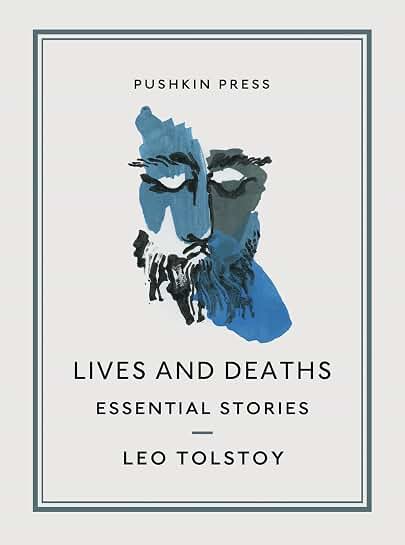 What if you did everything right and discovered on your deathbed that you've wasted your life? Rabbi and author David Wolpe talks about Tolstoy's "The Death of Ivan Ilyich" with EconTalk's Russ Roberts. Weaving Rabbi Wolpe's own brushes with mortality and his years at the bedsides of the dying into Tolstoy's masterpiece, they talk about the lies we tell ourselves about death, our longing for honesty and human touch at the end, and the way that death forces us to take a clear-eyed look at life. They conclude by offering advice on how we can avoid Ivan's regrets.
