| 0:37 | Intro. [Recording date: July 3, 2026.] Russ Roberts: Today is July 3rd, 2026, and my guest is former U.S. Senator and former president of the University of Florida, Ben Sasse. Ben, welcome to EconTalk. Ben Sasse: Good to be with you, my friend. I'm a listener, so it's an honor to be invited on. Russ Roberts: Privilege to have you as a guest. |
| 0:52 | Russ Roberts: Let's start briefly with a thumbnail about your health situation. Tell listeners about your diagnosis and where you are right now. Because people care. Ben Sasse: Thank you. I'm happy to spend time on whatever you want. Cancer is one of my least favorite topics, but we'll do the mix as you prefer. Next week, or at the end of this weekend, I will be six months and three weeks since being told I only had 90 days to live. So, I'm on borrowed time. We all are, in a sense, but we're here with three kids ranging from 15 to 25. Every extra bonus week, month, dinner, 4th of July to blow some stuff up for freedom--it feels like a pretty great blessing. So, my wife and my short hand is--after a terrible diagnosis, we'd say there are currently two small bads and one pretty dang good. So, I have pancreatic cancer that had metastasized to five other systems. I presented as far-along Stage Four. Pancreatic is 87% death rate overall, but 97% death rate within 12 months if you're Stage Four, and I was advanced Stage Four. So, to be pushing seven months when you had 90 days to live is pretty great. And, that's because of the really wonderful experience of being on daraxonrasib, this new miracle drug at UCSF [UCSF] and a few other places, that's a RAS [renin-angiotensin system] inhibitor. If you're 80-something, pancreatic cancer might be environmental. If you're 50 something, like I am, it's almost always a genetic mutation. 89% of people have a RAS mutation. So, this new drug--there hadn't been good news in pancreatic cancer in 40 years--this new drug essentially tries to inhibit the RAS mutation's ability to toggle the on-off switches the wrong way. The great news is my tumors are down over 80% right now. The bad news is, it's probably not going to be a cure for me because I presented so far along and so metastasized, but this drug is going to be super-interesting over the next two to ten years. My two rough byproducts right now of a really aggressive dose of chemo are a real hard time growing skin and hair, so my root follicles on my head are all kind of tingly and falling out and bleeding all the time. So, my scalp is real a bloody mess, but I have an amazing dermatological oncology team at MD Anderson [Monroe Dunaway Anderson]. We're making a little bit of progress. I used to have the same problem on my face; we've largely resolved that. And, I'm super nauseous. So, I puke four or five times a day. So, if I need to pause our EconTalk, it's not because I'm ducking your question. Russ Roberts: No problem. It's an unusual request for guests, but I'm here for you, Ben, obviously. |
| 3:35 | Russ Roberts: It's interesting: you said you're going to blow up some stuff for freedom. Pride in America is, as it is in many Western countries, controversial. And, it's interesting to me--I know it was a one-liner--but the thing you chose to emphasize was freedom. Say something about those two things--the pride and the freedom. Ben Sasse: I mean, on pride, very briefly. As a Reagan fan, it's my obligation to cite him a lot. Freedom is always only one generation away from extinction. So, if you believe in this unbelievable constitutional system, you need to teach it. You need to pass it along. It doesn't happen in the bloodstream. It has to be taught. America is an idea. It's more than that, but it's certainly not less than that. And, we haven't done it since the 1960s, in some ways. We had all sorts of important advances racially in the Civil Rights movement, but then we had all these other problems, and we basically just had a late-1960s to mid-1970s quiet phase of 'Let's not scream at each other so much, but let's definitely not do basic civics.' So, it's not surprising that our kids don't know it. You and I have in common having been college presidents. And I remember the first time I became a college president in 2009, 1910: I read a bunch of data about 18-to-25-year-olds, and it was crazy. And things are much worse now, nearly 20 years later, but something like 41% of kids thought the First Amendment was dangerous because you might use your freedom to say something that hurts somebody else's feelings. It's kind of the whole point of America, is that words are not violence, and we protect each other from violence so you can debate with words. So, I think part of our problem is we haven't done civics. Another big part of our problem is: capitalism is so wonderfully productive and effective--best economic system the world has ever known, as you know far better than I--but we are so rich. Median, middle-class Americans, richest people any time and place in all of human history, and affluenza has got a lot of downsides, a lot of drug side-effects to it. And, I think we're very distracted, and very confused, and we don't know a lot of necessity. So, people don't know what it would be like to not really have freedom of religion, speech, press, assembly, right of protest. So, you asked why I emphasize freedom. I'll stop there. I think religious liberty, freedom of speech, freedom of assembly--these things are core to souls. Souls can't be compelled. So, I think America's political system comports the best with human dignity. |
| 6:18 | Russ Roberts: You mention, you identified--the way you described it, I think, was 'an unbelievable constitutional system.' And, we have the same system today that we had 10 years ago, 20 years ago. You can debate at some point there were tweaks and changes, but the overall system hasn't changed. It's a republic, and it's a constitutional republic; and it has an Electoral College. And some of those features are non-negotiable--meaning without a Constitutional Amendment, there's going to be an Electoral College. A lot of people don't like it. But, what I've noticed over the last 25 years or so, and at least it seems to me--and you have a much better window on this--many of what Lord Moulton called the unenforceable pieces of that system that we used to be obedient to--the norms that limited what you could do--have eroded. And executive power--long before Trump--started to expand. It's decades old. And I'm curious if you agree with that as a serious problem. In particular, given the extraordinary system, a lot of that system was held together by these norms, by what was expected of politicians, and what was not acceptable, and what was considered gauche or expedient. And, I think a lot of those have fallen away. Do you agree with me? Ben Sasse: I do. I think executive overreach is a problem, but it's a reactive problem. The far bigger problem, in my view, is legislative underreach, which set up this moment. So, I was running for office--I'd never run for anything before in my life till running for the Senate. I was 41, it was 2013, and I kind of get drafted into the open Senate race in Nebraska. So, President Obama is in his second term, and I started thinking a lot about pen-and-phone kind of theories, nonsensical stuff that President Obama said--that President Trump now essentially says, 'Hold my beer.' Those things happen partly because the public is so impatient--understandably impatient--about the legislature to tackle big problems. We don't have an entitlement state that makes any mathematical sense at all. And most people aren't paying attention; but to the degree people pay attention, there's new monetary theory nuttiness on the far Left, and maybe some people in the post-liberal Right now echo the same silly math. But, mostly when people pay attention, they know, 'Holy crap, our entitlement state is going to bankrupt us. What are we going to do? We used to have 16 workers per retiree. We're on our way to two and a half workers per retiree. We got to figure this out.' And, the legislature doesn't do anything. And so, I think the problems of social media and the digital revolution--awesome in many ways, but I'm sure we'll talk about some of the problems--they came to the legislature early, and the legislature became performative early on and stopped doing real work. So, I think the executive understandably fills that vacuum. Not defensively, but understandably. Russ Roberts: Yeah, I agree with that. So, you've been very critical-- Ben Sasse: Actually, can I say one more tiny on that? Russ Roberts: Sure. Ben Sasse: I still teach occasionally. Lord willing, I might teach again this fall if I get bonus months. I think it's a useful exercise when you're deep in reading one period to just do a small thought experiment. What's most different to them if they were transported to our age? So, tomorrow being the 4th of July, it's worth lingering in the 1770s or 1780s once in a while. And, if you're in Philadelphia in 1787 and they came to today, obviously they'd be stunned by our material largesse and by technological revolutions. But, I think they'd also be stunned at an anthropological level by politicians that aren't jealous of their prerogatives. Like, to be in the legislature and not want to legislate--that's weird. And, we definitely have a legislature that doesn't really want to legislate. I ran part of the transition project for Mitt Romney in summer of 2012. If he had won the White House, how would he structure his team? So, I interviewed every living Chief of Staff from the White House at that point. And, one of the things that I heard that just kind of stunned me was, I would ask a basic strategy consultant question: 'What did you think it was going to be like? And when you got in there, three or six months in, what most stunned you?' And, in both parties, they said something similar: 'I can't believe when a senior member of the legislature--a senior Senator, a Committee Chairman of my own party--comes to us and asks us to do by Executive Order things that are popular and that they have the power to do. And they ask us to do it by Executive Order instead of legislation.' And, I said, 'That is weird. Why would that be?' And, he said, 'A senior Senator told me one time'--it was a Democratic Chief of Staff--'a senior Senator of my own party said, it's like this: If it's a 70/30 issue, I'd still kind of rather not vote on it because the 70% are going to get the outcome they want if we do it by Executive Order. And, if I'm lobbying you to do it, I get to tell all the key grasstops back in my state that I was lobbying you to do it, and now it's going to happen. So, the 70% is basically going to be happy. But the 30% is going to be pissed off either way. Why should they be pissed at me? Let's let them be pissed at you, an endless bureaucrat.' That's weird. The Founders wouldn't be able to make sense of that. |
| 11:55 | Russ Roberts: Yeah, it's a great thought experiment. I think the other part of it, of course, is the extension and growth of the Administrative State, which I see also as part of the abdication of responsibility by the Legislative Branch. And, it's basically--it's what you said. It's a performative--embracing of the performative. It's a shirking of responsibility. And it's just a different norm than we usually think of. I mean, you're there to make the country better--and that's a little naive for me to say that. I'm a big Public Choice fan. But at least you should tell yourself that. But, somewhere along the line, we got out of that habit. I don't know why. Ben Sasse: Agreed all around. I mean, I've said a bunch of pessimistic things so far, so let's at least do a thumbs up for something: The Originalism Movement on the Court over the last couple decades, and in particular, a lot of the nominees who are associated with the FedSoc [Federalist Society] movement. But, there is a healthy thing happening post-Chevron to roll back some of these delegations of authority to nameless, faceless bureaucrats. I mean, again, bureaucrats, by and large, aren't bad people. I think of Weber's distinction between entrepreneurial managers and bureaucratic managers: A bureaucratic manager is supposed to sustain an institution. An entrepreneurial manager is shifting resources and doing new things. But, we want, in our system, the people who do new things to be accountable to voters and to be fireable. And so, I think that this delegation of authorities to the Administrative State--Obamacare is kind of mathematically most egregious example--in the law, there are, like, 1200 either explicit or inferred places where it says, 'Dot-dot-dot the Executive Branch shall finish the law.' Obamacare says: 'It will be illegal to offer a health insurance policy that doesn't meet an essential minimum benefits care package.' What's that? Does it include in vitro? Does it include hair plugs? Somebody has got to vote on that. And, they just decided: Let's not vote on any of that because it will expose us to things that are unpopular. And it would be complicated. So, how about we just legislate in a way that says people inside HHS [Health and Human Services] bureaucracy, they'll make all the decisions about the essential minimum benefits package. Well, then why have a legislature? Russ Roberts: And of course, they'll say, if pressed, 'Well, but they're the experts.' But that's not really the right point, because the whole essential challenge of any policy like that is getting the trade-offs right. Which is not an expertise issue: it's a values issue and a responsibility issue. Ben Sasse: Great--I mean, what a great sentence. Because, we do have a major problem in a world--the great world of ubiquitous information has tons of upsides. But, one of it means is expertise domains will shrink because more people have access to this information. And, your point about expertise is not a way to just bumper-sticker shirk responsibility for hard trade-off choices. |
| 14:49 | Russ Roberts: If you could pass one piece of legislation, what would it be? And, has the answer to that question changed over time for you? Ben Sasse: Wow, that's really good. And, it's so simple. It should have been something I've thought a lot about, and I don't think I have. So, let me nibble around the edges en route to a big answer. First day in office, January 3rd, I think, 2015, I introduced a term limit Constitutional Amendment for term limits on Senators. That's not the most important thing, but it's what I went with first because, as a believer in the George Washington/Cincinnatus tradition, I think a professional ambitious class to go to Washington, the center of the world, and stay forever--I'm saying 'center of the world' cynically: Dodge County, Nebraska, zip code 68025, on the North Banks of the Platte River, where I sit today, that's the center of the world, brother. I think a two-term limit on the Senate would mean a much healthier institution. And actually, if I could just amend the constitution straight up, I might do one 10- or 12-year term. They'd still be staggered so that the Senate would be a continuing body, but people to serve in the--the Founders had a vision of a mixed system, and there is supposed to be a temporary aristocratic element, at least in terms of your insulation from public opinion, in one part of the legislature. The House is supposed to be a populist body. That'd be pretty important. A short-term one I do this summer is I just make sure that the Congress doesn't pass this ridiculous idea of mandating cameras in the Supreme Court, which I think will be so obviously disastrous within 18 months. There's no transparency problem in the Supreme Court right now. Pen and pad are allowed everywhere. We get audio. But, if you put cameras in there, it's going to be a platform for jackassery on Instagram and TikTok, the same way the legislature is. There's a reason why no hearings work except for Intel [Senate Intelligence Committee] in the Congress, and that's because Intel, we don't have cameras, so there's no reason for people to act like a douchebag pretending they know everything with a five-minute self-aggrandizing speech that maybe has a question at the end. In the Senate Intel Committee, you say, 'Hey, Director Burns, if the CCP [Chinese Communist Party] is doing this, I don't understand how that makes sense. What's up?' The question is, I'm confused about this apparent contradiction. What senator would ever say that in public if it becomes a soundbite that they look stupid? So, you got to get reelected. Anyway, that's a short-term one. But, I think probably my two biggest bundles--and I don't have precise legislation for you, but I'll just name categories--are: One, we have to fix our entitlements. Bankrupting the next generation is unfair. And right now, most of the public still thinks of government like it's the military with a few social safety net programs. The FISC [?fiscal portion of U.S. spending?] is actually Medicare, Medicaid, Obamacare, Social Security, interest on the debt. That's more than 70% of spending. And then, less than 30% is half-and-half national security and non-defense discretionary. You can't spend two-thirds of all your money on entitlements that are on autopilot when we've got wonderful life-expanding health technologies and growing life expectancy in most categories. So, we need to fix the Entitlement State. And then, I think we also should be grappling with the question of what mid-career job disruption looks like. This is a lot less money, but I think, as a free trader, both trade mitigation logic and job disruption at age 35, 40, 45, 50, those programs should be transferring money in a way that's actually successful at getting mid-career people realigned with economic needs. Not just: if you're 45 and you become unemployed, you're likely to be unemployed forever, and now you're just on the dole. So, that's a subset of entitlements, but I think economic and job retraining stuff is going to be particularly important in the AI [artificial intelligence] revolution. Russ Roberts: You said 70%. It was those things--you made a list. I'm not checking you while we're talking. Ben Sasse: Please do. You got better math than I. Russ Roberts: I'm curious. You still pay attention. You're not a senator. You keep up, right? Ben Sasse: I mostly keep up on intel stuff. I'm worried about the long-term civilizational race around tech with the CCP, but I keep up a little bit. I write for the Wall Street Journal occasionally. |
| 19:13 | Russ Roberts: Let's shift gears. You started your career in education at a small college. I forgot the name of it. Ben Sasse: Midland University. It used to be called Midland Lutheran College. Russ Roberts: How many students? Ben Sasse: When I got there, 600. When we left, we'd almost tripled it. The denominator was small, but we were one of the fastest growing schools in America. Russ Roberts: What did you learn from that experience, and what was different when you got to the University of Florida? Besides everything? Ben Sasse: Okay, maybe two things I learned. One is my grandpa--my dad was a high school football coach, but he was the first person in our family to ever go to college. His dad came back from World War II, never had a day of education after age 18, worked his way up at this college, and became the Executive Vice President. He basically ran everything except the faculty side of the institution, but he himself was not a college grad. And this little local, rural, religious college is such a Tocquevillian grasstop sense of what community looks like. I've always loved Tocqueville, but I feel like when he talks about going from DC [Washington, D.C.]--which isn't the center of the world to Tocqueville, to, I think there are 25 states at that time--he goes to 17 state capitals and finds that not only is the center of American life not politics in DC, it's also not even politics locally. It's entrepreneurial projects. Not just for-profit, but entrepreneurial things. So, I always say in speeches, it's the Rotary Club. The Rotary Club didn't exist in the 1830s and 1840s, but it's the Rotary Club. Midland Lutheran College is that. So: One, it's just a community institution. I love the place. Go Warriors. Number Two, 18-to 22-year-olds are so different now than 35 years ago when I was graduating high school. This is not an old man, terminal diagnosis standing on my lawn screaming at the kids, 'Get off my lawn.' We're so dang rich because of consumer capitalism that 18-year-olds, by and large, in America have never worked yet. And that, for human history past for millennia, until 35 years ago, would just blow anybody's mind. During the American Revolution still, I think the number is 30% of all labor on farms in America was supplied by people under 14 years old. Like, it's a lot. And, 18-year-olds had already learned to work, and then they went to school. And, for you, as President of a college, you know this: That a student who is ambitious about their curiosity, that they want to figure out how to better themselves to serve, they want to think God's thoughts after Him, they want to wrestle with the good, the true, and the beautiful--that's a completely different student than one that's in Grade 13. And, by and large, our 18- and 19-year-olds are still kind of in grade school. They're passive. They're on receive mode. They're indoors, sitting still all the time. That's not what college and university is supposed to be like. It's not the free-for-all of a library. A school is different than a library. But it's still supposed to be a place where the student's curiosity is propelling them forward, and then they're availing themselves to Great Books and lectures and professors and mentors and wisdom. And, I think right now college has become a delayed adolescence project, and we need to do better. I won't do your University of Florida question, small versus big, yet because you need to talk again. Morphine brain. Didn't mean to monologue at you like that. Russ Roberts: No, no, keep going. I mean, I've never been a college administrator until I came here in Jerusalem to Shalem College, and it's an exhilarating entrepreneurial experience. I actually asked Claude what I could have done better in my career. This is after somebody sent me a congratulatory note--based on AI. And, one of the things it said was, 'Why did you waste your time being the president of a college with your last job?' And I thought, 'Well, you don't know much about this college. You don't know much about Israel. It's a different thing.' But, I get it. I get the reflex to look down on college administrators. I certainly did before I became a president. So, I have learned an immense amount about management, leadership, education, and I can't imagine going to a mega-institution like a state college of the size of Florida. So, tell me something. Ben Sasse: Yeah. So let's set the stage with how big a mega-institution is, because it's gigantic. So, University of Florida, fifth largest school in the country, but it's both flagship and land grant. So, it is Texas and Texas A&M [Texas Agricultural and Mechanical], or Michigan and Michigan State, or UVA [University of Virginia] and VA Tech [Virginia Tech] in the same school. Florida State is the historic women's college, and now it's got broad and some really wonderful programs as well. But, people often assume Florida State was the ag school [agricultural school]. Florida is both the ag school and the flagship. So, that means we have locations in all 67 counties in Florida. And, at the mothership in Gainesville, the main campus, we have about 85,000 people because we've got a hospital system with between 20,- and 26,000 folks at any given moment. Our instructional faculty--let me pause to get this number right. Oh man, morphine stinks. You said I still keep up. I used to be really good at photographic memory about math-- Russ Roberts: There's a lot of them. There's a lot of them. It's okay. Ben Sasse: Well, I think the number is 6,300. The paper that we submit to the accreditors every year: How many people taught a class at the University of Florida last year? It's north of 6,000 people taught classes at Florida: you know, 42,000 undergrads, 19,000 grad students, etc. But, 6,300 professors. Here's one of the core problems with the American university, with the English training college model and the German research bench model: is a glorious wedding if it has been intentionally managed. And what's happened is there's been so much money thrown at it by the federal government over the last 50 or 60 years that it will absorb those resources and do a lot of stupid things. So, most faculty are supposedly teaching, doing research, and having some "service component" that they're measured on. I'm putting that in scare quotes because it rarely, rarely happens at most institutions. At our university, I think we have about 1.3 billion in total research. A smaller share of that is externally sponsored dollars that had to be won by competition, but $1.3 billion dollars. On paper, a faculty member is supposed to teach a three/three load: You teach three classes fall, three classes spring, unless you get research leave. And, our median professor of those 6,300 folks, is on majority research leave. About 60%. So, the modal faculty teaching experience is somewhere between a one-one and a one-two. You're getting 60% research leave. But, if you rank-order those $1.3 billion dollars, about 80 professors account for more than 95% of the dollars. So, 1.5% percent of the faculty--this is not an 80/20 rule; this is a 95-to-1 rule--about 1% of the faculty are principal investigators or research team leads, and they're accounting for 95% of the research. Well, when you do the tail of that curve, it means by the time you get to professor 3150--the median professor--there is no research output. And yet they're still on majority research leave. And so, you've got people who are quite[?] retired to the tune of 60% of their paycheck coming for so-called research output, where there is no research output. And so, if you look at a lot of the crisis of what's wrong in the Humanities and the Social Sciences, it's faux research. Because, essentially a union mindset has absorbed the sort of political activism to say, 'Well, you got to do important stuff. So, we're going to call this stuff that you believe in--all fine and good to believe lots of stuff. We all have lots of avocations--but we're going to call that research or service when it might just be activism on the public payroll.' That problem is a giant problem for universities, and AI's disruption is going to be helpful because there's lots of things that aren't really important that are being publicly subsidized, and the public is upset about it. |
| 28:16 | Russ Roberts: Yeah, I'm just thinking about--I mean, those things are all disturbing, of course. But when I came here, my first goal was to improve the teaching quality of the College. And it was already quite good, but my view was it could be better, of course. It wasn't my analysis, but it can always be better. And, how do we get there from here? And, I don't think a University of Florida can think about that. It's not a viable question, partly because of that research money, right? Because nobody is compensated, honored, rewarded for great teaching. In fact, it might be just totally ignored, in my experience in research institutions. Ben Sasse: Yeah. The former President of the University of Chicago had the great line: We pretend that universities are coherent organizations. They are, like, seven different large corporate structures all thrown together. And at the end of the day, the health system--if you have one, and in Florida, our budget $9.5 billion, about 65% of the money is spread across six campuses with 11 different hospital systems. About 65% of the money is that. So, the University of Chicago used to joke, they would say: 97% of our financial exposure is the health system. And, I have about 3% control--or competence--to be running a giant health operation. So, education on the side is itself going to be a 25- to 30% enterprise. And then, in that, athletics. And I say this as the son of a coach and former--I was on the wrestling team in college, and the second-most important religion in my life is Nebraska football. So, I love college athletics, but a University of Texas or Ohio State at $330 million, down to a power four school median at maybe $150 million per year--those are big enterprises, and they're important; but it's a teeny fraction of the educational enterprise of a major institution. And yet most board members and most donors are most interested in that thing, which is this side-project that's just co-branded as junior professional sports--professional football played on Saturday instead of Sunday. So, you end up with this shared governance problem, which is massive. The accreditors say your institution to have access to federal dollars--Perkins loans, Stafford loans, Pell Grants, research dollars--you have to have shared governance. Well, what does shared governance mean? What it should mean is the faculty and the board/administration together wrestle with what the curriculum is, and all non-curricular things--athletics, fundraising, physical plant, lobbying the state legislature for money--that should be on the board and the president and the administration. Instead, what happens is shared governance usually means almost everything is shared between faculty and board, even things where a committee of faculty is not going to be competent to manage physical plant planning. And, curriculum is given over to the faculty entirely, and maybe just the Faculty Senate, which is the activist subset on average. It's not true of everybody who is on a Faculty Senate, but on average, the Faculty Senate is the most activist, non-productive subset of the humanities and social sciences faculty. STEM [Science, Technology, Engineering, and Mathematics] faculty, by and large, don't want to do anything with Faculty Senate because they've got research projects with deadlines. So, the curriculum is unmanaged. And, the way you know the curriculum is unmanaged is both by how incoherent it is. Who would say, as the father of a 17-becoming-18-year-old, 'Oh, I want to hand my kids over to'--and then go read the curriculum of your school? Most schools require 120 hours to graduate. It's three thirds: It's a little over a third your major; it's about a third the core curriculum; and it's a tick under a third electives. The core curriculum should be the most important part of the school, and at most places you would say, 'My kid has 45 to 48 months of quasi-leisure to get exposed to great ideas in the world? Are these the most important books they can read?' Hell, no. And, there's nobody who would even make the case that it is. The second way you know it's unmanaged is if somebody retires in a department with declining enrollment--anthropology, sociology--does the faculty of that department have the right to appoint the replacement for the retiring professor on their own, or is there any deliberative process about whether or not that faculty line should be moved somewhere else? That almost never happens, and that would happen everywhere in an institution that was well-managed. |
| 32:52 | Russ Roberts: Yeah. Last question on education. And, you can-- Ben Sasse: I could ask you a few as well because you're doing a really interesting project. I want to hear about curriculum and how you get great talent to teach, because I know you do. I'm a fan of what you're building. Russ Roberts: Well, maybe after we finish, but I appreciate the sentiment. Ben Sasse: Thank you for agreeing to come on my podcast. That's what I just heard. Russ Roberts: Yeah. Just curious about how your day goes as a small college president versus a large college president in terms of duties, responsibilities. Is it insanely different? Ben Sasse: Yeah, that's a great question. And, here I'll head-nod to--I assume where we're going theologically at some point, as Ecclesiastes--so, vanity after vanity is chasing after the whirlwind, life is but a breath. I am a recovering workaholic, and not just because I have a terminal diagnosis. About three or four years ago, I realized that there's a lot in my soul that's pretty unhealthy because I was a working machine; and I could generate a lot of output, and way too much salve for aches was in the escape of produce more, work harder: I am boxer, it is Animal Farm, let's roll. So, I have kept a time sheet on myself since I was in middle school or high school. 15-minute increments forever, including all my workouts, and sleep, and whatever. And, not a healthy thing, but I know the answer to your question because I mapped it. Russ Roberts: Wow. Ben Sasse: Again, it's a kind of a sicko answer. I was, on paper, a small-college president for five years. But I was one and a half years on leave--for half on leave while I was doing the primary for my Senate campaign in 2014. So, three and a half years of full-time grinding work. It's a real job where outcome--the small-college presidency--where outcomes are going to be obvious. We were in an enrollment crisis. They had missed payroll four times over the year before I arrived. They ultimately always got faculty and staff the money to make sure people didn't miss their mortgage payments, but it wasn't necessarily on payday. So, we had to build a real institution that was going to be accountable to the commitments we had made. And, I named the project Big Scribner because there's a tiny little town up the river from here called Scribner, where there was a bank that had some revolving debt. And, I ultimately said there are, like, five dominoes to restructure this college: We're going to need to restructure our syndicated bank debt. We're going to need to make a bunch of bondholders take a haircut. We're going to need to retire a bunch of faculty members that teach in departments that don't have schools anymore--students anymore. We're going to need to raise a bunch of new money. Etc. There are sort of two categories of new money: some new donors and some community foundation money where stuff was escrowed. And, I essentially went in and said, 'It's the 131st year of this college, but we need to view it as Year One as well. It is a Tocquevillian project. We need to build this institution. We need to serve the students of our community, in Omaha'--over half of Nebraskans live in metro Omaha, and that's an hour from here. So, that's where we were mostly recruiting kids. So, we built a project that had very clear metrics. What would it look like at an enrollment level and at a budget level to be successful? And, we were. I get too much credit for it. I'm good at building a team. I'm not Midas. I didn't deserve all the credit; but I put together the right group of people. Fast-forward to--you go to a big university, the job is more than 70% ceremonial. Shake hands and--a head-of-state/head-of-government distinction in a European government. The president's job is mostly to be at the right events. So, you could say that that has a fundraising component, but a lot of the fundraising is not concretely tied to a specific pillar of the capital campaign. So, there's a lot about both jobs. It's super-important, but we're going to need our large institutions to reform themselves to persuade the public that they're good stewards of 15-to-25-year-olds' time in a world where job disruption is going to be forever more. And, therefore--there's never been a civilization that really created lifelong learners. We're going to have to do that, both on the merits because it's the right thing to do for virtue inculcation and curiosity, but we're also going to need to do it because economic viability for a household is going to require 35- and 45-year-olds to be able to get retrained, and nobody's ever done that at scale. Russ Roberts: Yeah, we're in for interesting times. |
| 37:33 | Russ Roberts: I want to shift gears and talk about religion. Talk about your faith, if you're comfortable in this moment, and how it's been affected by your diagnosis. Ben Sasse: Yeah. I am self-consciously Christian and believe the Heidelberg Catechism structure of what are the three things you need to know to live and die in the joy of this comfort that my only hope is in a grand trade--where I get to bring the sin, and the Messiah gets to bring the forgiveness, and I get to hand off all of my brokenness; and I get imputed righteousness. Those three things are guilt, grace, and gratitude. How big is my law-breaking? What does it look like to have access to forgiveness? And then, how should we then live in light of it? I'm blessed to have had a worldview that's been settled probably since my teens or early 20s. But, it's definitely different to be looking at a terminal diagnosis. But, I've had a lot of peace about the fact that on December 14th, a doc said to me: Ben Sasse's torso is chock-full of tumors, and you're not long for this world. Death sucks, but it is a blessing to be able to view it as the final enemy, not as the ultimate word. It's the last bad thing. So, I'm going through stuff that's not fun. Treatment is a little easier than I thought, but I still puke many times a day and bleed out my head all the time. As you and I were talking before the show started, I have a RAS inhibitor drug that makes it really hard to grow skin, so the downsides of my chemo are smaller than the carpet bombing chemo of 5 or 25 years ago, but it's still--I changed a blood-saturated pillowcase on my bed three times in the night last night, so that's not a lot of fun. But it is a truth injection about the fact that we're finite, and we're mortals, and it will shatter the idols of things like my workaholism past. Russ Roberts: Did your faith fluctuate in the past? And, is it stronger now? Ben Sasse: It fluctuated in the sense that I grew up in a Christian home. I'm from rural Nebraska. I grew up just a couple miles from where we're recording this right now. And, I grew up in the Lutheran Church; and, in college and taking time off to live on trains in college for a while, I read a lot of theology and wrestled through stuff, but didn't ever really have any grand period of doubt. Just got more theologically serious and more serious about understanding what I believed and why. And, every Sunday for decades, getting the chance to assemble for corporate worship and get on your knees and tell the truth about my sin is a blessing. So, that hasn't fluctuated. I would say there's something different about the last six and a half months, which is: when death is nearer, it definitely crowds out a lot of the distraction. There's sort of a truth serum about what do you really believe, and lots of small things seem bizarre. Like, I knew in public life that reading the comment section of something online was dumb, but I would still occasionally do it. I mean, I was in intel, and so I know most of this crap is bots. Right? I think the public doesn't really get this. A huge share of the comments on something like X aren't real. They're generated by foreign intel services that want us to hate each other. In Fall of 2017, when there's an open Senate seat in Mississippi and President Trump stands up at a rally and he says, 'What do people in Mississippi like? I think maybe racism. So, why don't I talk about Colin Kaepernick--that son of bitch who won't stand for the anthem?' Colin Kaepernick wasn't in the League when that speech was made. There are 1,500 NFL [National Football League] players: six of them are kneeling, and Kaepernick isn't one of them. And over the course of the next four days, American discourse is taken over by #Standfortheanthem and #TakeakneeNFL, the two sides of the fight. It's an important debate at one level; but, like, it's ludicrous. It's like a cartoon that our public discourse for four days was dominated by the two sides of this debate. And, both sides were more than 70% Russian bots. And all of a sudden, all of us are drinking this crap. And so, I know that to be true; but I still might have read the comments section during a reelection campaign in 2019 or 2020. Today, I could not care less about that. I mean, I care about it for civic health. I want people to not be distracted by it. But I would never think, 'Oh, this bot says Ben Sasse is an insider asshole who embezzled a bunch of money.' And I was, like, 'Well, thank you, St. Petersburg. Bot farms--somebody just got 17 cents.' [More to come, 42:54] Russ Roberts: Do you get angry at God? Ben Sasse: No. I read the law from the Early Church to then the Medieval Church and Early Lutheranism, and then Calvinism and beyond, which is sort of my convictional community. I call myself a Luthero-Calvinist. Our numbering of the Decalogue changes. But, Table One: No other gods, no images, not taking God's name lightly, and the Sabbath. And then, Table Two: Honor your father and mother--which is really all authorities--and adultery, and murder, and stealing, and false witness, and covetousness. I look at those 10 Laws, and I'm, like, 'Holy crap. That's a straight edge, and I am crooked stuff.' I don't look at the gap between the righteous law and my unrighteousness and say, 'Oh, something's wrong with the law.' I'm, like, 'Crap, that's wrong in me.' In my conscience, I know that I'm guilty. And so, Paul, in the Letter to the Romans, Chapter Seven, says, 'That which I want to do, I do not do, and that which I do, I do not want to do.' I'm like that broken Augustinian/Pauline anthropology. That's me. And, I want to be righteous; and I always fail. So, I'm not mad at God. I'm sort of mad at me. |
| 44:41 | Russ Roberts: So, I get that. As a Jew, I get it. And I would just add that, disappointingly, a large number of the frustrations that I experience in life--what we would call annoyances. Not a terminal diagnosis, but things going wrong. But, things going wrong. Every day. Things go wrong. They're not what you want. And, I can get annoyed with those, and I recognize in some dimension--not at the time always--but I recognize later that's just my self-centeredness that I deserve better. And ultimately, I'm kind of angry at God for not giving me more of what I deserve. That's the flip side of what the generous thing you just mentioned. And I look at myself in those moments and say--you know, I think about Anne Lamott, who said: God's name is 'Not me.' That's where I want to head. Not me. I'm not the center. I'm just a small thing. And, that's easy to say when we're talking about delivery that goes awry and a dinner that gets spoiled or whatever it is. But, when you're given your fate, I would think it would be hard to take it well. So, if you really are--I was going to say, God bless you. I mean, I think that's an extraordinary achievement. Ben Sasse: Thanks, but I want to view it as the language of gift in--to be clear, death is terrible. I don't want to whitewash it at all. But, I mentioned Ecclesiastes earlier. I think it is useful to view it as a big screaming--a flashing sign of truth about our finitude and our mortality. And, your point about God's name is not Russ Roberts or Ben Sasse. Knowing that is a tiny, tiny step toward wisdom, and it's like the paradox of so much of lived experience, which is that we're relational beings. Right? And, I want to flourish. I want to be happy. I want joy and short-term pleasure. But I want longer term more than short-term. But even the longer term, I know that an uncertain path to it is pursuing it. And a much more certain path is self-denial and dying to self, and trying to serve. Right? Like, if in my marriage my aspiration is my happiness, I'm going to be unhappy. If my aspiration is my wife's happiness, I've got a pretty good shot at being happy. And, it feels like that might be a writ-small portrait of relationship with the Divine as well, in that: We're not meant to be on the throne. Russ Roberts: Yeah. That's a great insight. |
| 47:48 | Russ Roberts: Do you pray? Russ Roberts: And, what is your prayer practice? And, do you believe in petitionary prayer? And, how has your health situation affected your prayer? Ben Sasse: Yeah, great question. Both corporately and individually. So, at corporate--at church on Sunday, but in our family, we pray aloud. Ideally twice a day, almost always once a day. So, if not at the evening meal, if we're not assembled, then before bed, but sometimes morning as well. But, individually, I try to use the structure of adoration, confession, thanks-giving, supplication. If I start with petitionary prayer and supplication, I'm pretty soon talking way too much about Ben. So, I think trying to work a little bit through both the communicable and incommunicable attributes of God is a pretty great way to do the Adoration. If I'm just on communicable attributes, God is patient and long-suffering and should be patient and long-suffering: and man, am I impatient and not long-suffering. That's important, and it's one of my failings. But, a bigger one is, you know, reflecting on the eternality, omnipotence, omniscience of God. And none of those are characteristics that are communicable to me. So, I think the Adoration is a key piece that sets the stage for me properly confessing my sin. And then, I try to do thanks to a certain degree before supplication. The one thing that's changed a lot over these six and a half months is Tim Keller, who was a Presbyterian pastor in New York City who ironically died of pancreatic cancer three years ago, was in my denomination. And I knew Tim relatively well. And he said something really profound in his declining year or two. He didn't present at Stage Four like mine, but he was still pretty clearly going to die. He said, 'I hate pancreatic cancer. I would never wish pancreatic cancer on anyone. But, paradoxically, I also would never want to go back to a stage in life where I didn't know the power of pancreatic cancer prayer.' And I didn't have any idea what the heck that meant. And then, I became symptomatic. So, I was symptomatic just a little before Halloween, and I wasn't diagnosed till mid-December. So, I had about seven weeks of some pretty extraordinary pain because my cancer has metastasized from the pancreas to five other systems. Liver is farthest along, but I got lymphoma and lung cancer, etc. And, my soon-to-be med-school daughter always corrects me: 'You don't have lung cancer. You have pancreatic cancer that is now also resident in your lungs.' So, it's a different thing. The molecule is pancreatic cancer, but it's in all these other systems. I had really weird pain all along the front of my ribcage that would radiate. I would get this piercing pain in the mid-spine, and then it would radiate all over my torso, down to scrotum and up to chest. But, around the front of my ribcage, I would just have this incredible pain, like when you're a little kid and you get a soccer ball or a punch to the gut, and you think for about 20 seconds you're going to die. And, I would have that the majority of my waking hours. But it would radiate from my spine, and it turned out I have a tumor that is not technically in my spine, but presses against it. So, now that I'm on a lot of morphine and I'm on daraxonrasib--this amazing drug which has shrunk my tumors so much--I'm in so much less pain April, May, June, 4th of July of 2026 than in November 2025. But, to your prayer point, I was in so much pain and I didn't know why, that I was spending almost all night, every night, on the floor in my shower and removed the temperature control so that you could make it way hotter than you're supposed to make your water in your house. And I was just running that hot water in the center of my spine to try to take away this pain; and we had not been able to diagnose what was wrong at first. And, in that time, I would cry out to God asking for relief from the pain, but also reflecting honestly on the fact that, 'Hey, if I got a terminal cancer diagnosis and I'm cured from cancer, it doesn't change the fact that this 53-year-old is still, at 83 or 93, headed for the same fate.' Then so, standing before the fact that we all have a terminal diagnosis, changed my ability to self-delude and to distract with this worldly performance or output, and you realize we stand naked before a holy God, and relationship is the only thing that ultimately matters. Relationship with those we love as well, but I mean, it's relationship to God first. |
| 52:51 | Russ Roberts: It seems to me, and I don't know if this is generally true, but it just seems to me that we try not to think about death. And, when we get a scare, we get afraid. We don't get more thoughtful. We get afraid, and we just want a doctor to say it's fine. And then we go back to ignoring death--because we want to. And, I think people vary in how much they think about it. Certainly, as you get older, you think about it more, inevitably. It does concentrate the mind wonderfully, as Samuel Johnson said. Is there fear in all of that? Or is it just that your daily life--obviously, there's sadness--but I assume there's also a lot more intensity. I assume every day has a different texture than it had seven months ago. Is that true? Ben Sasse: Partly, yes. I wouldn't say that there's more fear about the relationship to God. I definitely feel fear is a little bit strong, but let's go with 55% of fear about not wanting to be a pansy-ass during the final stages. I mean, it's pretty obvious that pancreatic cancer's actual death weeks are really ugly. And so, I want to be able to play the man during that phase. I want my kids to see me honorable and able to engage them. Again, I'm not a complete stoic about it; I'm not eschewing all morphine. But, I choose most days to take way less morphine than my 55 milligram prescription because 55 milligrams has me high as a kite, and I'm either asleep or incoherent. So, I'm in a small bit of pain right now, but it's because I want to be able to talk to you at speed. So, I know that the actual process of death is going to be a part of life that isn't fun, but that suffering can build perseverance. Perseverance can build character, and character can build hope, to quote Romans 5. But, I think what's clearly true about our mortality is that we have an unbelievable capacity to delude ourselves and pretend it isn't so, and it's definitely on a spectrum more true of me today than when I was in great pain six months ago. Right? I can have a short-term fight bickering with my wife about something today that I couldn't have done six months ago because life just felt too short. And, I think there's a real wisdom in contemplating our death as a way to then also get back to living. Like, I think the thing that makes the day-to-day valuable is that it sits in light of eternity, and we're doing these things out of gratitude, and love, and service, but not because we're stupid enough to believe we're actually building a storehouse that's going to be big enough as a store of labor or grain, that it doesn't just get us through a bad harvest in a really long cold winter, but that we think we're transcending our mortality. I know with your dual geography, you've thought a lot about the worldviews of Silicon Valley over the years; I've done a bunch of board work in Silicon Valley over the years. I don't mean this to be disrespectful, but I think it's just mind-blowing that Ray Kurzweil's stupidest ideas are treated as if they're sophisticated: that humans are going to upload our consciousness into the Internet and become indifferent to our own mortality. The singularity is we will transcend corporal bodily existence and become abstract idea. That's nuts. Like, spirit and body are both true, but the purpose of these digital tools is to supplement embodied, place-based existence, not to supplant them. And, the place where you break bread with people, the place where you get on your knees and worship, the place where you make babies, or more generically, the place where you hug the people you love--we are bodily. And, there has to be some reckoning with the question of, do we think from dust to dust means that's all there is? It's hard for me to understand how you could live in a coherent way if someone thought this was the end. |
| 57:46 | Russ Roberts: There's an old saying which I've always loved: 'No one on their deathbed wished they'd spent more time at the office.' And certainly, when you're on your deathbed or when you just start getting older, you reflect on your life and what things you're proud of, what things you're not proud of. What are you most proud of lately? Has it changed 10 years ago, when you'd look back on what you'd achieved? You've had a rather special life, right? You've done things that--I won't include the university president, but you've done things that--I won't include the University President--but you've done things that people marvel at. And you were not a cipher or a pawn in that game. You were a player as a member of the Senate. And you influenced thought. And people still think about what you think about and talk about. Is that on the list? What's on the list? Ben Sasse: Thanks. That was too generous, but thank you. I definitely love to work, so don't hear this as a minimization of work. But, you're right. The things on my deathbed that I think about that I'm proudest of are--I have an unbelievable friendship with Melissa Jane McLeod, now Melissa McLeod Sasse. Thirty-three years of friendship, 31 years of marriage--and man, it's an amazing thing. And, we produced three kids together that are sinners and broken and look in all sorts of horrible, stupid ways like their dad. I don't mean just the ugliness of the physical visage, but I mean their sort of proto-workaholism, their grinder-achiever culture--which is wonderful but also too much. One of my kids, we jokingly say, 'Man, in a family of Type As, Kid X makes all three of us look like potheads. What the hell is wrong with you, Sisyphus?' But, I'm really proud of my kids and the fact that they love to work and serve. So, the things that I think I still contemplate are not achievement-based. They're relationships. But I like to work hard. And, to your point--I mean, not trying to take it precisely to religion and theology--but I think the Sabbath is an incredibly useful institution. In the Christian tradition, where we've flipped it to Day One from Day Seven, there's even a little more poetry about it because it means that the indicative precedes the imperative. Acceptance precedes high expectations. You live the week out of gratitude, not to attain standing. But, regardless of whether we put the Sabbath at Day One or Day Seven, it's a day where you cease your striving, because, at the end of the day, I can't do it. I can't achieve enough. I can never build a big enough storehouse. I can never make myself immortal. I can't keep the planets in their orbits. When I was in grad school--I'm a historian by training--and when I was in grad school, I was in New Haven from 1998 to 2003, 2004. And, there were still all these books around from the 1970s in the psychohistory moment where basically Freud had so dominated many academic categories--that to be a historian, the assumption was you had to be able to do psychoanalysis of anybody who you were studying. And, I thought it was just nutty. And, I asked a couple of my professors, 'How the hell did this happen?' And, they said, 'Well, it's crazy. The idea that Martin Luther wasn't really wrestling with theological ideas, but he was just super-constipated. Then he had to explain it away; and that became the Tower Doctrine at the Diet of Worms.' That stuff was overwrought. But, I had a professor say--Skip Stout was his name; John Butler was another guy who made a similar point--Skip said, 'Ben, at the end of the day, we're all still kind of 70% who we were as 10-year-olds. And, psychohistory was getting at a little bit of that. It's not 99%, but it also isn't 29%. We're 70% who we were when we were 10-year-olds.' And, I think it's really helpful to think of ourselves as people who want to know and be known. We want to be accepted, and we want and need a well-done, good-and-faithful-servant blessing. We want a daddy who welcomes us, and accepts us, and takes us up in his arms. And I think that aspirational sense can play out in really good work, but it can also become super-deformed in lots of kinds of addiction because we're trying to make a name for ourselves. Russ Roberts: Yeah, for sure. It's a beautiful thing you said about your marriage. I think, until you've been married a while, what you said probably doesn't make any sense. So I'll just leave it there. I think those of us who have been married a while do get it. And, the thing that I think about my kids--I don't know if this speaks to you--but my kids are not my legacy. They're me. And, they don't want to hear that. It's not comforting to them. It's horrifying. Just like I don't want to hear I'm my father and my mother. Although times I'm comforted by that, too. But, the immortality that we can have as humans in this world, outside of divine or faith, the divine or faith--it's nature and nurture that we pass on, and it persists after we go, and it persists after they go. It's all one very long chain. And, I'm sure, like you said, it's almost unavoidable when you see your both flaws and your strengths in your kids, and you realize it's not, 'Oh, I influence them.' They're a piece of you in a different form to me. Russ Roberts: I hope my kids are listening. It'll ruin their day. Ben Sasse: You got big and broad enough listenership that I'm sure they get recycled back to them all the time. My oldest kid turns 25 next week, and it blows my mind. I mean, it's, like, all the country music lyrics: three chords and the truth. And an old man can never tell a young man how fast it goes, but the days are long and the years are short. It's so obviously true about parenting. And, you never know when you're doing a thing for the last time. The last time that you read a book aloud to a little kid and they fall asleep--excuse me--that's not supposed to happen. I've been wrestling with death for over half a year now. I'm not supposed to get teared up talking about my kids. We need to blow some stuff up for freedom again so I can keep it together. Russ Roberts: If you can't cry over reading your book to your kid, there's something wrong with you. I'm tearing up. And, again, it's the same thing. It's immortal, that feeling. You have it forever. It's just an amazing thing. As precious as can be. Ben Sasse: Yeah. She's a Second Lieutenant in the Air Force, and she gets here in a few hours. Oklahoma--Vance Air Force Base in Oklahoma--is seven hours south of here. And, she passed a check ride yesterday, jet flying in formation. And I'm, like--there's a lot of decline in the U.S. government over the years, but these idiots that are allowing my toddler to fly a jet 10 feet off somebody else's wings--like, somebody needs to check their wisdom because she's two. She cannot be flying a jet next to another jet. Russ Roberts: That's incredible. It's just incredible. [More to come, 1:06:14] |


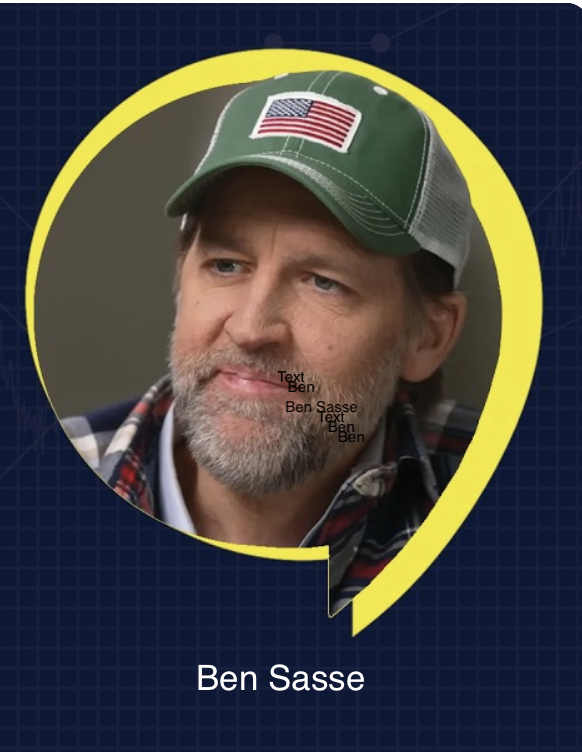 Six months into a stage-four pancreatic cancer diagnosis that gave him 90 days to live, Ben Sasse sits down with EconTalk's Russ Roberts for a conversation that refuses easy comfort. The former U.S. senator and University of Florida president is candid about his physical challenges but the heart of this exchange is elsewhere: what actually matters when time is short. Sasse reflects on faith and mortality, the "shattering of idols" like his own workaholism, and his pride in his marriage. Along the way he offers sharp diagnoses of Congress's abdication of responsibility, the crisis inside American universities, and a republic distracted by the "digital casino" in its pocket. Funny, unflinching, and deeply human, it closes with a meditation on raging against the dying of the light while walking with your head bowed.
READER COMMENTS
Deborah Salon
Aug 10 2026 at 12:18pm
I’m a regular listener of your podcast, and I really appreciate a lot of the guests that you bring on. I’m also a university faculty member in the social sciences, and I teach urban planning courses at Arizona State University.
I’m writing today because I really hate when I hear people in positions of power making false claims, and that unfortunately happened in the middle of this conversation. The part of this conversation where Ben Sasse claims that faculty in humanities and social sciences are doing “faux research” immediately follows his discussion of the “numbers” around research productivity and teaching at the University of Florida, which is clever spin and placement because it almost sounds like he’s got “numbers” to back up his “faux research” claims.
The thing is, there may certainly be a real problem with faculty getting lower teaching loads when they aren’t bringing in much research money, or a real problem that too few faculty bring in research money at all. But Sasse’s “numbers” are extremely skewed (and wrong). They make the University of Florida look ridiculous, and Sasse claims that the same story is true everywhere, so it makes all of higher education look ridiculous.
I looked it up – Florida has around 2250 tenure eligible faculty (the ones who are evaluated based on teaching/research/service). Sasse’s claim of 6300 who teach a class isn’t wrong, but most of those people are part-time adjuncts or lecturers whose job is only to teach. They do not get reduced teaching loads because they bring in research grants.
Still, it sounds bad to say that only 100 or so of these 2250 people (i.e. ~5%) are bringing in 95% of the research dollars.
But this *also* is extremely misleading! Sasse is counting research grant money here as going only to the “Principal Investigator” – the top person on the team that brought in the money. In my experience, nearly every research project has a team – sometimes quite a large group, in fact – that work together to bring in the money and to do the research. I’m in the social sciences, I’ve worked on research proposals with between 2 and 25 co-investigators, and I’m not unusual. Teams in the natural sciences or in medicine are generally even larger.
So, making a guess that the average size of a research team is maybe 4-5 people and redoing Sasse’s “numbers” leads to about 400-500 people out of 2250 bringing in most of the research dollars. This is approximately 20% of tenure-eligible faculty bringing in 95% of the research dollars – not the 1% that Sasse claimed.
One could reasonably argue that this number should be higher than 20%, but when you hear that 20% of faculty at a particular institution bring in 95% of the grant money, it doesn’t make higher education sound like a joke. It makes it sound like higher education has something to work on, which I think is true.
Unfortunately, people like Sasse making higher education sound like a joke leads the people who fund research want to stop investing in research at universities. This is exactly what the US federal government is working toward doing right now, in large part “informed” by misleading “data” of the sort that Sasse presented in this interview.
Scott Wilson
Aug 10 2026 at 3:51pm
Following on Professor Salon’s comments, how about this thigh-slapper? “So, people don’t know what it would be like to not really have freedom of religion, speech, press, assembly, right of protest.”
I wonder how Alex Preddy, Renee Good, Don Lemmon, and Georgia Fort feel about this?
William Walsh
Aug 10 2026 at 4:56pm
For decades and decades now, my first law of politics has been: No decent person seeks or accepts political power over another.
That law has served me well. Perhaps it’s cynical. Perhaps it has huge explanatory power.
I admit that Ben Sasse caused me to wonder about the universality of my first law. I was both disappointed and impressed when he gave up what could have been life tenure in the Senate from Nebraska, and took on the University of Florida. I didn’t follow it closely but his work there impressed me.
I was devastated when he resigned, even more so when the reason became clear.
I think Ben Sasse is an extraordinary man.
That said, I find his protestations of faith hideous.
I’ve long ago accepted that people can compartmentalize. They can live by reason while worshipping superstition. I get it.
But it is simply impossible to square the circle of an all powerful, all knowing, all loving God, who could have made it otherwise, would strike down this man when he had done so much good and had so much more good to do.
No conscious being could conceive of such a thing. Unless he were malevolent.
Not even then.
I also take strong exception to the idea that Sasse expressed in this episode but which is oft repeated among the superstitious: That without a God and without a supernatural realm, life has no meaning.
That’s stupid and insulting. And obviously so. If for no other reason than there is no God and there is no supernatural realm, just as there are no unicorns.
And life has meaning.
I loved this conversation. I was moved by it. I learned a lot–as I do every Monday. But it occurred to me: Ben Sasse’s God has explicitly condemned Russ Roberts to eternal damnation. And vice versa.
What a perfectly horrible, anti-human, hateful thing to believe.
Russ, if there is a God (and there is not) I look forward to spending eternity learning from and arguing with you in Hell.
Richard Boltuck
Aug 11 2026 at 9:01am
Prof. Sasse, thank you for a consequential and well-directed life, and for sharing your thoughts with us in this wide-ranging conversation. You might now question your workaholism, but we should acknowledge that the rest of us were the beneficiaries.
One thing you said about our current political moment that resonated with me is that the executive overreach we’re experiencing with Trump was really caused by legislative underreach. You and Russ both noted Congress’s apparent aversion to taking responsibility, preferring instead to delegate tough decision to the President or civil servants.
My own suspicion is that an institutional change in the operation of Congress in the mid-1990s is largely responsible for the recent decades of legislative underreach. Specifically, prior to around 1995, Congress functioned with “strong” subject-matter committees that reported proposed legislation directly to the floor for a vote by the full chamber, either the House or Senate. Committees conducted meaningful, respectful, thoughtful hearings with witnesses reflecting expertise, interests and experience.
Because the two parties were generally centrist and not polarized (think Blue-Dog Democrats and Republicans like Lowell Weicker or Jacob Javits), bipartisanship within the committees was the rule of the day, and proposed legislation generally reflected compromises to accommodate what each party thought most important — and final passage also generally, or very often, required bipartisanship on the floor. Compromising to get legislation passed was incentivized within committees. The only way a committee chair or ranking minority member could earn their spurs was by being associated with successful legislation.
This system institutionalized ongoing government reform, often incremental, sometimes more radical, but usually the product of a thoughtful process.
In 1995, however, things changed. The incoming House speaker, Newt Gingrich, wanted to consolidate power in the House leadership, probably so he could personally negotiate on fairly equal terms with Bill Clinton. In the short run, this approach did result in compromises on welfare reform, and especially on institutional measures that led for a brief time to a balanced budget, thereby permitting the Democrats and Republicans to share credit and avoid losing Ross Perot’s proven 20 percent of voters who were mostly concerned about fiscal balance.
In the longer run, however, over the past 30 years, gutting the strong committee system meant that ongoing government reform was dead. To get to the floor, legislation needed the direct support of the House and Senate leadership. This new process cut the minority party out of the process and eliminated the strong committee-based incentives for bipartisan compromise. It led to a vicious circle strengthening party polarization.
We are now reaping the consequences of three decades of neglecting responsible government reform. Unlike the private sector, government is not disciplined by competition. To achieve any semblence of efficiency, it requires ongoing rational reform, which requires supporting institutional structures such as strong committees. In these three decades, we couldn’t consider adopting the metric system, eliminate the penny, or cut out Saturday mail delivery, let alone consider privatizing air traffic control, the postal service, or passenger train service. Much of the rest of the world, not so shackled, moved on.
Edmund Burke’s 19th century critique of revolutions was based on the lack of foresight when existing institutions are torn apart without understanding what beneficial functions they may serve, and without a considered plan to replace them — in other words, without a rational approach to reform rather than destruction. It is the same point G.K. Chesterton made with his famous “fence” analogy. Burke never opposed change — in fact, he was probably his era’s preeminent “reformer”.
Gingrich’s elimination of strong committees spread to the Senate, and both parties, for apparently differing reasons, embraced the change going forward, regardless of which of the two major parties controlled either chamber.
So here’s my thought. Let’s return to strong committees. Perhaps the Democrats might consider nationalizing this issue in congressional races, a new “Contract with America” on a platform to undo the Gingrich “reform”. Of course, “fix” the problems that initially led Democrats to embrace the Gingrich change, namely, mainly, the much abhorred “seniority system” of assigning committee chairs — that shouldn’t be too difficult.
I would certainly be interested in what others think, including Russ and Prof. Sasse (if he has a moment — I’m sure he has more important things for his time these days) — but also those engaged in politics and elected leadership.
DG
Aug 11 2026 at 9:35am
I didn’t really understand Ben’s criticism of the legislature. I agree that Congress’s unwillingness to legislate is a huge problem. But the one major piece of legislation they discussed, Obamacare, he criticized for not being specific enough and for leaving too much to the bureaucracy.
I understand that Ben opposes Obamacare on policy grounds. But the idea that one of its central flaws was that Congress didn’t legislate at a sufficiently granular level seems strange to me. Do we really want Jim Bunning screaming at Al Franken about hair plugs on the Senate floor?
If you’re going to have meaningful national legislation in a country as large and complicated as the United States, I think you have to leave a lot of the details to agencies and career officials. The more important question is how to make those institutions accountable and competent, not whether Congress itself should be writing every detail.
—————————-
I was also confused by the criticism of universities. Of course, I agree that universities are large, complex institutions and are often inefficiently run. But I wasn’t sure what the proposed solution actually was, other than, perhaps, putting more people like Ben and Russ into leadership positions?
The part I found especially confusing was when Ben said…
That seems to suggest there are no meaningful market forces shaping universities. But obviously there are. Students and parents choose among schools, schools compete for them, employers react to the graduates they produce, donors have preferences, and institutions differentiate themselves in all sorts of ways. I hear a version of this frequently from conservatives who strongly dislike what universities teach, but are unwilling to acknowledge it is the outcome of a highly competitive market process.