| 0:37 | Intro. [Recording date: September 14, 2026.] Russ Roberts: Today is September 14th, 2026, and my guest is author Meghan O'Gieblyn. Her latest book, the subject of today's conversation, is Will and Attention: A Memoir. Meghan, welcome to EconTalk. Meghan O'Gieblyn: Thanks so much. Happy to be here. |
| 0:52 | Russ Roberts: Now, this isn't an easy book to summarize. It is a memoir, but its themes go deep into questions of addiction, rationality, religion, what it means to lead a good life. Just to set the stage, tell us a little bit about your personal story, which is the memoir part, which is the thread that runs through the book. You've had some interesting experiences. Meghan O'Gieblyn: Yeah. I guess the first thing to say is I grew up in a very religious home. My parents were evangelical fundamentalists, and so that was a big part of my early childhood. I went to Moody Bible Institute to study theology when I was in college. Moody is one of the oldest and most conservative evangelical colleges in the country. I had a lot of good experiences there, but I also ended up having a faith crisis, largely around the problem of evil. I left the school after two years. I ended up leaving the Christian faith altogether and had this period of being in the wilderness, so to speak, where I fell into--I was drinking a lot. I was working at bars. I fell into an addiction, was not really connected to anybody from my former life. I ended up getting sober when I was 28 years old and really found my way back into a sense of community and just a much more stable, healthy life, largely through my participation in 12-step programs. That whole experience gave me my life back--or maybe gave me my life for the first time. I was sober for 11 years. I got married. I started writing during that time. And then, around the late 2010s, so I don't know, 2018, 2019, I became really attracted to Catholicism for reasons that were unclear to me at the time. I had not identified as a Christian for over a decade. I called myself an atheist, but I found myself drawn back to attending mass every day. I started talking with a priest and came very close to converting. In the end, I didn't. And then, shortly after that, for reasons that were totally baffling, returned to drinking, and I drank for about a year in secret without telling anybody. This was after I had spent years working with other alcoholics, telling my story from the podium of church basements, talking about how much better my life was. So, it was this completely irrational, in both cases, this return to Christianity, which had not worked the first time and didn't work the second time, and then also this return to drinking. The book begins as I was sort of coming out of those experiences and trying to make sense of them and figuring out this problem of why do we keep doing these things that we know we shouldn't do? Is it a problem of willpower? Yeah, that was really the starting place for the book. |
| 4:13 | Russ Roberts: I want to start with a quote, and we're going to talk somewhat about a thinker that I always thought was pronounced Simone Weil, W-E-I-L, but sophisticated people say Simone Weil [rhymes with 'way']. So, if you hear Weil, we're talking about a woman who was born Jewish, who becomes deeply attracted to Catholicism; does not convert, though, finds it, as is in your story, a bridge too far for a variety of reasons. Maybe we'll get to those, maybe we won't. But, you start early in the book with a really amazing quote from her: "We have to try to cure our faults by attention and not by will." And that's the quote. It's a seemingly simple sentence. A chunk of the book is trying to untangle what that actually means. So, take a crack at that. Meghan O'Gieblyn: In some way, the whole book grew out of my desire to understand that one quote, which I was totally--the first time I read it, I was, on one hand, attracted to it. I knew that willpower didn't work. So, that part of it I really recognized. I knew that it had not worked in my own life: that, if anything, it led to more problems. I guess I'll just say, in context, it didn't work with addiction. I couldn't cure myself of alcoholism by gritting my teeth and trying harder. And it didn't work with spiritual belief either. You can't will yourself to believe in God, right? The part that mystified me was 'attention' because I'd never seen those two words talked about together or set in opposition to one another--that attention could help cure faults that could not be cured through will. I was really fascinated by what Weil meant by 'attention.' And, the more of her work that I read, the more elusive it became in some ways. I mean, I guess, just for context, to her spiritual writing that we have today was not published during her life. It was composed mostly in private notebooks that she wrote during the last years of her life, so the early 1940s, late 1930s. And, it was compiled after her death by a friend of hers. One of her most famous books is Gravity and Grace. What that was is basically her friend, who is a French Catholic farmer, Gustave Thibon--he basically went through her notebooks and took all of these isolated quotes. Some of them she wrote in a way that was very aphoristic. So, she has the quote about attention and will that sounds really gripping, but there's no context around there in her journals, which is really maddening. Yeah. But, in Gravity and Grace, there's basically--Thibon took these isolated aphorisms and organized them by theme. So, there's a piece in Gravity and Grace called "Attention and Will." It has all of these phrases that she jotted in her notebook about the relationship between these two ideas, but it sounds like you're listening to someone who is talking almost in a way of negative theology--almost like she's trying to understand these concepts herself. But, I gathered through reading, actually, her journals themselves, and reading a bunch of essays and books that she wrote during her life, that attention was not at all the way that we think about it today. I think most people, when we talk about waning attention spans, there's a sense that attention is this hyper-focus, almost like a really rigid kind of tunnel vision. Like, you got to look at the screen and focus on this one thing and ignore everything else. And for her, attention was almost the opposite of that. It was a kind of directed receptivity. It was a willingness to look and not grasp. So, she talks about attention in the context of art. When you're looking at a painting and trying to understand it, she says sometimes you move from one end of the room to the other, look at it from different angles. Sometimes you have to repeatedly come back to the same thing day after day until the light dawns and that that process is largely mysterious. It's something that you can't force. She talks about it, too, in the context of paying attention to people who are suffering, and that that requires to actually listen and to give someone your full attention--requires a kind of self-emptying that you can't be trying to--I don't know. You can't be thinking about yourself. You can't be thinking about what you want and be paying attention at the same time. So, in that way, will is really the enemy of attention. So, I started just reading a lot of her writing and thinking about that: how that applied to addiction, for one thing, where it does feel like you can get in your own way when you try to--I mean, one of the, I think, the delusions of addiction is that you can somehow figure it out. Like, 'Oh, if I just try harder to control my drinking, or if I just drink the right thing at the right time, then I'll be able to master this.' The truth is what works for a lot of people is you have to give up that delusion and just basically stop fighting, surrender. For me, it came through showing up into this community and listening to other people's stories. And I think that's a type of attention. [More to come, 10:00] |
| 10:00 | Russ Roberts: So, I'm going to read a quote. You say, The most important things in life completely elude the will. Cheerfulness can be summoned through sheer effort, but not happiness; piety, but not faith; seduction, but not love; productivity, but not genius. I know from experience that it's impossible to will oneself out of an addiction, and I know that you cannot force yourself into faith no matter how hard you pray or starve or grit your teeth. I very much want to live a good and virtuous life without alcohol and drugs, which have made my life miserable. And, I still long to believe in God despite the resounding silence that suggests he does not exist or is not interested in us or in me specifically, but my actions suggest that part of me does not actually want these things or that I want them only provisionally or part of the time. My will is scattered, directed toward many contradictory things, and easily distracted. And I just want you to expand on this idea a little bit because I think in, I would call it, Western civilization--I don't have a better phrase for it--there's a deep, deep belief that our choices are ours and we bear responsibility for them. So when we make a bad choice, whether it's addiction or something cruel, something evil, it's our fault because we should have willed otherwise. And you're suggesting it's not 100% or maybe at all in our control. Meghan O'Gieblyn: I mean, I'm very interested in the question of free will as a philosophical problem, and I do touch on it a little bit in the book. I think I was more interested in the practical, first person experience of trying to will something and just having it completely resist any kind of effort. I mean, the other place where I've experienced this is in creative work or intellectual work, right? I think everyone recognizes this point where you're just banging your head against the wall: you've hit an obstacle, and you can't figure it out. What doesn't work in those cases is to just grit your teeth and try harder. Usually, what works is to get up, go for a walk, take a shower, and the answer arises almost just from outside of yourself-- Russ Roberts: Somehow-- Meghan O'Gieblyn: Somehow, yeah. Physicists have this phrase that they use to describe the places that are most likely to give way to a breakthrough, the three Bs: the bed, the bath, and the bus. I mean, I think everybody can recognize that. It's almost when you're relaxed and not trying that the answer comes. So, I was really interested, too--I mean, Weil writes a lot about this idea that when you try to force those things that can't be forced--like spirituality, virtue, creativity, love--you end up with what she would call idols or sort of false versions of what you're trying to achieve. I think that's especially true in any type of moral or spiritual life, where, if you try to act more virtuous than you are, you end up with a sort of false piety that isn't really rooted in a true spirituality. That was something I recognized in my experience in 12-step programs, where I think, for a lot of my time there, I was sort of walking the walk and talking the talk, but didn't really have that deeper belief--or had some really deep unresolved problems with the idea of a higher power and the whole spiritual aspect of that ideology. So, yeah, I think that the thing I was interested in is how can attention to those things that we're trying--instead of trying to will something, paying attention to what it is that you're not being honest with yourself about or what you're not looking at, how can that sort of offer a way through? |
| 14:05 | Russ Roberts: I often say on the program, when these kind of issues come up, that part of growing up is becoming self-aware and realizing you're not the center of the universe, which is the way human beings start. You are the center of the universe. You're an infant, you're a child, and you get a lot of attention because otherwise you're not going to survive. And it's hard to do anything else except put yourself in the first. So, I say there are four ways to grow up and become self-aware: religion, meditation, literature, therapy. You've done all four. You write about all four in the book in some detail. I would say, in some sense, your book is about--ask the question, is this possible even? Is there any sense in which we control our own destiny, that we can forge ourselves, that we can become better? I'm Jewish. We're in the time of the Jewish calendar between Rosh Hashanah and Yom Kippur, which are the Ten Days of Return. They're called the Ten Days--sometimes it's translated as repentance. I think that's a mistranslation, but the idea is this is a time of self-reflection, and you should improve yourself. Now, it's really hard to do, and we all understand that, but in Judaism, it is a core belief that it's possible. That belief might be wrong, but I'm curious: what's your take on that? Is it possible to make yourself a better person? Is it possible, through attention, say, maybe not through will, but through attention and various techniques--religion, meditation, reading great books, therapy--to become a better person? Become a different person? Just even start with that. Meghan O'Gieblyn: Yeah. I like your four things. I would agree with all of those. I would add maybe a fifth, suffering, I think, is how you-- Russ Roberts: Good. Very Christian. Meghan O'Gieblyn: Yeah. Yes. Well, and I mean, it's been true for me, too, that I oftentimes--I know something intellectually, but it doesn't really sink in until I've suffered the consequences of not doing it. This is a thing that's really maddening me because I'm a slow learner and have to learn things firsthand: that you really don't transform that, at least for me, you don't transform that intellectual knowledge into actionable wisdom until you've had some sort of experience with it in life. But, yeah, I mean, I think the idea of any kind of religious pursuit or moral pursuit is to try to change and improve without having to constantly suffer consequences before you do. Yeah. I mean, I fiercely believe in change. It does feel like it's a slightly unfashionable idea. I think a lot of people today are skeptical that people can change, but I've seen it happen in my life multiple times. I've seen it happen in the lives of other people, specifically through recovery from addiction. But, it's hard because, I mean, it's an incredibly slow process, and it's not direct. I think that's the thing that is sometimes frustrating about it, is that most things in life, if you want something in the material world--like success, or, I don't know, if you want to change your life through wellness or fitness or something like that--there's very sort of clear steps to doing so. Not always easy, but there's sort of a path. For me, the idea of inner transformation, it's largely circular in some ways. It's about sort of having to come back, either through ritual or through these successive acts of attention, to the same thing and constantly sort of reminding yourself of these truths until they sink in. And, yeah, I do think it's oftentimes the case where the change happens once you've given up changing, in some way, where you've sort of just committed to doing these things for their own sake, and then suddenly you realize a problem that you've been struggling with is gone or that the wall that you've been sort of pushing against, it suddenly falls over, where before it wasn't. |
| 18:44 | Russ Roberts: Well, I thought one of the themes, which, of course, is a fascinating question in human behavior for economists--economists tend to ignore it--but economists assume that you look at your situation, you decide what's best for you, and that's what you do. Meghan O'Gieblyn: Well, that's, like, classical economics, right? Yeah. Russ Roberts: There's some modern variants on it, but not so much. It's hard to get very far if you don't assume rationality. So, then you need a model of irrationality. There isn't a good one, usually. But, what I like is, at various points in your book, you concede that as human beings, we often tell stories to ourselves to explain what we did that aren't the real reasons, and we may not even have access to those reasons. I thought--it's a beautiful quote I'd never heard that you use from William James. You say: it's impossible to know how or when it will bear fruit--some technique. And you quote William James saying that he believed that the crisis of religious conversion was the 'last stage of a long incubation that had taken place in the unconscious.' James writes, quote, "When the fruit is ripe, a touch will make it fall." And I love that, because it looks like something was decisive--the touch. But there's decades, sometimes, or years or months that set the stage for that change. And I think people want to have a lightning bolt or a crisis or--I'm not just talking about religion--but any transformation where people decide, say, to lose weight or to stop drinking. Or to start drinking. Any kind of transformation, good or bad, it's usually we attribute it to a dramatic moment. And James is saying, actually, that's really not the right way to think about it, and I think a lot of your book has that theme underlying it. Meghan O'Gieblyn: Yeah. I was so fascinated by James' work, which I'd read The Varieties of Religious Experience before, but I went back and read it again. It had been several years when I was writing this book. I mean, he's talking about the very problem that I'm wrestling with in the book, which is this problem of being at war with oneself. And he talks about these people who have divided wills. They have some sort of a higher aspiration, but then they keep running into problems, and sometimes it's spiritual doubt. Sometimes it's temptation. Sometimes it's excessive self-criticism. And, that there's often this moment that comes, which he calls the crisis of self-surrender, where the person kind of just stops the war, says, 'I'm going to hand over my problem to some sort of higher power,' or 'I am going to simply admit defeat,' and then the solution becomes possible. And, yeah. He did believe that that moment of self-surrender was not the lightning bolt: that there was all its work that had been happening, maybe even throughout the struggle, that this work had been happening unconsciously. You know, James--I don't think he ever uses the word 'unconscious' in that book. He talks about the powers outside of the conscious mind. He has this great phrase, too, which relates to the idea of rationality. I think he said that the change happens below the loquacious level of rationality. Which I love. It's almost this idea that we're constantly telling ourselves these stories, right, and sometimes you just need to shut up and listen. Yeah. I think that so much of modern psychology and even this idea of cognitive biases rely on this idea that we are fundamentally rational creatures with maybe some glitches here and there in our thinking. I mean, the thing that I really love about psychoanalysis or even the whole Judeo-Christian tradition is that there seems to be this notion that the human mind and the human heart has vast depths that are not accessible to the person, the individual themselves. I really became interested in that larger sense of the unconscious and its role in change. I don't necessarily mean the Freudian unconscious. I just mean everything that we're not paying attention to, right? Everything that we're not focused on. And, with this idea that maybe the solution lay outside of that narrow focus. |
| 23:30 | Russ Roberts: Yeah. I'm reminded of the line from Faulkner's Nobel Prize acceptance speech, writing about--he talks about writing about the human heart in conflict with itself. I think it's related to other work you've done, which I'm not very familiar with, but I think there's this temptation to see the brain as a machine. Now we see it as an LLM [Large Language Model], which is a neural network: which, of course, it has neurons. There is a network. It has electricity. But it's a rather meager view of the complexity of the human experience. But, ultimately, it's like, 'Oh, yeah, there's this bug called cognitive bias. We'll just correct that. Let me explain it to you, by the way. Let me tell you what this bias you have, and once I tell you, you will be protected. You'll be inoculated.' It doesn't work that way. It's an endlessly fascinating challenge, our war with our own self, and it's part of, again, what I mean by growing up or living. Meghan O'Gieblyn: Yeah. I mean, yeah, it's maybe one of the oldest problems. I mean, this is what the Greek philosophers called akrasia, this idea of weakness of will, right? You know something is good intellectually, you know what you should be doing, and yet you don't do it. You do the opposite. I was really fascinated by these quotes that you find both in Eastern and Western spiritual traditions. I was exposed to it through, first--I think that my first awareness of this was through the Apostle Paul, who says in his letter to the Romans, 'I don't know why I do what I do. The thing I want to do, I don't do, and what I hate, I do.' Yeah, I think that really just sums up the heart of the problem. I think, through the Christian interpretation of that problem, is, yes, your will is weak. You need to rely on God and not trust in your own hubris or your own ability to change. You need grace. Today, I think--I don't know--obviously, Christianity still has a long legacy in our culture, but I'm really interested in these more contemporary metaphors about the mind being a machine and how that changes our view of our own minds and our view of what can be changed and what can't. I think that the thing that is most pernicious about that metaphor of the brain as a computer is this idea that, well, there's really no point. Everything is sort of an automatic process. There's no point in actually-- Russ Roberts: It's an algorithm. It's all built in-- Meghan O'Gieblyn: Right. There's no point in actually paying attention to what your mind is doing. And this is so much of what Weil writes about, and Iris Murdoch writes about this idea of you really need to pay close attention to your thoughts and to the stories that you're telling yourself because your actions are a result of those thoughts: that, your will is not this sort of isolated power where you're facing a choice and you have total freedom to choose one thing or the other. It's really the outcome of what you've been thinking, how you've trained your attention, how you've trained[?changed?] your mind, and those habits over a much, much long period of time. |
| 27:03 | Russ Roberts: I want to read another quote, which I found fascinating, from--referencing G.K. Chesterton, who is famous on EconTalk for his fence. Chesterton's fence gets talked about a lot in here: the idea that you see something that doesn't make sense, so you should just, of course, tear it down rationally. Why would you leave something that doesn't make sense? And, then, because you don't really appreciate the complexity of the world, you don't realize why the fence was put there in the first place: that the problem that it solved is still there, and so on, and so on. But, here's another insight on Chesterton that is really kind of cool, and it relates a little bit to what you were just saying, so I want you to talk about it. You say, quote: I'd read an essay that summer by G.K. Chesterton and had underlined a passage about the importance of taboo. Now, I'm going to step out of my quote for a second. Taboo is completely out in our modern culture. Taboos are irrational. They're silly. They shouldn't have any taboos. Almost by definition, a taboo is something that you believe in that's obviously you're afraid of or you stay away from but there's no reason for it. I mean, it's just a weird cultural bias. Anyway, back to the quote: 'All myths and fairy tales,' he pointed out--[Russ Roberts: Chesterton], 'rest on a completely senseless taboo.' Cinderella has to make it back from the ball before midnight. The milliner's [?miller's?] son cannot stand on his head in the fairy place. Adam and Eve cannot eat from the fruit of the tree of knowledge. Why? The stories never answer this. They simply insist that all the magic and wonders of paradise depend on respecting this one senseless rule. These stories, Chesterton argues, preserve a very old and very deep human truth, quote, 'that happiness depended on not doing something that you could at any moment do and which very often it was not obvious why you should not do it.' Close double-quote. Say anything about that you like. It's just a really interesting idea. Meghan O'Gieblyn: I was fascinated by this idea, too, and I had, not, until you mentioned it, connected it to that other writing of his about the fence. It's almost exactly the same thing, although I think here he's talking about almost this sort of mystical plane. Russ Roberts: Yeah. It's similar. Meghan O'Gieblyn: Yeah. Yeah, I agree. I think the idea of a taboo is so--especially a senseless taboo, right? It's just so antithetical to any type of rational, contemporary thinking about-- Russ Roberts: Modernity-- Meghan O'Gieblyn: Yeah, modernity. I was fascinated by this quote, particularly when it came to thinking about addiction, because I think the one thing that you can't do as an alcoholic is drink. And, so long as you don't drink, your life can be great. The thing that's gotten me in trouble, and a lot of other addicts I know in trouble, is starting to be, like, 'Well, maybe the taboo can be negotiated. Maybe I was just really young when I was drinking. Maybe it'd be different now. Maybe I didn't try hard enough.' Once your mind goes down that path and tries to start thinking rationally about that taboo, you can talk yourself back into something that's completely irrational. I think this is something that I was really interested in the book, is that even reason can be used to arrive at completely irrational, destructive conclusions, and that you need to be skeptical of your reason and sometimes trust the idea that these taboos exist for a reason, particularly when they're embedded in a community. I've heard countless people in recovery communities talk about why this one rule is the center of their lives and that sometimes we just need to respect that there's a hard limit to something and something that we can't understand. I'm never going to figure out why I'm an alcoholic, but I know for a fact that my life is better when I heed that one rule. |
| 31:14 | Russ Roberts: Yeah. I've talked on the program before about the challenge of a modest violation versus a cold-turkey rule. So, it is remarkably easier to eat no potato chips at a party than one. When you say to yourself, 'But, one potato chip is not harmful'--and it isn't--that's true. So, you take the one, and, of course, 30 seconds pass, and it's still the case that one is okay. And after a while, you've had 40, and that's just not good. So, it's better to have a rule: I don't eat potato chips, and I'd like to have that rule, Meghan. I sometimes have it. Part of what your book talks about is that there are times when you seem to have control of your will and times when you don't. Do you think it is a personality? It's a terrible way to describe it, but that some people have an addictive personality versus others? For them, alcohol is not an issue. It's never an issue. In your case, you can't have one. You can't have the potato chip. So, is it a part of our nature for some of us that we struggle with certain things like that, or is it everyone who has that, or for different things? Meghan O'Gieblyn: Yeah. I mean, it's something I think about a lot. I certainly think that it's idiosyncratic: that it's different for everybody. Yeah. I absolutely cannot have one drink of alcohol without it becoming totally destructive. I can have an occasional cigarette, and I'm fine, whereas I have friends who can't. I don't know what that has to do with brain wiring or experience or what. This is also, I think, one of the things that's so baffling about willpower when it comes to those addictions and compulsions and things that we can't control, is, like, when I was drinking, I had an incredible will in a lot of other areas of life. I was able to show up to work for a time. I was able to do anything else--moderate my eating, exercise--all that stuff. I had a very healthy will; but when it came to this one thing, I just could not. Willpower was completely useless, and I think that thing is different for everybody. But, yeah: what you're saying about the potato chips, too--I mean, the great thing about having a taboo is that you don't spend, waste all of this mental energy constantly negotiating, like, 'Okay. When does one chip turn into two chips, and when do I need to stop? Can I do another one?' And you're completely distracted and outside of yourself. Whereas, if you just have a hard rule, you can stop thinking about it, and it frees up an enormous amount of space in the mind. Russ Roberts: Yeah. I had a friend who would tell me that there should be no overweight Orthodox Jews because Orthodox Jews are really good at self-control. They don't eat pork. They only eat certain types of food, even that are non-pork, that are certified as kosher. They don't use their phone on the Shabbat, on Saturday. So, they have this incredible will. So, how could they be overweight? Welcome to the real world. My theory, which is not a theory, but an amusing-to-me thought, is that you have a certain amount, and you use it up on some things, that it spills over elsewhere to not be available in those other things. So, you just have to have some things you struggle with. I don't know. It's a mystery. Meghan O'Gieblyn: It is a mystery. Yeah. I mean, the way you're talking about, about the will being sort of finite, I think there was a really popular framework called ego depletion theory--throughout the late 1990s, early 2000s, maybe--that was sort of the dominant paradigm for self-control research. And this idea that the will was a muscle that could be overextended and that it sort of declined the more you used it. Or, maybe that you could also strengthen the muscle through-- Russ Roberts: Get better, right? Meghan O'Gieblyn: Yeah. Right. And, I don't know. I think there's some truth there. But a lot of theories, it feels incomplete, too, because there's--I don't know. It's a mystery. I think the problem of will, for me, is that it also extends backward and ad infinitum. You can maybe talk about, 'Okay. I have a desire. When I really want something, I can do it, and I can achieve it.' But, where did the desire come from, you know? I think everyone has had this moment where it's, like, 'Oh, I wanted so badly to get fit or skinny that I finally was able to stick to a diet.' But, why did it happen at that moment that you were so motivated? Schopenhauer talks about this. There's a famous--I think it's actually a paraphrase of what he wrote, but he said, 'A man can will what he will, but not will itself.' Basically, you can do what you desire, but desire itself is dependent on some previous experience or conditioning that we're not in control of. So, it's really this really deep problem of freedom and determinism that goes back to a person's birth, essentially. Russ Roberts: Yeah. My dad smoked three packs of cigarettes a day for a good chunk of his life. We, his children, when we were younger, would beg him to stop. I would be maybe, I don't know, 13, 14 years old; I'd talk to his mother, my grandmother, and say, 'Can you get dad to stop smoking?' She would look at me with total sincerity, and she'd say, 'He would do anything I told him.' I said, 'Could you tell him to stop smoking?' And, she would never do it. Now, I don't know if she'd have wanted to challenge her view of her relationship with her son or whether she knew that, in this one case, that wasn't realistic, but that's a complicated example of what you're talking about. Ultimately, by the way, my dad stopped smoking somewhere--I think he smoked probably from 20 to 60, or 20 to 50, something. He had to have a surgery, and he had to stop smoking for the surgery, which he managed to do because he could. Meghan O'Gieblyn: Wow. Yeah. Russ Roberts: And then, he didn't start again. He went cold turkey. He didn't say, 'Well, I'll go down to two packs, or one pack.' I'm a deep believer in zero being the right--being really effective. Unfortunately, it doesn't work with food. It's hard to have zero food if you want to lose weight. Meghan O'Gieblyn: Yes. Yeah. |
| 38:12 | Russ Roberts: Let's turn to an issue which is on my mind these days, and it's really about religion writ large more than your personal or my personal story. One of my favorite quotes, and I quote it often, is David Foster Wallace in his famous commencement address that's been called "This Is Water." He says, 'Everybody worships.' In that passage, after he says that, he says, 'Some people worship--if they don't worship God, they worship money, fame, beauty, youth.' And he says, 'Those are all false gods.' He then recommends that you pick one of the older religions that have stood the test of time. And I've always found that interesting, and it turns out Simone Weil says the same thing. You write: They believed that many of the totalitarian movements of the 20th century were forms of idolatry and expressed a desire that was essentially spiritual, the longing to surrender one's will to some higher authority. If people don't have some spiritual absolute to abandon themselves to, she argues, they will be vulnerable to the seductions of authoritarianism, ideology, and institutional religion, which similarly demand a swooning submission. And I want to say two things about that, and then I'll let you react. I've always thought about the David Foster Wallace quote about adoration: Everybody worships. Everybody finds something that they adore. But, it's also--I started to realize recently--it's also about something to submit to, something to be commanded by, the way religion does. Religion has all kinds of demands either on your beliefs or your actions or your practices or your rituals, restrictions on your freedom. And I start to worry that, as religion retreats in the West, which it is doing now--it could change, but I'm not optimistic--that it will be replaced not by Hegelian and Kantian wisdom, or Voltaire, but rather by people submitting to different religions that have other negative consequences. I think we're at risk of that in our time, very much so. The rise of populism, the strong leader. Human beings like to be free, but they also like to be commanded. As a child, we have both of those urges. We want to do what we want. We don't like to be told what to do, but we also like limits. If we don't find our limits in religion, I worry we're going to find them elsewhere, and it will be a dark time. What do you think? Meghan O'Gieblyn: Yeah, I could not agree more with that. I think a lot of my writing, even from the very beginning, has been about how essentially religious or spiritual impulses find their way into weird corners of secular culture. My last book was about how that happened with technology, this idea-- Russ Roberts: That's another god. Yeah. Meghan O'Gieblyn: Yeah, that all these spiritual metaphors that come up in conversations about AI [artificial intelligence] or how this sort of techno-optimist view of the future has a lot of similarities with Christian eschatology. Yeah. You see it, and I think about it a lot with politics, too, and the idea that we like to say that we want freedom and endless choice, and the truth is that that is an enormous burden. I think that people are looking for any way out of that. I think that it can be a healthy thing when it's channeled towards something-- Russ Roberts: [inaudible 00:42:21]. Meghan O'Gieblyn: Right. A religious community that has ethics built into it. And it is also about something--this is going back to Weil--she talked about why religion was the right thing, or I guess spirituality, she would say, is the better thing to submit to, as opposed to an authoritarian leader or the sort of fascist politics, was that you're looking at something transcendent in a spiritual tradition. She talked about how God was the void in this idea of surrendering to mystery, to something that we fundamentally can't understand, because if you're submitting to anything in the human world that's promising to give you answers or control, that's going to come back to bite you, and you're in the same place that you started out in. Especially in the United States, I think the extent to which Christianity itself has become wed and bound up with an authoritarian strain of politics has been really confusing to me, and it seems like a lot of--I mean, it's not confusing in a way. I mean, there's a way in which these things could be opposed to one another or different alternatives, right? The submit-to-God or submit-to-this-other ideology-- Russ Roberts: Caesar. Meghan O'Gieblyn: Caesar, yes. Thank you. Yeah. Yeah, exactly. And, that the Christian nationalism just confuses that in such a strange way. And, a lot of evangelicals, I think, here tend to almost put politics over their belief system or see the belief as sort of subservient to this larger political ideology. So, I think that there is also this countervailing trend, I think, in the United States and Europe of young people who are trying to go back to traditional religion and returning to--I mean, most of the press has been about Catholicism and Orthodox Christianity, about an enormous amount of young people that are returning to those traditions and who are, in some cases, doing so as a retreat from politics, which I think has become kind of a religion at this point of time. Russ Roberts: You reference The Brothers Karamazov, which has an extraordinary, immortal scene of the dilemma or distinction between organized religion and true faith, right? It's always an issue. It's an issue in every religion. It's an issue in Judaism. It's an issue in Christianity. Is this version that we are practicing now, is it apostasy? Is it heresy, or is it the true--it's capturing the essence of what we think our purpose is? There's a lot of ferment, I think, to the extent that religion is still a viable outlet for these urges in 2026, I think it's going to get complicated. I think it's going to get more diverse. I think, as you say, I think there's going to be a lot of innovation, is the way I would say it. I can't help but notice--I was in Italy, which is a very unreligious country. It is the home place of--the Vatican is in Italy, and yet Italians are, I think, very unconnected to the Church. I suspect--as an economist, I like to believe--that the government's control of religion in many countries has limited the innovation that would have allowed it to evolve into more healthy or more attractive, at least, competitive ways. We'll see. Meghan O'Gieblyn: Yeah. I mean, I'm similar, kind of bewildered by what's happening with religion these days. It feels like there's so many different facets of it and different directions in which it's going. But, I do think there's this, I don't want to say, trend, but this sort of pattern in the history of Christianity where you have Christianity become bound up with power, institutionalized in some way, and then you have this movement to, 'Let's go to the wilderness, to the desert,' or the Protestant Revolution. There's this idea that we need to get back to the true faith, back to the first century church. I think there's a way in which the faith has constantly renewed itself through those movements, but it does feel like it's sort of this eternal cycle that the faith is going through. |
| 47:08 | Russ Roberts: Let's talk about Iris Murdoch for a minute. I had never read anything by her until very, very recently, and she's a fascinating thinker and intellect because she's a very serious philosopher, and she's a very serious novelist. I hope to read more of her novels. I may read some of her philosophy, but you have a really interesting variation on some of the practices we've been talking about from Murdoch. I'm going to read this. This is Murdoch. It goes to the question of what is attention and this difference between focus and other things. Murdoch writes: If we consider what the work of attention is like, how continuously it goes on, and how imperceptibly it builds up structures of value round about us, we shall not be surprised that at crucial moments of choice, most of the business of choosing is already over. This does not imply that we are not free, certainly not. But it implies that the exercise of our freedom is a small piecemeal business which goes on all the time and not a grandiose leaping about unimpeded at important moments. The moral life, on this view, is something that goes on continually, not something that is switched off in between the occurrence of explicit moral choices. What happens in between such choices is indeed what is crucial. Closequote. And that's a really interesting commentary at all the things we were talking about earlier. So, add your thoughts on that. Meghan O'Gieblyn: I love that passage so much, and it was really not until I read Murdoch--because throughout that book that you quoted--the quote comes from her book The Sovereignty of Good, which is just a long essay that she wrote in the late 1960s, and she was basically trying to interpret and build upon Weil's ideas of attention and will, and I think she does so in a way. She's famous for having taken Weil's ideas and secularized them. Like, instead of God, she talks about the good, which she saw in this very platonic sense. But, I think that she makes Weil's ideas about attention and will so much more clear and practical. And, the idea, as I understand it, is that we all think that we're free at any moment to take any choice, right? And, when you are faced with a temptation or in the crucible of some sort of moral dilemma, you've basically already become the person who is going to make one choice, right? It's not like you are totally free in that moment. You've actually been conditioned by everything that you've done, especially in the weeks and months and years leading up to that, what you've turned your attention to, how you've tried or not tried to condition your mind through paying attention to your thoughts. That's actually what counts and not these big moments of choice: that the choice comes down to those much simpler acts of attention that we perform every day. She gives an example that I found really useful, especially when it comes to paying attention to one's thoughts and self-interrogation, where she says: Imagine that there's this woman, a mother-in-law, who finds her daughter-in-law to be uncouth and vulgar. She's very self-controlled. It doesn't affect her behavior in every way. She still treats her graciously, but she has this prejudice in her mind. And then, one day she decides, 'You know what? Maybe I'm being unfair. Maybe she's not simple and vulgar. Maybe she's actually spontaneous and youthful.' And, Murdoch's point is that that action happens completely in the woman's mind. There's no action attached to it. And yet she says we have to be able to talk about that as a moral act. Murdoch was writing in the sort of shadow of behaviorist and existentialist theories of human nature and philosophy, where there was this idea that the will was radically free and that action is what counted. She's saying, 'No, everything that happens in your mind and how you have controlled your mind or not is what counts.' And, I just found that to be utterly--it felt like one of those moments where you read something that has distilled a truth that you've known for a long time but haven't been able to put into words, and I think that that idea was maybe one of the most transformative things that I encountered in my work on this book. Russ Roberts: I think it's incredibly profound. Especially if it's true. I like to think it's true, this idea that we form ourselves day by day rather than through some great rational study of morality or religion or whatever. We actually--we are making choices constantly, most of them quite small. And we think, 'Well, it's small, so I don't have to really pay attention to it.' And what Murdoch is arguing--which, again, if true, is profound--is that it's the small decisions that add up to form you and allow you to become the person that makes the right choice when it's a big decision. And I think so often we fool ourselves into thinking that this thing we're doing that's actually quite self-interested is probably okay because it's just a small thing. It's not stealing, it's a corporation; or it's not--whatever is my rationalization. And Adam Smith actually writes about this very profoundly in The Theory of Moral Sentiments, the sort of slippery slope of small indiscretions and inappropriate things. And, I recently--I interviewed Adam Mastroianni on this idea of incentives that economists like that explain behavior. So, if the incentive to do something slightly dishonest or slightly unattractive--I'll pick a tiny one. I wish I'd talked about it when I interviewed him. I'm leaving my office at the end of the day. Should I turn the lights off? The cost is tiny. But, I could say to myself--it would be, I think, the wrong thing to say--but I could say to myself, 'Well, the college that I'm the president of, we rent the building and the electricity is included. So we're not billed for it. So, I don't have any incentive to turn the lights off. So I should just leave them on. Then when I come back, they'll be on already.' That's a horrible attitude. First of all, it's wrong because when we renegotiate our lease, they'll notice we used a lot of electricity because we didn't turn our lights off at night, and they'll probably pick a higher number. So, it's an illusion that we're not paying for it. We are paying for it. It's embedded in the price of the rent. But, the more important point is that every time I make a decision like that and say, 'Oh, well, it's a small thing, and I'm going to get a little bit of benefit, and I won't pay a cost,' regardless of whether it's the right or wrong thing to do, is you're degrading, you're eroding your moral sense. And every time you do the right thing, I think you're strengthening that muscle. That's my view. So, I like Murdoch. Meghan O'Gieblyn: Yeah. And I think that those types of moral dilemmas, even though it almost seems too small to call them moral dilemmas--about whether to turn on the light or not, or turn off the light or not, or whether to recycle, or just all these other small choices that we have in these enormous economies of scale that we're immersed in--it feels almost like you're completely powerless to do anything. What does it matter if I call my congressperson as opposed to, yanno? But, yeah, I agree that it's like there is something to the idea of doing something just for the sake that it's right and doing it because it's a principle that you've chosen to live your life by, that, not only, I think, strengthens your own moral sense of yourself, but also just makes life so much easier because you're not constantly thinking about--right?--those questions of, 'What does this count? Will this matter?' All those things that have to do with outcomes. And I think probably Murdoch would say that the outcome is not even the point. It's about what's happening inside of you. And she has an interesting point that she makes, too, and it's a really difficult one at first, or it was difficult for me to wrap my head around, where she says, 'The ultimate goal of a moral life is not to expand your freedom, but to actually restrict it.' She says: The person who has really trained their moral sense through these small acts and through attention, when they arrive at a moral dilemma, they don't have to deliberate because they automatically know what's good, right? That you act according to your principles or toward your higher aspirations so long as you've done the work leading up to that point. I struggle with that idea a little bit because it almost seems like she's encouraging thoughtlessness or something. There's actually a line in Weil where she says the same thing, where she says, basically, we should become automatons of the good. Almost like doing good should not require any kind of struggle because you have trained yourself to desire the good to such a point where it doesn't feel like a struggle. And I think there's some truth to that; but, yeah, then it does raise this question of, like, well, what about--the thing about moral dilemmas is that they're incredibly difficult and nuanced, and you can't really apply some rule that fits every situation. You really have to think about the context and all of these other things. Yeah. So, that was one thing I struggled with. I do think that there's truth to this idea that it's not--I don't think Weil or Murdoch are encouraging thoughtlessness by any means. I think they're encouraging the kind of deep self-reflective introspection in, again, this sort of longer, piecemeal period leading up to a choice, so that the choice becomes more obvious when you are in the trenches of a temptation or a moral dilemma of some kind. |
| 58:02 | Russ Roberts: No, I would think of it--and again, I don't know if they'd agree, or you can just tell me if you agree--but I think of it as: it's not so much a muscle that you're strengthening. Well, that's half of it. The other half is you're developing a moral intuition. Because, if you continually are thinking about what's the right thing to do here and you systematically urge yourself to do these small, relatively low-cost, selfless things, then when the more complicated ones come around, you're not going to have to study it for so long. That's been my experience, and especially, I think, as you get older and you go through the experiences that you referred to earlier, which I do think are really very much maybe the only way that you learn. As Adam Mastroianni, in a different episode, talked about, the brain is not connected to the ears. The things that you're told don't really go in. You have to suffer or experience them or learn from them. Intuition, which has, I think, a very bad name in some circles because it's, quote, "your gut," and it's not rational--you haven't done a careful analysis. I think it's a fundamental misunderstanding of how thinking and reason should work and can work. So, I think, to give Weil and Murdoch their due about the thoughtless part, is that it's thoughtless because you feel it. You don't have to study it and pretend that you've done a careful analysis. Meghan O'Gieblyn: Yeah. Yeah. I think what you're describing--I totally agree that, and I like the idea of thinking about it as a moral intuition. I think this is what, basically, we mean by wisdom--right?--is the ability to, because you've experienced so much, you have these internalized rules that you maybe don't have conscious access to the way that you do with--I think once you get to a point of mastery with anything, with art, writing, or music, or something, you sort of just know what to do in a certain situation. It is a type of knowledge. It's something that is often difficult to articulate according to rules or maxims, but it is maybe the most valuable kind of knowledge that there is. Russ Roberts: Yeah. Beethoven knew what note to put next. He couldn't explain it, but he was really good at it. |
| 1:00:29 | Russ Roberts: Let's close with a personal reflection. This is a brutally honest book. There's some very hard things in it to read, and I assume that they weren't easy to write. Why did you do that? Why did you choose yourself? Why did you expose yourself the way you do in this book, your challenges with addiction? If I were a really bad psychologist, I would say you put them down on the page so that you would be able to be held responsible for them. I don't think that's what you did, but maybe that was part of it. Can you talk about that? And, if you don't want to, you don't have to. Meghan O'Gieblyn: No, no. I'm interested in this question, I mean, because to some extent, it's a mystery to me, too. Why am I led to write anything? I mean, I think with anything that I write, I wrote it because it felt like it was the only thing that I could write, that I felt was urgent to write. I guess with this particular book, I did not plan on it being so personal when I first started off. I really conceived of it as more of a bibliomemoir. I thought I would be talking about Weil's ideas and maybe have an anecdote here and there from my life. And, as I was writing more and trying to understand this one passage about will and attention, I realized that these ideas are so elusive and abstract that they really didn't make any sense unless I put them in conversation with my own life. The thing that I was thinking about during this period was, obviously, addiction and religion and these things that I've just struggled with throughout my life. And, it is always a danger to put yourself into such a center point of a narrative because once you start telling your story, people want to know more, and so the personal stuff became bigger and bigger. But, I also think, I mean, if I could speculate now after the fact about why I felt compelled to write about this, is that writing is really the only way I know how to pay attention. This book, which took about two and a half years to write, was just a way to lock me in to looking at these problems, looking at these thinkers, and then looking at my own life to see how those ideas were playing out and how my misconceptions about will and attention had led me astray. I think any time you start writing a book, you think you're going to get the answer at the end of it. You almost need that delusion to think, 'I'm going to solve this.' And, of course, you never solve it. If anything, I think the best thing you can do is just articulate the problem to the best of your ability and to maybe create something beautiful out of that struggle that puts the questions to rest or transcends them. |
| 1:03:25 | Russ Roberts: Actually, I want to ask you one other thing. I'm sorry. I thought that was going to be the last question. You mentioned in passing a few times the problem of theodicy--which is why there's suffering in the world, why good people suffer, in particular. And you have a beautiful--we haven't devoted enough time to your lyricism as a writer. So, I'll just encourage listeners to go read the book because there's some really beautiful writing in here. There's a long passage where you talk about going swimming with your husband, and you're watching these young men, and they're mostly men, but they're all young, jumping off of a ridiculously steep cliff down toward rocks below and just sometimes barely avoiding them, and that during this time, no one was hurt. You write: It was at this point that I realized the problem was not about cliff diving, but about gravity itself. Why didn't each of those divers fall immediately to their death? Which is to say, why were all of us fragile, earthbound creatures not always constantly falling to our deaths? Why in this universe ruled by force and blind chance was everything not crashing relentlessly into everything else? How is it possible that healthy babies were ever born, that car trips were completed without accidents, that flights departed and landed every day without a crash? It was as though the theodicies that had preoccupied me for years suddenly inverted themselves. The riddle was not the problem of evil. It was the problem of good. Closequote. I think for those of us who choose some kind of religious path, we have to deal with this. Especially in the modern world, we think about it a lot. I think any thoughtful person who chooses a religious path has to think about evil. I always find comfort in the idea that there's also good--an immense amount of good. There's an immense amount of evil, is the problem; but there's also an immense amount of good. Brian Doyle, who you mention I think once, writes about this very beautifully. He's a person of faith who has great suffering and challenges at various times in his life, as all human beings do. So, I thought that was a really interesting, a nice thought. Want to say something about it? Meghan O'Gieblyn: Yeah. I think the moment that I'm describing, too, is sort of an example of what we were talking about earlier, where it's like you're struggling with some problem for a really, really long time, can't solve it, and then you sort of are one day just sitting and looking, and this insight comes. I'm trying to articulate in a sort of logical, rational manner what the thought that took hold of me, which was really just a deep feeling or intuition or maybe a sense of wonder. I mean, it goes back to this really fundamental question of why is there anything instead of nothing? And why is there beauty? Why is there order? Why, if the universe is just sort of blind chance and a cosmic accident, why do we have all of this? I have just never been able to fully buy into atheism because of that question, I guess, even though I know sort of the logical response to it. The thing about that moment is that it has stuck with me since then. I don't really think about the problem of evil anymore. I mean, it is something that I think that we all wrestle with and that is unavoidable in any kind of spiritual pursuit, but it hasn't become an obstacle to faith in the way that it once was for me. I think a lot of this, too, was the outcome of the reading that I've been doing leading up to that moment. Simone Weil talks a lot about gravity and grace being these two fundamental laws of the universe. And, gravity is just sort of the blind laws of nature: that the world is sort of run by these laws, and there's a lot of chance and accident; and she talks about it as a sense of fate, almost. But then, there's also grace: these things, these moments of beauty, wonder, human goodness. The idea that people can attain these sort of moments of heroic virtue that just it doesn't seem like it applies to those same laws of cause and effect that run the rest of the world. And so, I don't know. I think any spirituality has to hold those things in tension, the gravity that keeps us maybe returning to old habits, keeping us in sort of a fallen state, and then these moments of self-transcendence that are really rare and that you can't will, but nevertheless happen. Russ Roberts: My guest today has been Meghan O'Gieblyn. Meghan, thanks for being part of EconTalk. Meghan O'Gieblyn: Thank you so much. |


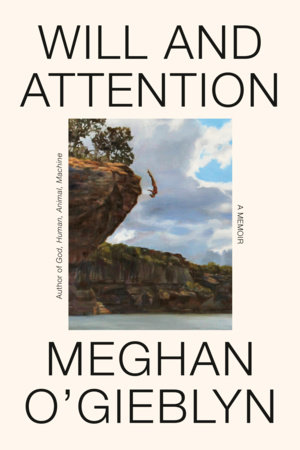 Why do we keep doing things we know we shouldn't? And is that really a failure of will? Author Meghan O'Gieblyn spent years trying to answer that question, first in response to her struggle with alcoholism and her loss of faith, and then by means of Simone Weil, William James, and Iris Murdoch, who argue that the will is powerless over the things we want to change most. Listen as she speaks with EconTalk's Russ Roberts about her new memoir, Will and Attention, which explores why paying attention does what effort alone can't, why we can reason ourselves into doing destructive things, and why the choices that most shape our lives are the "choices in between the choices," or the ones we barely notice making at all.

READER COMMENTS
Doug Iliff
Oct 6 2026 at 7:21pm
It was at this point that I realized the problem was not about cliff diving, but about gravity itself. Why didn’t each of those divers fall immediately to their death? Which is to say, why were all of us fragile, earthbound creatures not always constantly falling to our deaths? Why in this universe ruled by force and blind chance was everything not crashing relentlessly into everything else? How is it possible that healthy babies were ever born, that car trips were completed without accidents, that flights departed and landed every day without a crash? It was as though the theodicies that had preoccupied me for years suddenly inverted themselves. The riddle was not the problem of evil. It was the problem of good.
This is a great passage in response to the issue of theodicy, and a lovely expression of a deep thought. C. S. Lewis gives a lengthy and thoughtful book on the same issue: The Problem of Pain.
But I’ll add a brief anecdote.
I was sharing a meal with George Brett, the Hall of Fame third baseman for the Kansas City Royals. He related a story about his visit to the deathbed of great reliever Dan Quisenberry, who died of a brain tumor at the age of 45, four months after being inducted into the Royals Hall of Fame.
Brett asked him “Dan, why you?” Quisenberry, a dedicated Christian, responded “Why not me?”
Ultimately, we’re all just dust in the wind. But how many blessings we take for granted on the journey!
David Clark
Oct 6 2026 at 9:26pm
I hesitated to play this episode. The title didn’t grab me, but I decided to try it – it was one of those suprises where it spoke to me and I wouldn’t have guessed that it would.
I am also watching Severance on AppleTV – The protagonists are suppressing trauma (at the time of being severed, not asking why not me) via will/surgery vs attention (explicitly non attention since they don’t have the memory)
Thank you for this episode
Jody Mullins
Oct 7 2026 at 9:54pm
I recently read this paraphrase from Emerson’s essay on Self Reliance:
“Men imagine they communicate their virtue… only by overt actions and words. They do not see that virtue or its opposite emits a breath at every moment.”
Russ and Meghan got at this idea beautifully. Great episode.
Michael Walters
Oct 22 2026 at 5:09pm
Dear Russ and Meghan,
Thank you for such an engaging conversation. However, one thing I wish you two had done from the start, was to agree upon a working definition of addiction. I’m especially interested to know how you might approach behavioral addictions (love, sex, gambling, shopping, pornography). From the context of the conversation, I assume that you have excluded these behaviors. However, I remain interested to know how you might have defined addiction. Is alcoholism only a matter of degree? Or is there a qualitative difference between heavy drinking and alcoholism? And if you were to agree on a working definition, how might that inform your brief discussion of nicotine use, and even the potato chip phenomenon?