Incentives matter, sure. But what should you do when following the incentives means quietly participating in something wrong? Psychologist Adam Mastroianni argues that obeying bad incentives--shading a headline for clicks, keeping the found wallet because no one's watching--is "loser behavior," a surrender of the hardest and most human task: figuring out right from wrong for yourself. In this wide-ranging EconTalk conversation, he and Russ Roberts explore Le Guin's "Omelas," the "big fish" you glimpse that could upend your whole life, and Charles Sumner's near-fatal courage. They wrestle with whether good incentives or good people matter more, why lavish academic salaries may attract exactly the wrong scholars, and the moral lessons of marriage.
How We Tamed Ourselves and Invented Good and Evil (with Hanno Sauer)
What if humanity's capacity for cruelty was actually one of our greatest moral achievements? That's just one of the provocative ideas philosopher Hanno Sauer explores in this conversation about his book The Invention of Good and Evil with EconTalk's Russ...
Making Your 80,000 Hours Count (with Benjamin Todd)
If you want to change the world, how you spend your 80,000 working hours may be the most important decision you can make. Benjamin Todd, founder of 80,000 Hours, joins EconTalk's Russ Roberts to dismantle the career advice you've been...
Explore audio transcript, further reading that will
help you delve deeper into this week’s episode, and
vigorous conversations in the form of our comments
section below.
"Brown v. Board of Education (1954)." U.S. National Archives. 1954 Supreme Court decision overruling the "separate but equal" principle set forth in the 1896 Plessy v. Ferguson case.
Adam Smith. Biography. Concise Encyclopedia of Economics.
Milton Friedman. Biography. Concise Encyclopedia of Economics.
* As an Amazon Associate, Econlib earns from qualifying purchases.
AUDIO TRANSCRIPT
Time
Podcast Episode Highlights
0:37
Intro. [Recording date: August 12, 2026.]
Russ Roberts: Today is August 12th, 2026, and my guest is psychologist Adam Mastroianni. His Substack is Experimental History. This is Adam's fifth appearance on the program. He was last here in April of 2024 talking about our emotional thermostat.
Our topic for today is close to my heart: incentives. And it's based on a recent essay of Adam's, "Incentives Are for Losers." Bold, bold claim. Adam, welcome back to EconTalk.
Adam Mastroianni: Hey, thanks for having me back. Good to be back again.
1:09
Russ Roberts: Now, you start off your essay saying something that most economists would agree with, which is the bad things we see around us--pollution, polarizing social media, scientific fraud--these are due to bad incentives. And, that's the problem. And, the economist sees this and says, 'If we want to make the world a better place, we need better incentives.' But, you're not as impressed with that argument. So, what's wrong with that viewpoint on the world?
Adam Mastroianni: First, I feel like I should say what is right about it, which I do think this is a better analysis than, I think, the default analysis that people have, which is people do bad things because they are bad.
Russ Roberts: True.
Adam Mastroianni: And, they produce badness from their internal stock of badness. And, isn't it so bad? There's so many bad people. If only we could, say, put them all on an island or launch them into space.
And, so, there is something I appreciate about the incentives analysis, which says people at least have reasons for what they do. And, if we think through the reasons, we might be able to identify why they're doing what they're doing. And, if we could change the reasons, maybe we could change the bad behavior. I've got no problem with any of that.
But it does, I think, miss something, an important caveat, which is: if you are one of these people who is doing something because an external reward structure tells you it's good and will give you a pat on the head or a little treat or a reward for doing it, that's loser behavior. That, as we are trying to fix the incentives so that people don't try to game the systems and do bad things, we should also not try to be one of the people who is gaming the systems and doing the bad things. This is the critique that I wish was also part of the analysis, which is: even if you have a reason to do a bad thing, you shouldn't do it. I realize it's an obvious point, but some points are so obvious that no one ever thinks to say them.
3:00
Russ Roberts: Yeah. I don't think it's such an obvious point, actually. I'm going to invoke one of my favorite short stories. I don't know if you can get it online anymore, but it used to be online. It's called "The Ones Who Walk Away from Omelas."
Adam Mastroianni: Yeah. I've heard of it.
Russ Roberts: If it is online, it's probably a pirated copy, and we will not probably link to it, but you can find it if you look for it, I suspect. It's by Ursula Le Guin, and it's a magnificent story. It's very short.
[SPOILER ALERT, till time mark 6:26] The story is very simple: that there's this magnificent village, Omelas, and she describes with great power the pleasantness of living there. It's just absolutely delightful. And then, she just mentions that everyone in the town knows that the joy and delight and prosperity of the town depends on the existence of a small child who is kept in the basement of a building under horrific conditions and who has a miserable time of it. It's an example that comes from The Brothers Karamazov. Some people suggest she took it from there. Some say it was just independent; maybe she's influenced unconsciously.
But, the point is very simple. It says that if you live in this town, you have a glorious time, except there's this side-cost of incredible suffering of a child kept in a miserable state. And, the story is very simple: that there are some people who walk away from Omelas. They cannot handle, they do not accept, that trade-off. They do not want to profit from that system. So they just leave town. And, on one level, that's crazy. Why would you want to leave one of the most beautiful places on earth? But, on the other hand, why would you want to be a party to grotesque suffering, no matter how many there are of you who are benefiting? And the incentives are to stay.
Adam Mastroianni: Yeah. This story was on my mind as I was writing this piece. There was a section that I ultimately cut that was about--in that story, you have a metaphysical connection to this child. That it is basically some kind of enchantment that causes the good from the bad. In real life, I think our connection to the suffering is much more of, like, a Rube Goldberg machine situation where, like, I am not the person torturing the child. I'm actually three warehouses away. I'm just the hammer that swings and hits the ball that rolls down the ramp so that it lights the match. And, all the bad things are very far away from me, and I'm not personally causing them. I am in the causal chain that ends up with the bad thing happening, but it's not me doing it.
And, I think this makes it a lot harder to walk away because you're so much further from your responsibility, and it feels so much less heroic. Leaving the Rube Goldberg machine is not shaking the dust of Omelas from your feet as you walk away. It looks much more like, I'm not going to be VP [Vice President] of brand partnerships at Philip Morris. It's just not a kind of heroic story that we see depicted on screen or in the epics that animate our culture, which I think is why it's harder to be inspired to exhibit that kind of bravery.
Russ Roberts: We're way off the rails. We'll come back to your essay in a second, but I think it's interesting because I think that you can debate what Ursula Le Guin's point is. And, I used to teach that story and ask students: What do you learn from the story? What do you think Ursula Le Guin wanted us to learn? In my mind, it was an anti-utilitarianism lesson, but not everybody agreed with that.
And, in fact, your example of the Rube Goldberg machine--that you're part of this unbelievably complex system and you're not delivering the pain and suffering firsthand in any way--that perspective is, of course, what encourages some people to say, because it's a complex system, we got to burn the whole thing down and start over.
And, on both the Left and the Right these days, I think there are people who see the world as so dispiriting, ironically, even though they are on the Left and the Right. You'd think one side would be whooping it up and the other side would be angry. But, they just say, 'If I walk away, it doesn't accomplish anything. They just slot another person into my job. So, I have to burn down the whole system. I have to destroy it and start over.'
And, I think that's a mistake. I think that's an incredibly dangerous attitude, but that's not the point of your essay. So, unless you want to add anything to that, I'm going to move on.
Adam Mastroianni: No. No. I think it's totally tied in: that I think one reason why people think it is acceptable to obey the incentives is just like, look, things are so complicated. There's no ethical consumption under capitalism, and whatever the Right's version of that is, there is bad in the world that's beyond my capacity to do anything about. So, if I can't burn down the whole system, I might as well participate in it. And maybe I can reduce the child's suffering by .3%. And, I think, like, 'Yeah, of course, problems in the world are very complex.' You don't get to pull the lever yourself, which is why I would rather think about: What's the good that you can do? What is the internal locus of control you can have? What are the things that you value? How can you do that? And then, hope that other people do the same.
And, the complex system is an emergent property of all the decisions that each of us make. If we all made different decisions, the system would work differently. I understand a lot of people are not going to make those decisions. Doesn't mean you shouldn't.
And so, I think there is some appeal to complexity here that is also an exculpatory account: that things are so complicated that if I can't be pure, I might as well be fully impure. What are you going to do? And, I don't think you have to.
9:02
Russ Roberts: I think the challenge is, for most of us, is that you have an opportunity. It is a mixed bag, perhaps, in its impact on the world, but you rationalize it to yourself, saying, 'Well, I won't do the worst things that I could do in that job. In fact, I'll go the other direction. I'll be ethical--fill in the blank.'
Of course, the incentives are very strong. The incentives are for you to--I'm going to move away from a brand manager at Philip Morris. Let's just take somebody who runs a social media account, which is incentivized to get attention and eyeballs and clicks. And so, you shade the headline in a way that makes it angrier, crueler, less honest; and eventually you convince yourself that that's not a big deal because we need people to read our publication and so on.
So, I think that's the challenge in most settings where we find these issues. The incentives are designed to push you toward--not evil, but not good.
And, your point, I want you to elaborate a little more because we just barely touched on it, is that: Well, isn't it normal to follow incentives? In fact, isn't even rational to follow those incentives? Why would you expect me to do anything different?
Adam Mastroianni: I think because a key part of human development, I think, is figuring out what's right, what's wrong, and how you personally can increase the right and decrease the wrong, to develop a value system that--this feels to me like part and parcel of the development of secondary sexual characteristics in adolescence. Like, that happens. And meanwhile, you are also trying to do this thing. Like, this is part of the human mission as you go through life, is to figure out: How do I slot into things? Where can I help? What's going wrong? How can I help something go right?
And, I think if you don't do that, if you outsource that process to a bureaucracy, to an incentive structure, to the ambient norms of the culture around you, I think you have declined a key quest of human existence.
And, to me, that's just loser behavior. That is just allowing someone else to colonize your value system in such a way that you are giving up this key part of your identity.
And, maybe that's kind of extreme, but I think it is far more extreme to go, like, 'Why do I have to think about anything? Why can't I just do what gets rewarded?' And, I think if you do what gets rewarded, you can start as amoral, and you can end up being deputized for the immoral. Which I think is where a lot of people end up. I think there are few villains. There are many people who don't have a strong sense of right and wrong, and that can be turned into an army by the villains.
Russ Roberts: So, when we think about how to make the world a better place--writ large in terms of public policy--the economist is arguing we need a better incentive structure, typically. Are you suggesting we should be encouraging people to be more moral, and that's the way we can make the world a better place?
Adam Mastroianni: Yeah. I don't know if it really works in the sense that, like--like, the surgeon general issuing a warning against smoking, someone else in the government issues a dictat that we should all be moral. I don't think that is the way that people become more this way.
My own part of it is trying to write a blog post that I think gives people a useful metaphor for thinking about it. I think it's something that we should expect of ourselves and encouraging other people. I don't think it's the kind of thing that can be centrally organized and required and mandated and cultivated. Often, when governments try to do this, it turns dark quickly. But, I think the goal is to produce the kind of person who would do the right thing even when it is inconvenient, and even when it is much more than inconvenient--even when it could cost you dearly.
Russ Roberts: Yeah. I have faced a number of ethical challenges in my life. I'd love to brag about them on air, but I won't because they'll sound self-serving and embarrassing. And I'm sure there are times when I have implicitly made a choice to do something that maybe wasn't so honorable or ethical because it was pleasant, and I rationalized it as not really bad for the world, but good for me and the world.
13:50
Russ Roberts: So, let me indict my profession for a minute. I think one of the downsides of economic education is to convince people that what is self-interested is good for the world. Now, there is an aspect of economics where the pursuit of self-interest is good for the world. So, if I own a restaurant and I make great food at good prices and I treat my customers well, I'm going to make good profits. And, that's where there's an alignment, we hope, between self-interest and public interest, and the public good.
But, it doesn't always have to be the case. And, I think a lot of mediocre education trains people to think that if it's rational, it must be good.
I once taught a class online to a group of high school students. Mercifully, I've forgotten the name of the high school. But I asked them whether you should keep a wallet that you find in the street if no one sees you. So, you discover a wallet, and it's got a lot of money in it, and no one's around, and so, should you keep the money or try to return the wallet? And, they all said, keep the money. And, I said, 'What?!' And, they said, 'Well, because that's rational.' I thought, 'Wow, rational does not mean true and right.' And, that's really the point of your piece.
Adam Mastroianni: Yeah. And, I think sometimes doing the right thing should make you feel crazy because it requires you to do things that everyone else thinks is a bad idea.
But, I think beyond the sense of craziness, there's a sense of clarity. That, I, too, have had plenty of ethical lapses and some triumphs in my life that I won't brag about. And so, instead, I'll put it on someone else.
I read this account, this interview with monks living in a traditional monastery, and they go, 'Our life is very easy because we just do whatever God wants. And, as long as we do that, we know we're fine.' And, I'm sure that I don't share a lot of values with the monks. We probably have disagreements about what God wants and doesn't want. However, there is something about that feeling that I think is worth reflecting on, which is: What if life actually was much easier? And: What if you just decided that you were going to do the right thing as best as you can figure it out in any situation?
Whenever I've been able to inhabit that mindset, there is this sense of very deep freedom that comes with it of, like, 'Oh, I don't have to pretend or lie anymore. I don't have to try to construct elaborate justifications for why the thing that's best for me is also the right thing to do.' I give up on all of that. And, instead, I try to make my peace with the consequences of whatever it was I did.
I could tell a very silly version of this where the stakes felt very large to me, but would seem very low to anybody else. When I was on the academic job market and giving job talks, I was at this point in my thinking about psychology that we've talked about in previous conversations, where I just don't think the future of psychology is doing more of the kind of thing that I did. Even though I thought my dissertation was good; I'm still proud of it. I think it holds up, but I don't want to spend my career doing another hundred of those. I don't think that is going to unlock a paradigmatic version of psychology. I don't think that's the future. I think we need to do something very different. And, it would have been really convenient for me in giving my job talks to pretend I had never had any of these thoughts at all. And, I'm going to continue to produce these high-prestige publications. Just hire me and give me a shot and pay me a lot of money and the machine will keep running.
And, I just decided, the day of giving my job talk at the place I wanted to be the most, I wasn't going to lie at all about anything. I was going to talk about my dissertation and then append it with this thing at the end where I'm like, 'By the way, I just think the future of our field is way weirder. Here's what it could look like. Here's how I want to do it. I think we could have a paradigm. I think we could do it in our lifetimes. And, the work I showed you, I like it. I think it's cool, but I don't want to do more of it.'
Russ Roberts: They started applauding wildly, and they carried you out of the room on their shoulders, and they all said, 'We're with you. Where are you headed? We'll follow.'
Adam Mastroianni: Yeah. You're the president of the university now. No, what happened was privately, in every conversation I had, people said, 'I think this is cool. I don't know what other people think.' And, I never met the person who thought it was uncool. They never identified themselves.
And, obviously, they didn't give me the job. That would have been insane for them to give me the job. And, that was one of the most frightening days of my life. It was also the day that I felt the most powerful, because I felt like I've decided to tell the truth, and I'm already dead. They can't kill me more. And, I had this experience of talking to all these people who had this job that I supposedly wanted so bad, but it felt to me like I was free and they were in prison. That they couldn't say the things that I had said, and they couldn't do the things that I wanted to do because they decided--and maybe that was the right choice for them, that's not to indict them, But it made me feel, in a perverse way, very free--not perverse--in a paradoxical way, very free and powerful.
Even though the consequence was I did not have a job, but it felt like I didn't have a job for exactly the right reasons. And so, in that moment, I felt a little bit of the same freedom that I think the monks had, which is just, yeah, what if you just give yourself over to doing the thing you think is right and then try to make your peace with the world that results from that? Which, it's so much easier.
Russ Roberts: Man, I love that. You can be hungry, though, and you can fail to feed your family. So, it's not quite so straightforward.
And I want to just say, for the economists who understand these things: obviously, when you do a cost benefit analysis, you try to do what's rational, you could include the good feelings you get from doing the right thing. We're talking here about really forfeiting monetary or direct benefit to yourself in return for doing the right thing. And, that's sometimes really hard; and you don't want to just make it completely tautological and say, well, obviously people who do the right thing are rational because they get the satisfaction from returning the wallet. And, some people do, but some people would rather have the money. And, ethics and morality are about returning the money even when you want it and you don't feel good about it, that you had to give it back, but you did think it was the right thing to do.
20:33
Russ Roberts: Let's talk about your career for a second because that'll get us to another important idea in this piece, which is the big fish. What's the big fish, and what happens when you see it, and what happened to you? When did you see it?
Adam Mastroianni: The big fish is this idea that comes from H.P. Lovecraft, which--I read a collection of his short stories, which I don't really recommend. I feel like he walked so that later horror writers could run. But, I was interested, and I just kept realizing, oh, every story is kind of the same. Every story is about a guy who sees something that is so freaky that he goes insane.
And, one of the earliest stories is called "Dagon." It's about a guy who gets lost at sea, and he sees a fish god or a fish demon that is so--apparently, so grotesque that he's not right for the rest of his life, and he ends up throwing himself out of a window. And, I thought, as I read this, that this is a useful metaphor because I think that deep inside everyone's psyche is this fish that, if you see it, you will go insane because, if you really take it seriously, you will have to upend everything about your life. This is some unexamined assumption, some belief that you have. This is basically opening the door and seeing the kid in Omelas. It is realizing that that's the situation that you're in.
And, I had a situation like this. Not so dramatic, but in 2020, just before the pandemic really hit in the United States--it was like the last chance for anyone to have a conference--I was at the annual social psychology conference in San Francisco [SF]. Social psychology, as I'm sure most people know, very concerned with social justice. How do we improve the world? How do we help people get along? How do we overcome prejudice? And, all that seemed totally normal to me until that year, when the conference hotel was in the middle of the Tenderloin in SF, which is, I think, maybe a little better now, but at the time was just really a site of human misery. People dying of overdoses on the street. It felt post-apocalyptic.
And so, inside the hotel, people are eating canapés, and they're giving talks about how we might be able to reduce people's implicit bias by this tiny amount that might be noise. And outside of the hotel, people are doubled over, their veins full of fentanyl. And, it just seemed like, I don't know if we are taking these problems seriously. It really seems like what we're doing inside the hotel is burnishing our CVs [curriculum vitae], and we are pretending that all of this will ultimately lead to the resolutions of the problems outside. And, I'm just really not sure.
I do think that the problems in the Tenderloin in SF can be solved through increasing our knowledge. I don't think we know how to solve the problems quite yet. And, even if we do know the right solutions, we don't know how to convince people to take them up. But, I don't think the kind of research going on inside the hotel was ultimately going to lead us there. And this was a moment of crisis for me, where I was, like, what does it mean to participate in this field where we are, I think, somewhat pretending to be really concerned about some of these social problems while ignoring the ones?
And, there's especially this moment where I realize, like, oh, people are hustling by people in need to give lectures about social justice, which is one of the classic findings from social psychology. There is a study from the 1970s where they get a bunch of seminary students, and they either assign them to give a neutral lecture about career opportunities or a lecture about the Good Samaritan, which is a biblical story about stopping to help someone in need. And so, they're randomized on that dimension. And, they're also randomized in terms of whether they're told that they're late to give their lecture or whether they're on time or early. And, this is an old study, so take all the findings with a grain of salt. But, what they find is that it doesn't matter what lecture they were assigned to give. It only matters whether they were hurrying or not.
If they think they're late, they rush past. On the way, they see this guy who is slumped over. He's part of the study. They don't know that. And, the thing that's being measured is just: do you stop and check on this guy or not? And, all that matters is: did you think you were late to give your lecture, not what you're lecturing about?
So, there are these people who are about to go and lecture about how we should stop to help those in need, who just did not stop to help this guy in need because they thought they were five minutes late for their talk.
And so, given the fact that one of the most famous findings in social psychology--everybody inside the hotel knows it--but none of us even feel conflicted about it. I don't even know what the right thing to do is. Obviously, we're not going to be able to solve the homelessness and drug crisis in SF just on our way to the hotel. But, the fact that it did not even seem to be on our minds was the version of the fish that I saw.
Russ Roberts: If you want to really indulge in an absurd science fiction fantasy that would make a movie that would never be made because it would be not just implausible, but, for a hundred reasons--imagine if, like in your job talk, you had tried to mobilize the people inside the building to help the people outside. And, you'd walk into a presentation of a keynote where there might be 250 people listening to a very renowned academic, and you'd say, 'Excuse me. I'm sure we've all seen the folks out there. Of course, we can't solve that problem overnight, but I've decided at least we should spend our three days here together--let's break up into different groups. We'll have some--one group that'll work on this and another group on that. Who is with me?' And, the answer is, 'Could the security people come here and take care of this man?' Because we have work to do. We have our papers to present and our CVs to burnish. It's kind of dispiriting.
But, the example you give in the book, besides your own story--and by the way, I'm happy to see you're in an apartment. You have not made this sacrifice of--you've made some kind of sacrifices academically, but you do have a roof over your head.
Adam Mastroianni: Totally. Yes.
Russ Roberts: I'm glad the world is such that Substack and other things allow you to do that.
Adam Mastroianni: Me, too.
27:02
Russ Roberts: But, you talk about Charles Sumner. So, tell the story. Charles Sumner is a phenomenally fantastic example of this. And then, I want to turn after that, and we'll talk about what we might call conversion of people when their world gets flipped on its head.
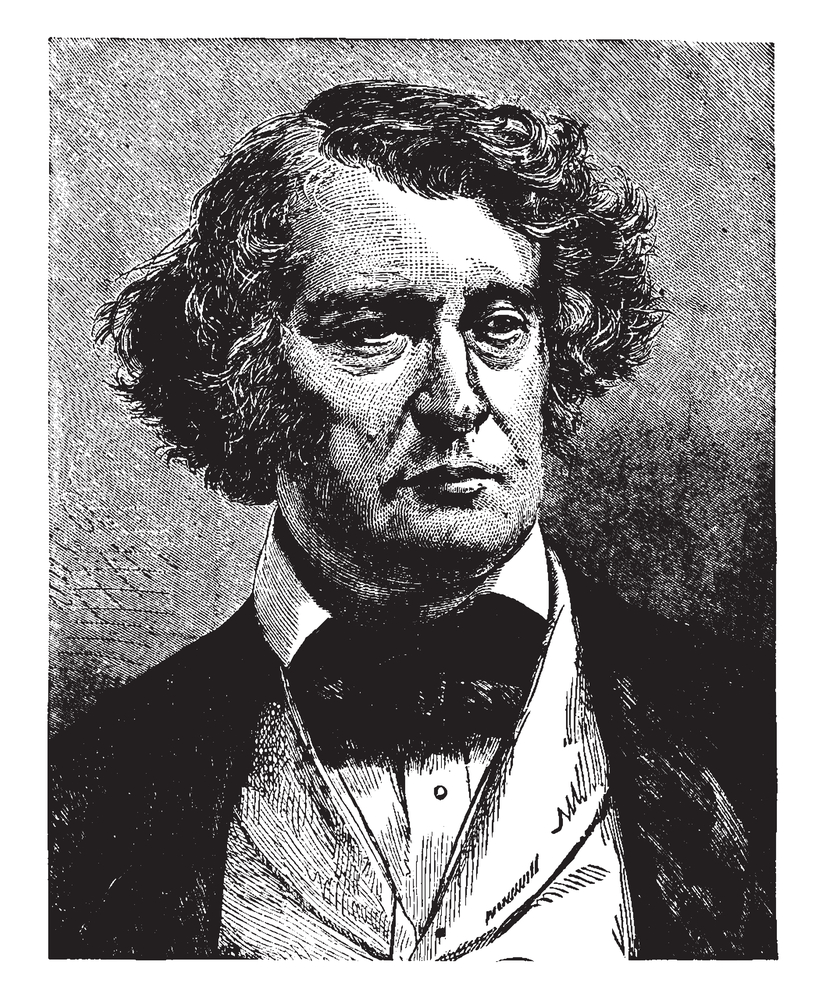
Charles Sumner, abolitionist, lawyer, U.S. Senator
Adam Mastroianni: Yeah. So, Charles Sumner--I've really first started thinking about him because there was a statue of him that I would pass most days on my way to the department. And, I kind of knew this story--
Russ Roberts: When you were in graduate school?
Adam Mastroianni: When I was in graduate school. Yeah.
I kind of knew the story of, at some point pre-Civil War, there was a senator, and another congressman beat him nearly to death with a cane. And, I understood that that was this guy. And so, I always felt a little moved walking by the statue that was basically ignored. No one really paid any attention to it.
But I looked into his story, and there's a lot more to it than that one violent incident. He's a kid born in Massachusetts before the Civil War. He grows up poor, even though his family has previously been in a higher socioeconomic strata. His dad is an illegitimate son, and so he's on hard times. He grows up in a part of Boston at the time which is home to a large population of formerly enslaved people. So, he's growing up next to African Americans. I don't think we know a lot about that part of his life, but certainly there's an experience here that most people don't have.
At one point, he goes to France, and he sees at the University of the Sorbonne white and black students studying together as equals, and he writes in his diary at the time. He says, 'Okay, so clearly the difference between people cannot be because of their nature. It must be because of their education. Because clearly it is possible for white and black people to be equals.'
He becomes an outspoken abolitionist and taking positions that were seen by people--it's crazy at the time. Like, these won't become common-sense positions for another hundred years, 150 years. Not only the abolition of slavery, but racially integrated schools, black suffrage. These are things that even the people who are, like, 'We can agree with you on slavery, but let's go slow.' He's extremely provocative.
He becomes a politician, a senator; and it is in one of these moments where he's delivering a very fiery anti-slavery speech, indicting various congressmen from the South, that a couple of days later, one of these congressmen, who has taken a lot of umbrage at this speech, approaches him sitting at his desk and just starts beating him with a cane. Nearly kills him. He's trapped in his desk. He's in a pool of his own blood. Takes him more than a year to recover.
But, when he does, he just goes right back at it. He goes back to being a provocateur. He pushes Lincoln to do the Emancipation Proclamation two years before it actually happens, at a time when people think it's an insane thing to do.
And I just look at this guy as, like, just kind of what it looks like to do the right thing no matter the cost. But, like, it is very hard to almost die and then come back and keep doing it. Not that he was right on every single thing. He doesn't seem to have had a lot of desire for women's suffrage or women's rights. But whatever: this is very far--not 'whatever'--but this is very far in the past. And, in one sense, he's looking very far in the future.
A lot of the legislation he tries to write, a lot of the arguments that he makes, are defeated or at least watered down at the time, only to reappear in Brown v. Board of Education.
So, I read--his newest biographer says that in the brief for Brown v. Board, Sumner is cited 40 times. That this guy is laying some of the intellectual groundwork for this case that he has no idea is ever going to happen when he dies. The Civil Rights Act of 1965 includes some of the things that he tried to get past a hundred years before that. And, I don't know.
So, when I pass by that statue now, which is much less often, I just get this feeling of, like: This is the kind of person I want to be. Not point for point, but the kind of bravery that I aspire to have. Like, what must it be to be the target of an assassination attempt and go, 'I'm just going to keep doing the right thing'?
31:22
Russ Roberts: Yeah. The image, which I love, of him standing on the threshold of a classroom and seeing this puzzling--must have been bewildering--picture of blacks and whites studying together was his fish. This is what you say in the book. That's his big fish. It won't let him sleep at night anymore and forces him to reckon with a whole set of views that he's holding at the time and to throw them away. And, instead of just saying, 'Huh,' and moving along--which is the person coming into the conference past the homeless drug addict: 'Huh. Okay.'
I spend time thinking about how to educate people about all kinds of different things. And, we don't have a very good theory of how to inculcate the, quote, "right thing." Religion is one way to do it. It doesn't always work. Not all religious training creates good people, although I think most of the time it often does. Obviously, there's problems with religion writ large, so I wouldn't overstate the case for religion, but a combination of parenting with some sort of value system usually either creates children that are like you--or children who hate you and are going to do the opposite thing. But, either way, you can see a fish somewhere down the line.
So, if you're raised in a household with a particular religion or a particular ideology--Left, Right, a political ideology--and you go out into the world, most people keep the ideology they grew up with. They stay in their religion. And, yet, at the same time, there are people who convert. They leave a religion, or they attach themselves deeply to the religion when they were raised without much of it; or vice versa, they leave it, the practices; or their parents are one type of political ideology and they don't want to be like their parents. But, I don't think it's merely a question of making the best arguments and studying these questions thoroughly.
So, when you think about Sumner, Sumner has an epiphany. He sees the fish. He has this experience that does not sit well with his beliefs, and he adjusts them. Most of the time, we don't. I don't think it has anything to do--it doesn't have a lot to do with analytical thinking. You want to react to that claim? Do you agree with me?
Adam Mastroianni: Yeah. Yeah. I don't think it's necessarily something you can reason yourself into, because if you try to reason it, it's hard to sit down and think, 'All right, now I shall inspect my most deeply held beliefs and see whether they hold up or not.' You're just not going to be able to get into the basement there, to get down to the foundation. Which is why I think you need some kind of inciting incident to open the door to the basement. And then, the question is, do you go downstairs and take a look around and change your life depending on what you see there, or do you close the door and keep walking? That is, I think, the choice that it's given to people.
Which is why some of the people reacting to this post have said, 'How do you find the fish?' I don't know if you can. I think the fish finds you, and you decide whether you're going to look it in the eye or not. Maybe I'm wrong and you can engineer this opportunity for yourself, but I actually think it requires some moment of crisis to loosen up all the assumptions and to realize, 'Oh, I might be really wrong' about something. And, I don't know if that can be self-instigated, and I don't know if it can come from a series of logical analyses. I think it's got to get you somewhere deeper in the gut.
35:40
Russ Roberts: Yeah. I'd ask listeners to ask--I ask yourself the question: Have you ever changed your mind about something fundamental about your identity? I think most of the time the answer is no.
I used to get interviewed--I don't get interviewed any more about this--but I used to get interviewed by people asking, did anything about, say, the financial crisis change your view of economics? Did anything about COVID [Coronavirus Disease] change your view about X, Y, Z? And, on a certain level, I've been pretty consistent in my views, which I like. That makes me feel good. I like to think that I'm a principled person. But at the same time, don't I learn from things? Doesn't the world affect me? And, when I look deeper into my heart, I think I see things often where--it's not a radical change. It's not like you go from being pro-slavery to anti-slavery. But you realize that a dogmatic view that you held doesn't hold up quite as well as you thought.
Just one example, isn't too self-congratulatory. After I went on a silent meditation retreat, which was very much oriented toward being empathetic about other people, I like to think, and I might be fooling myself, that I became a little more empathetic. That, situations where I would be judgmental, I was more tolerant.
And, in a way, that's kind of a really small thing. But, sometimes I would think, 'Well, maybe I'm underestimating how much that affected me and how I interact with the world.' I'm not a saint. I make plenty of cruel and insensitive comments and reactions, I'm sure, despite that experience; but I do think it opened my mind to what I'm going to call, say, the bleeding heart view of the world, which is: everyone is in a battle, so be kind. And, I think that was good. I'm proud of that. I think that's a good thing.
So, I don't think all of us have to undergo some kind of fundamental rejection of some deeply held view when we confront something in the world that makes us maybe be suspicious of it, but I do think it's a healthy thing to be open to it.
Adam Mastroianni: Yeah. And, for me, part of this process has been being in a marriage. I don't know if this is a universal experience, but certainly for me, attempting to share my life with someone has been an opportunity to realize all of the default ways in which I am very selfish and in which I first think about what's best for me. And being married to my wife has helped me realize, probably in several key moments over the past few years of, like, 'Oh, I can think in a different way from the get-go. My first reaction to things can be what's best for her or what's best for us and not what's best for me.' And, again, it's the kind of thing that sounds so obvious that I understand other people get there fast. Some people get there slow, and I'm one of them.
And, it is really hard to articulate the extent to which that feels like going into the basement. That everybody thinks they're a good person, and it takes something like that to really get into the intimate parts of yourself to realize, 'Oh, in this way, I am maybe a bad person--certainly not as good of a person as I want to be.' And, sometimes it takes an argument, like an oversight, something to open the opportunity to have that realization, because at any point anyone could be like, 'Do you think you're as good of a person as you want to be?' And, everyone goes, 'No, of course not.' But, you're never going to take it seriously until the stakes are high. If the stakes are, 'How do I live intimately with someone else? How do I build a life rather than build my solitude?'
Russ Roberts: Yeah. I've probably quoted this before, but a friend of mine, his father told him that: 'Until you get married, you're an idiot.' It's a blunt way to put the insight you're talking about. And, I don't want to suggest that all single people are idiots, but it's certainly the case that marriage forces you to step outside yourself in certain ways that's harder when you're single, don't have a person you're sharing a life with.
40:20
Russ Roberts: I want to say something about social circles, because I do think that when we think about these incentives--you know, Adam Smith talked a lot about how we want to be lovely and we want to be loved. So, we want the approval of the people around us. So, an underappreciated aspect of that insight is that you want to surround yourself with people whose approval you want, who are good people rather than charlatans and hoaxters and scammers, because--well, I don't know whether you do or not, but I do. And, that way, the social incentives of approval and disapproval will reinforce what you want to become. So, that's not easy to do either, but I think it's a good thing.
Adam Mastroianni: Yeah. Over and over in my life and in the lives of people close to me, we have been just desperately trying to get opportunities from people that we don't respect. And so, we're in this absurd position of, like, 'I think they're bad people. I think they're totally wrong about what's good and bad in the world. I really hope they let me into their club so I can--.' So I can--what? You're inevitably going to become more like them. You can't help it. That's just what happens. At the same time, when the opportunities that they have are very prestigious and attractive and well remunerated, it is hard to say, 'I just so don't trust this person's judgment that even though they could shower me with success, I am going to go do something else instead.' And, I think when you're able to get there, that is that moment of freedom that I was talking about before. That, just like, 'Oh, this person doesn't have any power over me anymore.'
I used to teach negotiation to MBAs [Masters of Business Administration] and executive MBAs, and there is this lay theory of power that people have coming into that class: that, power means your ability to coerce other people to do things.
And, I think that is obviously one form of power. But it's a very brittle form, because if you've ever had any of that power, you realize how imperfect it is. You can't really force other people to do things. Like, okay, they might comply with your directives, but they won't do it happily. They'll try to undermine you. This is why bosses and kings are always so upset all the time. You'd think they'd be happy. They have so much power. Like: No, they're so frustrated because they're so close to having the thing that they want, but they can't actually get people to do things the way they want them to do it.
And I think there's a different form of power which comes from the options that you have. So, in negotiation, we talk about your best alternative to a negotiated agreement: that if you're negotiating a job offer and you have another good job offer, there's just nothing that this person can do to you because you just walk away and go do this other thing.
And I think having a strong internal value system is like always having a good outside option. That, like, yeah, people can take things from you. They can put constraints on you. You're just going to do what you want to do within whatever constraints that you have. I think about, like, the artist who really wants to paint, and you take away their paints and they draw in the dirt. You take away the dirt and they draw on their mind. They're like, that person has a kind of power that you can do a lot of bad to them and you can really make them suffer, but you can't take that from them.
I don't think I'm that kind of person, but I aspire to be that kind of person. I aspire to have that kind of power that resists the coercion rather than tries to broadcast it.
43:57
Russ Roberts: I'm going to quote Milton Friedman. It's a powerful idea. It's at variance with your ideas somewhat. "I do not believe"-- [Source unknown. Might be paraphrase.--Econlib Ed.] Quote:
I do not believe that the solution to our problem is simply to elect the right people. The important thing is to establish a political climate of opinion which will make it politically profitable for the wrong people to do the right things. Unless it is politically profitable for the wrong people to do the right things, the right people will not do the right things either. Or if they try, they will shortly be out of office.
Close quote. I came very close there to imitating Milton. There's a second there--listeners will recognize that. But, what he's saying is: you want to make the world a better place in terms of public policy, again, he's saying: change the incentives, don't try to get the right people into office. I'm very connected to people both in England and here in Israel--I'm sure it's happening in the United States--who are trying to encourage good people to go into politics and make a difference. And, Milton Friedman would say that's a fool's errand. When they get in, they're going to face the same incentives as the people who are there now. And, if they want to stay in office, they'll end up doing the same things that the people are there. They'll become those people. What do you think of that?
Adam Mastroianni: I think I agree with half of it, which is that if you want to solve political problems, it isn't just a matter of electing the right people or electing good people. Also, good people have to be doing the electing. If the only good people that we have are the ones in charge, it doesn't matter. They're not going to be held to the right accounts. The people that they serve are not going to want them to do the right things.
So, like, yeah, totally, I'd rather a better political climate than a worse one, but I think we have two levers that we're trying to pull, and we should pull both of them. One is: how can we make the systems better such that they reward the right kinds of behavior? Like, totally, I think it is a very worthwhile intellectual project and a very difficult one. At the same time, how can we produce more good people who will do right things regardless of the system that they're in? I think such people can exist. I think if we try, we can make more of them. And, at the very least, each individual can decide whether they want to be one of them or not.
And, I think if no one does that, then, yeah, of course, it doesn't matter who is in charge. But, if we can do that, then it does matter a lot who is in charge. That, like, this climate and this system that we're describing is made out of people. And, if it's made out of good people, it'll be good. And, if it's made out of bad people, it'll be bad.
46:47
Russ Roberts: The more I think about it, the more I think it has to do with Lord Moulton and his idea of obedience to the unenforceable. So, when a nation first starts--we look back on America, and we see this incredible generation of Adams, Jefferson, Washington, Hamilton. They are people who felt they should do the right thing. They might not have agreed on what the right thing was, but they clearly had the good of the nation somewhere in their core. Here in Israel, we're 78 years old, so we're on the third or fourth generation of leadership. And, the farther you get from the founding and the romance and the culture of that founding, I think the harder it is to preserve the idea of doing the right thing and the more it is: What's in it for me? And I think one of the problems in America--which is, of course, 250 years old; plenty of time has passed--there's been a slow and steady erosion of what we might call public spiritedness: people willing to do the right thing even though it might hurt them. And, that's terrible. It's hard to understand how a democracy can survive that.
So, in a way, when we talk about, well, we need the better incentives or we need the better people, what you really need is a culture that has those incentives built in as the kind of emotional conscience rewards that I was talking about earlier. And, if you don't have that, it kind of doesn't matter what the incentives are: you're not going to get good outcomes. So, I think that's really a problem with the West writ large these days, is that the political process does not have the culture that it once had, and it continues to deteriorate.
Adam Mastroianni: I read a really interesting book recently, you might be familiar with, called Fear of a Setting Sun, which is by a historian who makes this claim that almost to a man, the Founding Fathers of the United States became blackpilled on America before their death. Basically, they went to their death saying, 'We tried, guys, but it didn't work.'
So, you have Thomas Jefferson saying shortly before his death: My only solace--I'm paraphrasing, but--my only solace is that I will not be alive to see the dissolution of the country, but it's coming soon. Washington, similarly, Adams, similarly. They all lived long enough to see this period after the Revolutionary War when we no longer have a common enemy. Now we have our enemies in common. And, there, I think, was this very naive sense that the spirit of 1776 was going to carry on forever and that we weren't going to have these internecine feuds. And, it's such a bad sign that we do, and it means that doom is coming. And, I could totally understand why they felt that way. But, 250 years later, we're still here. Not how they thought we would be.
Russ Roberts: I think Adam Smith understood that. He said, 'There's a lot of ruin in a nation.' By that he meant you can get by with a lot of mistakes. But, there is a point where maybe you've used up your credits.
50:15
Russ Roberts: Let's apply this to academic life, which has a similar, I think, problem with ethos and norms and the unenforceable norms that people were once obedient to, but now not so much. I'll just use myself as an example. When I came out of graduate school, I earned $18,000, roughly. I think it was $18,600. And, it may have been almost $19,000, $18,800. Yeah. You could correct for inflation. It's not as bad as it sounds. And, I was very happy that I wasn't working in finance or for the chief economist's office at a major U.S. corporation, where I could have made a lot more money, but I would have died. I would have just been shriveled up. I would have walked out of it almost, eventually. I like to think maybe if I'd gotten to enjoy it, I would have gotten used to it.
But, when academic life was not so lucrative, one could imagine that it attracted a group of people who were interested in discovering things and teaching and so on. And, as academic life has gotten increasingly lucrative, where there are professors in economics who make over $500,000 a year, for example, or $750,000 in some situations, and economics in one of the more lucrative fields because it has to compete with finance, which is a whole 'nother issue. So, I understand that in other fields it's not as lucrative. But, once, if it gets to be a very pleasant--not just a very satisfying place, but a very pleasant material place--surely it's harder to keep the norms of honesty and truth-seeking that created the discipline in the first place.
Adam Mastroianni: Yeah. I think, similarly, when was Christianity at its best? I think when there was a possibility you could be thrown to the lions.
But, I think the reason that is, it applies a very strong selection effect, that: who is the kind of person who is very attracted to making $750,000 a year is, I think, often not the kind of person who is going to make a great professor. And, I think that the effect of those salaries is less that it corrupts people who might otherwise have been good versus it attracts a person who should not be there, and it puts them in competition with one another. So, yeah. I agree, but I think it draws the wrong kind of ethos because it allows the wrong kind of person to exist.
Russ Roberts: So, help me out here. Save my free-market ideals. Surely, when you offer $750,000, you're going to get the best professor. Why wouldn't you? It's going to draw the best academic. What's wrong there? What's wrong with those incentives?
Adam Mastroianni: That, I think, what you want out of a professor is the kind of person who is willing to prioritize the truth above all else. And, if you make it very financially attractive to be a professor, you're going to attract a bunch of people who do not prize the truth above all else.
And especially if your selection procedures are not good at rooting out who is really in it for the truth and who is in it for the salary, then you're in big trouble. If you could do that--if we could look into people's heart of hearts--then I think the dangling the salary works. The problem is we're really bad at picking out who is in it for the right reasons and who is in it for the wrong reasons. And many people doing the picking are in it for the wrong reasons. So, we're sort of stuck in this vicious cycle. But otherwise it would totally make sense: If you offer more reward for it, you're going to attract better people, except if the reward is, in fact, what attracts the wrong kind of person in the first place.
Russ Roberts: Well, I think it does attract better people, but 'better' is not the same for the people who are doing the choosing versus what you and I are trying to talk about. It attracts people who are really good at publishing and publishing, to come back to one of my favorite posts of yours on the peer review system.
I want to say that's an example--by the way, a very rare example--where I walked into that essay thinking, 'Well, this is going to be stupid, but I'll look at the first part of it. This is silly. This is going to just be a bunch of goofy utopian idealism.' And, at the end of that essay, I thought, 'No, peer review system is worthless. You're right. We need to abolish it.'
Now, I don't want to say that everybody in academic life is a gross pursuer of money. It's not true. And, many of them care about the truth. But, I do think that academic life is less--it's not as productive in the social sense of the word as it once was. So, that's my take.
Adam Mastroianni: What do you mean, 'productive'?
Russ Roberts: This comes back to your conference in San Francisco. If I took the last 25 years of the five major journals in economics and asked, 'Give me five articles, 10 articles from those journals that have made the world a better place or helped us understand something profoundly that we didn't understand before.' Now, I'm not so good at the literature anymore, but I'd love to hear listeners try to come up with those. What's the social product there? It's highly subsidized, by the way, of course--incredibly subsidized by taxpayers, on average who earn less than the faculty whose work they're subsidizing. Which would be worth it if good things came from it. But, I think it's hard to make that case.
By the way, that's one of the big fish. To say that, it's anathema. It's heresy. Right? We have to believe that all of our work as academics is, of course, pushing out--I used to call it--pushing out the frontiers of knowledge. But, I think when we look deeply at ourselves, we see the big fish, and it's not what it does. And, it's not just, 'Oh, they tried, but it didn't work out. This one just didn't work out.' It's not the game. That's not the game. The game is a different game.
Adam Mastroianni: Yeah. We were talking before about salaries, and I think obviously in some places that attracts the kind of person who doesn't make a great academic. Most places, it's not money: it's status.
Russ Roberts: True.
Adam Mastroianni: The fact that it feels good if people call you a professor; people love it. It's something that so many people want and so few people get.
And, I think it's much harder to tell the difference between what you're doing for status and what you're doing for knowledge because so many of the status markers purport to be knowledge markers. They're, like, 'Well, you got published in a great journal. Must mean that it's great work.' And, now we're at a point where people talk about targeting certain papers for certain journals, or they refer to them as pubs or A-pubs. To be honest, I find this vile and repulsive. It feels to me like defacing a crucifix. I get that same kind of reaction of just like, 'This is too close to the thing we are supposed to hold sacred, and we're not doing it.'
And, I get that it costs a lot to hold it sacred, but that is the whole point of the enterprise, is to do that. And, whatever trade-offs you have to make--of which there are many--you're meant to trade for that. That's why I'm not there anymore, because I felt like I was trading everything, and I wasn't getting that. And so, it was, like, well, what's the point? I'm willing to sacrifice a lot if it means I can study what I think is important, describe it using words that I think are accurate, and for that I'm willing to make less money. I'm willing to have job insecurity. I'm willing to have to move around all over the world. But, if you do all those things and then it's, like, 'And, why not put out a bunch of junk papers,' or 'Why not fudge the stats a little bit?' That's, like, 'No, no, then it's not worth it.' Yeah.
59:01
Russ Roberts: Let's close with this question of: What should you do with yourself to make the world a better place? You say, 'Why am I doing these things? What's it all for? How can I make myself useful?' And, I want to focus on that last one: How can I make myself useful? And, of course, doing it in a way that is moral.
And, we've had people on the program talk about your 80,000 hours of work: Benjamin Todd, talking about 80,000 hours of work. How should you devote those 80,000 hours? And, I think I want to suggest that figuring that out, which you encourage in this piece, is really hard. I think it's really easy to think deeply and pick an ideology, a theology, a lack of either. That actually is not so healthy, and sticking by your principles might actually be a mistake. So, I think it's really, really, really complicated. What I would say is that it's an effort worth making and that being humble about the virtue of what you're doing is a good first step. So, I'd be curious if you have thoughts on that.
Adam Mastroianni: Totally. I agree that it is one of the hardest things we do, if not the hardest. I have a book coming out next year that's not about this. The next book that I'm working on is about this: How do you figure out how you're useful in the world? How do you find a place? In part, because I think this is a pretty modern question that we're asking ourselves. This is a place where we don't have a lot of ancient wisdom to draw on.
Like, ancient Greeks, there weren't a lot of careers to choose from. Even until 150 years ago, 80 to 90% of people were farmers. And so, the question in front of us was: how do we get the seeds to grow? No: Should I be a farmer, or should I work for Philip Morris, or should I drive a boat, or whatever. We have to do this without a lot of guidance from the generations of humans who have come before us. And so, I think the bar for our thinking right now is pretty low and possible to raise it.
And, I agree, a first step is to be humble about it and to account for the fact that it takes a long time. I think it's also a moving target. I don't think it's a thing you figure out once and then you're done. And, I think all I would add to it is: it is not a private endeavor.
I think we think of ourselves as, like, 'Oh, I need to find myself for myself.' That the point of me figuring out what I'm all about is for my own pleasure and success. Obviously, that's a great reason to do it, but there is a large public interest in people completing this process well, because if you find your place and contribute well, we all benefit. If you end up in the wrong place, that is the kind of person who ends up being the brand manager at Philip Morris. It's the kind of person who ends up committing crimes.
Like, we want this to go well for everyone, and so I think we owe each other both the patience of doing it, but also the expectation that we will do it, and whatever help we can give each other in doing it as well. That this isn't a private matter, like what kind of underwear you're wearing. It is a very public matter of: how do I work together with other people? And, I think we should do our best to help each other answer that question rather than leave everyone to be entrepreneurial about it on their own.
Russ Roberts: I'd like to spend five or 10 minutes--I'm not going to--but defending the brand manager in Philip Morris, but we'll put that to the side. And, in case anyone's listening who is in that job, I'm open to the possibility that that's not the worst thing in the world.
I think that the bigger challenge--and I'm not sure I agree with you about the publicness of this, and I look forward to your book. But I really think the question is much more at the micro level. It's exaggerating your expenses at work to get a bigger check back, and not speaking up on behalf of a coworker because you're competing for the same job. Those day-to-day ethical decisions, I think, are equally important and really hard. And, there's no magic trick to how do you sustain a good life--meaning a life where you are doing good and not just feeling good. So, I think it's hard.
Adam Mastroianni: I agree. Yeah. And, I don't know which way it goes. If you get the small things right, do you get the big things right? Or, if you get the big things right, do you get the small things right? Like, why are you so conflicted about speaking up for this colleague? Is it because you're in the wrong job in the first place? If you were in the right one, would you feel that sense of confidence and freedom that would make you feel, 'I don't need to hoard for myself. I can also give away.' I don't know. I don't have a strong theory which way. They both seem good, and maybe for some people it is, get the small right and you'll get the big right; and for other people it's, get the big right, you get the small right. I don't know.
Russ Roberts: My guest today has been Adam Mastroianni. Adam, thanks for being part of EconTalk.
Adam Mastroianni: Thanks for having me. Always a pleasure.


 Incentives matter, sure. But what should you do when following the incentives means quietly participating in something wrong? Psychologist Adam Mastroianni argues that obeying bad incentives--shading a headline for clicks, keeping the found wallet because no one's watching--is "loser behavior," a surrender of the hardest and most human task: figuring out right from wrong for yourself. In this wide-ranging EconTalk conversation, he and Russ Roberts explore Le Guin's "Omelas," the "big fish" you glimpse that could upend your whole life, and Charles Sumner's near-fatal courage. They wrestle with whether good incentives or good people matter more, why lavish academic salaries may attract exactly the wrong scholars, and the moral lessons of marriage.
READER COMMENTS
Fazal Majid
Sep 14 2026 at 8:04am
My nephew Zaakir Tameez recently wrote a well-received biography of Sumner: “Charles Sumner: Conscience of a Nation”
https://www.zaakirtameez.com/