| 0:37 | Intro. [Recording date: July 1st, 2026.] Russ Roberts: Today is July 1st, 2026, and my guest is Ben Southwood. Ben is a founding editor of Works in Progress, and has been head of research at Create Streets, and head of Housing at Policy Exchange. Our topic for today is a recent essay you wrote for the Works in Progress Newsletter, which I saw on Substack, which I recommend--your site. And you also have a print edition. In the Newsletter, your essay was called "The Secret Cause of the Industrial Revolution: Cue the Exciting Music." Ben, welcome to EconTalk. Ben Southwood: Thanks for having me on. |
| 1:12 | Russ Roberts: Before we get to your essay, tell listeners what Works in Progress is. Ben Southwood: A few of my friends and I decided in 2020--when I didn't have any children, so I had a lot more time, and I had a lot more time because I was stuck in my house--we decided to set up an online magazine. We thought that we know so many good people who aren't being given the time of day they deserve that if we just put their articles on our website and then we sat back and enjoyed the rents, then this would benefit us hugely. And, to an extent, that worked out, and now I do it as a full-time job. Then it was just an unpaid side-hustle for fun. Now, prestige and status, maybe. Now it's my actual job, and I spend lots of time thinking about how to make it better. And, as you say, we have a print magazine and thousands of subscribers that we send it to, and we're kind of a real media business, although not quite, but on our way to being one if we do play our cards right. So, yeah, but what do we do? We are about: "New and underrated ideas to improve the world" is our official tagline. And, the way I interpret that is: we write a lot about how global health has been improved in the past and how we could do it better today; how new drugs have made our lives better and how we could get more new drugs; how reforms have led to higher efficiency or more technologies being invented or more technologies being deployed; or distributing property rights around poor countries has led to economic growth there and poverty reduction. Those sorts of things. Sometimes it's case studies, sometimes it's making a case for something that we should do. But always trying to bring out parallels that are lessons for growth and progress for the world. Russ Roberts: And the version I saw in the Substack version is really quite beautiful. The aesthetics of it are quite nice, and I'm sorry I don't get the print edition, but for people who like beautiful print design, I think you guys are--if it's anything like the Newsletter, I'm sure it's beautiful. Ben Southwood: I can't take any credit for that. We have an excellent art director, and she does a brilliant job, and we get lots of compliments on our design. Russ Roberts: Yeah, it's gorgeous. |
| 3:26 | Russ Roberts: Okay. You open your essay with the following. You say--you make a very bold claim: Industrial modernity was invented in the English midlands around the end of the eighteenth century, kicking off an unprecedented global rise in living standards that continues to this day. But what made this revolution possible was a lesser-known political revolution that took place in the previous century: a period known in English history as the Glorious Revolution.
Today, the Glorious Revolution is remembered for having introduced the system of constitutional monarchy, which subordinated the power of the monarch to Parliament. What is really interesting, though, is how Parliament used its new power: to untangle excessively strong and complex property rights, making it possible for the first time for sustained investments to take place in infrastructure and agriculture across England. And unlike in most other political revolutions, this happened almost entirely peacefully and with the consent of the people whose rights were being redrawn. End of quote. Great opening. You say, "Today, the Glorious Revolution is remembered for ____" Fill in the blank. Unfortunately, there are many people listening who don't know. They don't remember it because they've never heard of it. So, explain for us outsiders what it was, just politically, and then we'll look at its application to the issues of the Industrial Revolution. Ben Southwood: Okay, great. Well, I'm going to draw a slightly stronger parallel than history can actually justify, but I think it's very useful for thinking about the Glorious Revolution. The Glorious Revolution is basically a middle revolution as part of three war/revolution situations that happened in Britain and America between the early 1600s and the late 1800s. And basically, you can see--if you want--you can see the English Civil War in the mid-1600s, then the Glorious Revolution in the late 1600s, and then the American Civil War in the mid-1800s as being the same struggle playing out a few different times. So, ultimately--I mean, as I say, I think that this is actually stretching things, but I think it's a useful way of thinking about things in that Britain--before that England, and then after that, the United States--there's ultimately a struggle between older aristocracies that depend on rents from their farmland, and they've taken this farmland through conquest hundreds of years before, been given it by the king, whatever; and then new mercantile elites who are growing up because of trade and technology and science and whatever. And, I mean, as I said, this is a very broad brush. I think it's actually slightly overfitting things to a simplistic model; but, like, it's a nice way of looking at things. And then, the English Civil War, you have this--the mercantile side effectively wins, takes over, but then tries to set up its own hereditary system. Everyone decides to restore the King. King comes back--Charles II, son of the Charles I who was executed at the beginning of the English Civil War. Then when he tries to hand over--sorry, when he hands over to James I, but when he tries to hand over James II, who is an open Catholic, then the same mercantile elites are worried: 'We're going back to absolutism, we're going back to rule by the aristocratic elites, and we are not going to have the system of,' I guess, like, mercantile freedom that they wanted. But, lots of other stuff is wrapped up in that, like different kinds of Christianity and so on. So, they invite in the ruler of the Netherlands, the ruler of--well, they would have said Holland at the time, William, who happens to be married to the daughter of the English king. And, they invade in Devon in Southwest England, and pretty much no one puts up a fight. It is actually a massive invasion. A lot of the recent historical work has been highlighting how it's a massive invasion, and there are actually loads of troops, and it was the biggest invasion for a long time before or after in England. But, ultimately, there aren't really any battles. They're very minor. James gives in very easily, and William becomes King, and they reestablish many of the rights that Parliament thought it had that it kind of lost over the previous 150 years and gained at certain times, then lost, and then gained, and then lost. Russ Roberts: So, the simple story is that out of fear of a Catholic king, some of the influential, powerful people of England decide they'd rather be ruled by a foreigner, although he's married to the daughter of the king, and they invite him, William, to come be king, and-- Ben Southwood: Crucial thing is that he's a Protestant, and their view is that if they've invited him and he's a Protestant, they'll understand that ultimately the aristocracy is in charge--or at least the landowners as a whole are in charge--and the king has an important role--he's very important, single most important guy--but he cannot overrule what Parliament as a whole, assembled together, on important issues. |
| 9:16 | Russ Roberts: So, this is a side-question, for a non-Brit. Why would William accept this? So, he gets this letter. I'm trying to imagine him sitting wherever he was in the Netherlands. He gets the letter and says, 'Could you come bring a bunch of troops here because we're not happy with this King, who is an open Catholic?' Open meaning just that it's not a secret. And, he says to himself, 'Oh, that'll be great because I'd really like England to help reestablish the power of Parliament and reduce the power of the monarchy.' Usually, when you bring a bunch of people with weapons and you're dominant and no one stands up to you, you kind of have a lot of authority, and you can decide what it's going to look like. Do you have any idea--this, again, a side-question--but, why did he concede to the parliamentary importance? Ben Southwood: Really interesting question. I'm not sure at all. I don't know the answer to that question. I think he was already kind of keen on taking over England, and discovering that there were a big group of powerful people who were up for it made him a lot more interested. They were called the Immortal Seven, who wrote the letter to him. And, you can get the actual exact--the letter itself, you can go and look up a picture of it if you like. I guess it's not that long ago, so it still exists somewhere. And, we have nice pictures on Wikipedia of the letter. And, they said about all the different ways that James II was injuriously riding roughshod over their rights. He was trying to do pretty--it did look like he was trying to head the country towards absolutism in various different ways. For example, like in many countries, the local governments were in charge of running elections, and he was trying to take over all the local governments around the country to install his own guys in there to, obviously, fix all the elections, to get his stooges elected, to try and get him to do all of his stuff. Russ Roberts: So, it isn't just what is effectively an institutional reform of boosting the power of Parliament. It's also making sure that a threat, perhaps exaggerated or not totally real, but a perceived threat or a useful threat to wave around: that the King was going to head back towards some time in the past when the king had more of an authoritarian opportunity. But, okay, let's put that down now. |
| 11:49 | Russ Roberts: So, as a result of this, Parliament becomes a lot more active and passes a lot more acts. And the opening half or so of your piece is that Parliament changes property rights. And, I want listeners to imagine this conversation as a conversation about the rules of the game. So, you have certain institutional rules, norms, and other kinds of things, but you also have legislation. And, the claim of this piece is that empowering Parliament--which was effectively answering to the landowning class--resulted in a surprisingly positive outcome. As opposed to, to take one of my favorite examples, Japanese farmers--there aren't very many of them, but the Japanese Diet, the legislative branch of Japan, privileges Japanese rice over world rice because they're powerful, those farmers. And, the rest of the people pay a much higher price for rice to eat it. And, that's often the case. A special interest group gets its way and extracts resources from the rest of the society. Here you're arguing that the special interest group--but not small, but a large group, but it's still a piece of society--the landowners got Parliament to do a bunch of things that were highly productive, as opposed to extractive. Is that a fair claim to summarize what you're saying? Ben Southwood: Absolutely. Yeah. So, two interesting things here. One is that there's a whole bunch of scholarship that thinks the core feature of the Industrial Revolution in institutional terms was constraining the power of the monarch. And, I think there's something to that, but I think it's a bit exaggerated how important that is. Because, in fact, what you tend to see is not that the English Parliament and the English State is less vigorous than continental states after this point, but actually they seem more vigorous. That, they're doing more stuff in general. It's not that the state is doing-- Russ Roberts: More interventionist-- Ben Southwood: Exactly. Yeah. I mean, the ways in which they're interventionists are very different, right? Because, it's kind of like, if we are drawing the parallel to today--and maybe I'm pre-figuring where we're going to go with this conversation--but if I was drawing the parallels to today, it's more like they are intervening to make local governments more YIMBY [Yes, in My Backyard], for example. They are being interventionist, but interventionist in a way that is concordant with--basically productive, as you're saying. But, sorry, to go more directly: Second point that's interesting is that it wasn't just that Parliament happened to be a committee of landowners. It basically was exclusively landowners. And after 1711, you actually had to be a landowner to--you had to own a significant amount of land; otherwise, you weren't allowed to stand for Parliament. So, Parliament, to an extent you can't imagine today, it's, like, exclusively made up of landowners. The whole point is basically to sort out landowner problems. They're thinking of things from a landowner perspective. They are all actually landowners. What you might expect or what you might predict, based on our experiences--like, with the Japan example or thinking about a parliament that people accuse of representing homeowners, say, today in the United Kingdom or many other developed countries, in the United States--what you might expect is that giving them power leads to them coming up with more and more ways to protect these privileges. But, strangely enough, almost the opposites happened. Now, they didn't--let's be clear--they didn't remove people's big land holdings. But, the land holdings at the time were not exactly how we would think about property rights. So, the kind of standard property right that we have today would be called, what I think is called a 'fee simple' in their terms. But, basically we can do whatever we want with it. We can mortgage it, we can sell it off, we can chop it up into different parts. There might be restrictions on these things, but, by and large, if we have property rights, we expect to be able to do lots of different things to them. That wasn't the case for the property rights of the 17th century in England. And indeed, anywhere in Europe. If you were a landowner, you had tenants; you often couldn't kick the tenants off. Right? So, like, if you're a German big landowner, your tenants couldn't leave; but also you couldn't kick them off in the 1600s or 1700s. They had a hereditary right to farm your land. So, you were the landowner, but you didn't have the same kind of rights that you would expect a landowner to have today. Equally, if you were the main landowner--almost exclusively men, but whoever was the heir--then you couldn't get rid of it. So, you might have a big plot of land; you might want to mortgage one bit of the land, use that to improve another bit of the land by draining some marshes or by improving the irrigation or by getting a new crop or by buying new animals to--horses instead of oxen. You often couldn't do any of these things. So, you would have a life tenancy, basically, where you got a certain income out of the land each year, but you didn't have the right to change anything about the land. And, this happened in different ways in different countries. In England, there was just a long contract which came out of trusts. I mean, before the 1300s, you didn't have the right to write a will. So there wasn't such thing as a will. It was just a set of rules that everyone customarily agreed where property went to. But after that point, you did have a will. And then you would write these really complicated things called 'entails.' And you would settle these entails with your heirs. So when your heir came of age, you and your heir would sign a contract saying that you get this land when I die, subject to all of these different deals. And the deals would be things like you have to pay dowries out--so if one of your sisters is marrying out, that gets paid out of the land. You can't squander all of the property before her dowry gets paid. You might have a widow who is in the family. You don't want that widow to go without. So, the widow gets an income out of this estate as well. You owe that to the widow. You can't split up your estate. And, usually, they would stop them from mortgaging, selling, splitting, because they were terrified that in a few generations their family would have gone. No one would know who they are. The land is all broken up, they're all poor, or middle-class, or whatever. And so, they signed these contracts. So, the property rights of the day--the key thing I'm going to here, is not just in that--there are loads of different examples we could give. But the property rights of the day weren't the kind of property rights always that we understand today. And, that meant that there were lots of problems with them. |
| 18:57 | Russ Roberts: And, just to add one more piece, and then I want to say something else about the general issue. Talk about commons--the commonly held land--and how important that may or may not have been. Ben Southwood: Yeah. So another one of the interesting ways in which property rights were held is that there were two kinds of land that basically don't exist today. Well, common land does exist in small cases. In London, there are lots of individual parks called Commons, like Wimbledon Common. Blackheath Common is near me. And this would originally have been common land that, when everything else was turned into houses, stayed as parks in the middle because the rights over who could develop it were complicated. But, this was the case no less in the 1500s and 1600s, and lots of land would be held in common. And, one mistake that people make when they think about this common land is they think that everyone had a right to use this common land. That wasn't usually the case. What was usually the case is this Common--so basically there were very complex--if people have read the work of Elinor Ostrom, then her stuff is often about how people manage these common resources without making them get massively overused, and these commons were an example of that. So, you actually had to be a local landowner to graze your animals on this common land or to use this common land in almost all cases. It's called stinting. You had a certain number of stints, and you got the stints from having a certain amount of land. So, you have more land, you had more stints; you could graze more animals for more days on the common land. And, in some places, the rules were extremely complex. There were special houses called tofts. And, if you had a toft, they gave you one extra day per month of grazing your--the rules were extremely complicated, and if people are really interested, they can look up Laxton, which was the last open field village. So, that common land is where there's a plot of grass, basically, that you can graze your animals on. People get a certain amount of rights of how long they can graze their animals, how often they can graze them. And, it was overgrazed. That's the standard tragedy of the commons. It was overgrazed, but it wasn't overgrazed that much because there were lots of restrictions on how you could graze it. And, there was a period of exaggerating how overgrazed it was because people didn't realize about how there were many restrictions, and not just anyone--any local poor person, couldn't graze their animals on that land. And, the second kind of land is open land--open fields, the open field system. So, across Europe, much of the farmland was under something called the open field system. Basically, one big landowner owns a bunch of land, and then that land is sub-owned by leaseholders, effectively, but tradable leases often--sometimes not tradable, sometimes they were, like serf-esque or serf, or they were tied to the land. Sometimes in England after the 1300s, there would be leaseholders who sold subleases who sold subleases, and you owned it through an incredibly complex chain up to the original freeholder. And, the freeholder was supposed to own it subject to the king anyway. So, the land would be split up into lots and lots and lots of small strips across this big farm. And, everyone would have strips split across different farms. And, if you're all doing the same crop and you have a very organized system, it's not so bad, right? Because, the great thing is you have massive insurance to one idiosyncratic risk hitting a particular field. If you own one whole field and that field gets a rust disease, or that, for some reason, there's snow on that field or some idiosyncratic risk hits that field, then you might just starve to death, you and your whole family. Whereas if you have lots of strips, tiny strips spread across lots of different fields, and you farm them all collectively--so you don't have to re-plow everything, you'll plow it together, you put the same crop in each field--then you have insurance. You're never going to lose too much because your strips are all spread out. That's great. The downside is when you want to change crops, use a different method, get a horse instead of oxen--horses go much quicker, but they use more food, so you need big fields so they're not turning around all the time. When you want to make any of these changes, then having your land split out across different places is a big deal. And, lots of these changes started coming about. So, from the 1500s particularly, people started making lots more innovations. Innovations started picking up. And, you get the horseplow rising, is one I've already mentioned, but lots of different crops. New World crops, for example, are more--like potato and maize--are just better crops than wheat and rye and barley. And so, people wanted to implement them. But, you can't plant a new crop on just one strip of a big field, or at least you can't do that economically. And, things like turnips will often grow across the edges, so your neighbor can take them easily. Or, their animals are there and their animals just eat your plants. Basically, these things require coordination. It's a massive coordination problem when you want to change crops. And, in a world of stasis for a long time, it just didn't matter that much, and the insurance benefits were probably worth it in many cases. And, you've got slow enclosure of some fields as it became really worth doing. But, at this time, suddenly all fields became worth enclosing, basically, because people needed to make changes. It was impossible to get the kind of consensus needed to make those changes. So, this is just another case, the open and common field system. Common land is the grazing area. Open fields are these big fields. They got crops in them, but you only own a strip--like, a really small strip--at a time. These are just two cases of--yeah, sorry, that's the interesting farming system that existed, totally different from what we have now. |
| 24:43 | Russ Roberts: Now, I was going to say that a lot of these, quote, "inefficiencies"--the strip land, which you have no chance of taking advantage of economies of scale; restrictions on how you use land--which means you're talking about the dowry for the sister, the widowed sister, or the sister to be married. A lot of these were, quote, "inefficient," but they provided a social safety net that otherwise wasn't available. And in a time where people are close to subsistence--they're not literally at subsistence, but they're not very far away from starvation--there's a certain natural equilibrium where these, quote, "inefficient" rules persist because they provide other things--other than bigger crops. The only other thing I want to throw in is that my understanding was always that primogeniture--which is the law that requires the oldest son to inherit all the land--was to avoid those kind of strip-farming inefficiencies that are really costly. You talk in the paper about just the travel time to go from one piece to the other is going to make you less efficient. But, the fact that you don't have a large plot, which means that your horse turns around a lot--I mean, there's all kinds of problems with this kind of system. The only benefit--besides seeing your neighbor more often because his plot is next to yours and they're not very big, so your neighbor is nearby, farming beside you--the only real benefit is this social safety net issue. Of course, if you can't imagine improving the land, if you can't imagine the role of a horse, if you can't imagine selling your land and using it to invest in some kind of capital project, the status quo is going to persist for a long, long time. And, it did. We're talking for hundreds and hundreds--centuries and centuries--the standard of living in the world's agricultural nations, which was almost everywhere, was stagnant and not much higher than in Roman times. There's a little improvement. The plow got a little bit more effective. That was the technological change: 'Let's make it sharper. Let's make it sharp instead of round.' 'Oh, good idea.' So, there were a few innovations, but not much. So, suddenly, and this, I think, is--listeners, you can debate the importance of any one of the institutional changes or the Acts of Parliament that we'll talk about in a second. But, just to foreshadow, Parliament comes along and does a bunch of things to give people more freedom to do things with their land--so to link things together and to make bigger plots and to mortgage them and to not have to wait for your sister's dowry and so on. And, this unleashes two things: productivity changes in the land itself, but also, I assume it also leads to capital accumulation that wouldn't otherwise be available. So, this is really important. So, the question is--and you can debate how important it is, and there's a thousand other things happening at the same time--but what I'm curious about is if you have anything to say about why this happened. So, Parliament does all this--you have a wonderful set of charts about how active Parliament was in legislating. And usually, again, as we said, begin with, well, that's not usually a good thing. You want Parliament to be on vacation, not passing all kinds of legislation. But, a lot of this legislation was plot-specific, family-specific, estate-specific. So, it's doing all these interventions that are suddenly giving people more freedom to do with their land what they might otherwise not have thought of doing or being able to do. Why? Why did Parliament move in this direction? What are your thoughts? Ben Southwood: Yeah, great question. And, to some extent, if you look at what Parliament was doing when it was active before then--so during the 1500s and the early 1600s, when it was actually doing something--so the issue with Parliament in the 1500s and 1600s, especially between the English Civil War in the 1640s and Restoration. So after Restoration in the 1660s up to the Glorious Revolution in the 1680s, during this time, the big issue was that Parliament just kept getting prorogued. So, what you would do is you'd be a promoter-- Russ Roberts: Getting what? Ben Southwood: Prorogued. Shut down, shut down. So, they'd shut them down mid-session. So, the King could just shut Parliament when he thought they were making a mischief. So, he'd call Parliament because he wanted to raise some taxes for something, and he wanted consent of the government to raise those taxes. Parliament would come in, and then all the landowners would be, like, 'Hey, great. Parliament is in session. Let's bring a bill to deal with all the problems on my land that I've got, and I'll bring it to Parliament.' And, they'd bring the bill, and they'd be working through the bill, working through the bill. Forty days later, the King would be like, 'You guys, you won't give me the taxes I want. I'm closing Parliament.' So, all bills instantly get killed if they're in progress, despite all the time, money, and effort you've put into getting that bill through. And so, people just didn't bring bills. So, people would have this extremely big problem, like, I don't know--so the system wouldn't let them cut any of the wood on their land. They'd signed a settlement with their dad, and their dad is dead. They need an heir, age 21, before they can change the settlement to cut the wood. But, it turns out their heir has gone missing, but not proven dead. So, they haven't got anyone they can sign with. There's no one that can consent in the country, except for Parliament, to them cutting the wood on their thing. It's all going--been planted a hundred years before. It's all going rotten. They're wasting this massive investment in wood, over a hundred years of land and time keeping this wood going. They can't do it. These guys are really annoyed. They come to Parliament. 'Please, can you fix this problem? Please, can you untangle this rights problem I've got?' It's not so much like, 'Do I want you to proactively produce some public good?' or just, 'I have a rights problem. This is a badly written right. We can make everyone better off'--or nearly everyone better off. I mean, the really interesting thing you said is carve widows out of their portions and get rid of your sister's dowry. In fact, until the 1880s, when they got rid of entails--strict settlements--so, in the 1880s, they just scrap this system where you can bind all of your heirs to how they use your land that you hand to them. But, between the 1400s and the 1800s, we have this system. After the Glorious Revolution, what they do is not scrap the system. And, they don't even scrap the system in individual cases. What they do is undo the entail briefly, let you do something, and then restore the entail afterwards. So, the key thing here is that you're only allowed to mortgage your land to improve it or cut down the trees to sell them or whatever it is you want to do--cut a canal through your land--you're only allowed to do any of this stuff if it benefits all the widows, all the dowries, all of the third heirs who get £1,000 pounds a year off your land. Actually, they try to do it in a really consensualist way. And so, they use two of the things I think are useful for making political changes. One is they've got big legitimacy because it's just a panel of all the landowners saying, 'What do you landowners reckon is fair for landowners?' And, of course, since they're dealing with land, they're the right people to have because when you get a consensus of all those guys, it sounds like all the landowners agree. Two is that: in any individual case, they're trying to make as few people worse off as possible. So, it wasn't like they were expropriating all of these streams of money you would be expecting to get into the future. It was just they're saying, if you were alive or if you were here, you would probably want us to increase the value of this property. Right? You would probably want us to let the current owner invest. You would like us, like everyone--if you're the 10th heir down the chain, you're not a twinkle in the eye yet. You don't exist in anyone's--yeah, you're the great, great, great grandson of the one who currently exists. You would prefer, when you inherit, that this guy right now was given the right to cut his wood down, sell it off to make boats, or to drain the land so you can get more higher rents for that period, or irrigate or whatever. You would prefer that. So, what Parliament was, in principle, doing was working out: would the heirs who don't currently exist like us to loosen this property right just temporarily? And then they did that, on a case-by-case basis, thousands of times. Which is amazing to me. It was basically like a committee they had set up of all the richest guys in the country to decide whether another one of those rich guys was allowed to slightly alter his inheritance rules and his will, which I think is a remarkable--a very obviously inefficient system. But, given the inefficiencies that were in the status quo, turned out to add efficiency, I think. |
| 34:09 | Russ Roberts: What's great about it is that if you go back to, I want to say it's 2009, I'm just guessing, the first time I interviewed--it might have been the only time--I interviewed Walter Williams of George Mason University. And I remember we're talking about this idea of if you could pass one piece of legislation, what would it be? And, if I remember correctly, Walter quoted Hayek's suggestion, which was that the piece of legislation he would pass would be that all legislation that is passed going forward from today has to apply equally to everyone. And, meaning you can't--go back to another 2009 episode: We were talking about how the financial crisis, in the settlement of the financial crisis' financial--its bailout for financial institutions. There was a piece in it about the Chevy Volt, which was an electric car, and it just had a set of--it wasn't about the Chevy Volt, it was about electric cars. But, they wrote it in a way that it only applied to the Chevy Volt. It was basically a giveaway of, I think, $7,500 to new owners, but it didn't apply. Or, there would be an emissions law about catalytic converters. You had to put a catalytic converter on. Now it turned out Honda, the Civic, had better environmental impact, meaning fewer emissions, without a catalytic converter than even its competitors did with a catalytic converter. But, of course, they passed a law that said everybody had to have a catalytic converter, imposing a tax, essentially, an equal burden on all competitors so that the American car makers could do a little better. So, these things are common as can be. And, worse than that, there's all kinds of legislation in the United States, say, to benefit--there's basically, I think, about 10 families that own the sugar beets and sugar cane that exists in America, and any law about, say, importing sugar, it's a payoff to 10 families. I mean, it's grotesque. It's an incredible example of rent seeking. And, as I often point out, those 10 families paid a lot of attention to sugar legislation and quotas, and the rest of us just ate the candy bars and the food that had sugar in it and paid a higher price and didn't think about ever that this was caused by some act of Congress. So, here's the flip side. And what I love about this story is: here's an example where the legislative branch only overwhelmingly passed legislation--it was not really legislation--decreed, created acts that only affected one family. Forget everybody. One. And, it's basically what we would call a waiver. It's like: Okay, we got this law. It's good for a lot of people, but it's really awful for you, and obviously you don't like it. And, normally that means too bad. You're by yourself. But, no, we got a little desk over here. Go make your case, and we'll give you a waiver. And, the amount--and you have charts, as I said, in the piece--of the activity of Parliament in this area of dealing with land rights, is: It's an explosion. So, I think of it--I don't know if it was good-hearted. I mean, it's not good-hearted, and obviously they were looking for ways to make more money. But they're not using it to make more money at other people's expense. The right way to say it would be it's not redistributive. It's not taking people's land and giving it to other people--taking large landowners, splitting their land up and share it, forcing them to share it. Which would be sometimes what revolutions led to. This is a weird revolution. This is a change in institutional power, the empowerment of a particular class because of the way they dominated the legislature we're talking about--which is Parliament--and as a result, they are doing ad hoc stuff--and other stuff as well--but ad hoc stuff that actually was maybe for the best. Maybe. Ben Southwood: Yeah. I mean, I personally think that most of what they did had good results. The one we haven't talked about so far--so there were three kinds of bills they did a lot of. One was unpicking particular families' inheritance problems so that they could invest. One was taking land that was either in common ownership or split up into lots of inefficiently small strips and allowing it to be combined into larger, more efficient fields where new techniques could be applied, etc., etc. And, the third thing they did was to basically let people set up a bunch of toll roads, toll canals, and toll rivers. So-- Russ Roberts: Go ahead. That was my next area. Ben Southwood: Oh, well, there you go. Russ Roberts: Really important. Infrastructure, we would call it modern terms. Ben Southwood: Exactly. Infrastructure. And, later on, they did use these same things to provide other kinds of infrastructure, like clean water, gas, electricity-- Russ Roberts: Sewage, I assume. Ben Southwood: Sewage. Exactly. But, at this time, that stuff wasn't done so much. But the three things they did an awful lot of were canals, navigable rivers, and building roads. And so, in the 1660s, before the Glorious Revolution, before these acts started being passed--which were called Statutory Authority Acts--basically they set up kind of a company, kind of a form of local government. But, the local government, insofar as a form of local government, had a really, really skinny territory. Like a long, skinny territory. You only apply along the length of this road or this canal or this river. But, before these were done, Britain basically had no canals. Its rivers were not particularly navigable, less so than most of the European rivers. And it had extremely poor roads. So, I've read some historians who suggest that the roads in the 1660s were actually worse than the roads under King Alfred a thousand years earlier in the 660s. Because they still had the declining Roman roads then, so they were still a bit better. Whereas they were genuinely almost unusable in winter and rainy seasons in the 1600s. So-- Russ Roberts: Just a quote, which I loved--you write: In 1700, English road speeds, which were similar to those on the continent, averaged 2.3 miles per hour in summer and 1.5 in winter. Which, the problem we have, I think, as moderns, is we've seen too many movies--Dickens or Jane Austen novels--where there's a group of people in a coach, in a carriage, and they're clip-clopping away at a nice brisk, maybe 15, 20 miles an hour. The roads really didn't allow that. A mile and a half per hour. So, what you said--you write: "In 1705, the journey from London to Birmingham, a distance of about 100 miles,"--100 miles. So that's an hour and a half in a car today. In those days, if you had a fast horse and it could go fast, again, maybe a hundred miles would take you six hours, I don't know, I'm just guessing. But, in those days, it took 65. Sixty-five hours. That's five days to go a hundred miles if you go in daylight. I guess you could go at night if you were really stupid. But it was really, really hard to move things, people, or stuff around. Ben Southwood: It's hard to imagine how disconnected the city was given--sorry, the country was, the world was--when the fastest you can send a letter is that speed. Maybe if you have a guy changing horses and it's just one guy carrying one letter, you can go at the speed you're talking about, so you can get it there in ten hours or eight hours or something. But, sending anything more than that and you traveling yourself is going to take days and days to go between two pretty close cities in a pretty small country. And, this means that so much stuff that we take for granted just couldn't happen. One that I found while researching this article is that some places would have loads of manure because they were animal farming areas, and some places would need loads of manure, but transporting was so expensive that it wasn't worth doing. So, there would just be loads piling up, not being used. I wonder what it smelled like. And then, loads of areas that had massively lower yields. And, it just happened, if you were next to one of the areas with loads of spare manure, you would have high yields. But, by 1800, when thousands and thousands and thousands of miles of toll roads have been built, thousands of miles of canals have been built, hundreds of miles of rivers have been made navigable with improvements, by that point, you have this national market in grain, national market in manure, national market in pottery, national market in textiles. So, you start getting concentration of comparative advantages. You can't really get Adam Smith's [David Ricardo's--Econlib Ed.]] ideal of people specializing in their comparative advantages when transport costs are so high. Actually, oversea in a big ship, large quantities of high-value goods, you can do that even before all of this stuff. But, inland--inland just doesn't exist. So, the cheapest place to get--London had stone because there was a place with stone--Portsmouth, Portland--that you could ship around the edge. But, nowhere inland had it unless they had stone right there. And, London had coal because Newcastle had coal right next to the coast. But, getting it even 50 miles inland from Newcastle didn't happen. No one was using coal 50 miles inland, but they were using it along the coast because you could transport stuff relatively cheaply by ship. Russ Roberts: So, just a footnote: Adam Smith is not comparative advantage. That's his successor, David Ricardo. Which is important, comparative advantage. But, in this case, it's really Adam Smith's insight that's more important, which is that the division of labor is limited by the extent of the market. So, if you're producing a small amount of something, you just can't use very effective techniques to do it, and if you can't ship it and sell it outside your hometown, you're basically--you're in the Middle Ages, as I like to say, when buy local was the rule of the day, and it was really poor. It doesn't work so well. It's not so pleasant. |
| 44:55 | Russ Roberts: So, I want to talk about the significance of this in comparing it to the rest of continental Europe. But, what did Parliament do that unleashed toll roads, canals, and making rivers more navigable? Ben Southwood: Basically, so they just said you're allowed to charge to create them, and we'll give you the right to expropriate the land, use eminent domain to get the land on the way. Not always eminent domain; sometimes they bought it. But, usually it was just a strip of someone's farmland, so it wasn't a big deal. And, usually the person proposing it was one of the landowners who owned the land. So, again, it wasn't such a big deal because the landowner wanted there to be good roads, wanted to export his grain around the country, was willing to give up a bit of his land. But, they did use eminent domain compulsory purchase together. But, basically, yes: a bunch of landowners of an area would come to Parliament and say, 'I want to build a road here. I want the right to charge a toll, which you can't otherwise charge. And, I promise I will use that money to improve the road. I will raise a loan, use that to improve the road, repay the interest on the loan.' Basically the same thing as if you are, I don't know, Harris County in Texas going to your voters and saying, 'I want to build a new road in the HCTRA [Harris County Toll Road Authority] toll road network. Will you cover the bond?' They were doing the same thing there. And, Parliament said yes to hundreds and hundreds of these schemes. And, as I say, sometimes they expropriated new land to build new roads. They always did that for canals because obviously there wasn't a canal to go from. They never did that with rivers because they were taking over the existing river; but the river had no owner, so no one could charge, no one improved it. All the ships would break on the rocks, and the places would be unsafe to go down. And then, sometimes they took over existing roads that were there for a long time. And, the road previously had been rubbish but free to travel on, and then afterwards it was improved. They put macadam down or they put stones down or whatever, [inaudible 00:46:59]-- Russ Roberts: Instead of mud, which was not a good--those who've been to the United Kingdom know that does occasionally rain. So, it was--these roads--the reason that travel was a mile and a half per hour--well, that was in winter, because it's raining all the time, and you can't go fast in mud. I also learned an important piece of trivia for me that this macadam surface, which I'd heard of, it's a form of paving; they would sometimes add tar to it, and that's called tarmac. Ben Southwood: There you go. Russ Roberts: And, tarmac is now--I don't know what it's actually made of, airport runways--but we call, when a plane lands, we say it hit the tarmac. The plane is on the tarmac. So, it must have been a point in life, if not still the case, that runways were made of macadam with tar added to it, which is tarmac. So, thank you for that, Ben. That's really nice to know. Ben Southwood: And, by the way, in England, we call asphalt 'tarmac.' So, tarmac to us is just the standard road material. And, again, because of old macadam. Russ Roberts: It's like Googling. It's a search whether it's on Google or not. Russ Roberts: Now you point out, it says, "By 1840," you write, By 1840, Britain had 20,000 miles of turnpikes, more than twice France's density of paved road per square mile, and nearly ten times Spain's. By 1760, average travel speeds in France were half Britain's--[Russ Roberts: Meaning Britain's were twice as fast.] By 1820, British speeds had quadrupled to eight miles per hour, dazzling foreign visitors. Karl Philipp Moritz, a German traveller in England in 1782, called the country's roads 'incomparable', writing: 'I am astonished how they have got them so firm and solid.... A thousand charming spots, and beautiful landscapes, on which my eye would long have dwelt with rapture, were now rapidly passed with the speed of an arrow.' [Ellipsis in original] Eight miles an hour. Ben Southwood: That's like a-- Russ Roberts: Yeah, go ahead. Ben Southwood: I was going to say that's like a Netherlands football [soccer] fan in Texas going to a Buc-ee's and being, like--they're having the exact same experience of the German travelers in England in the 1780s. Like, 'How are their roads like this, so big and wide? Or the petrol stations?' Russ Roberts: Yeah, my favorite is the size of the drinks in America for the Europeans. They go, 'This thing is the size of my head, and there's free refills.' Yeah, sometimes there are wonders outside of one's home country that travel allows you to appreciate. |
| 49:31 | Russ Roberts: But, the point is that these incentives--this is an incredibly important thing. These incentives that were allowed to operate to bring improvement, privately driven with the permission of Parliament to create infrastructure, what we would now call public goods, were extremely--it's got to be unbelievably important. So, I want to pause here and take stock of the argument, because before we started recording, we talked about some people were skeptical of this: the claims in your piece, that really, is this what caused the Industrial Revolution? I want to say just one thing. Here's what I hear when I read your piece: Agriculture, through a set of legislative changes and property rights, agriculture became more productive--and you give some examples of the actual, the size, the magnitude of the productivity. It's not a small thing. It's the most important industry in the country to start with, before the Industrial Revolution. So, agriculture suddenly starts to be more productive. Farmland becomes more productive. There's probably the beginning of accumulation of capital, which allows for investment in other things. And then, as technology starts to grow--which would be the steam engine and other things that are the more traditional sources of the so-called Industrial Revolution or the changes in standard of living that we're talking about here that begin in the late 17th, mid-17th through the century going forward--with this change in infrastructure, you suddenly have the return to investment in innovation technology go crazy. It's the equivalent of saying--where I live is a perfect example. Israel is an incredible high-tech powerhouse, an extraordinary innovator. Unicorns per capita are out of control. The amount of innovation here in technology is unbelievable. If you could only sell it in Israel, it wouldn't be worth doing. Those people would be doing other things with their time, the Israeli high-tech sector. Once you can sell it--and of course digitally you can sell it anywhere at almost no cost--once you can distribute software, for example, around the world, your market is enormously larger, and the economies of scale and the division of labor does the magical stuff that Adam Smith talks about. And, that's not a small thing. It's like saying: Well, technology is what drove the Industrial Revolution. Well, it can't if you can't use the technology outside your hometown. It's one thing to say, 'Well, my hometown has got really great construction equipment because we use steam.' Well, what? To build the 40th house after you built the 39th? But, if you're building a factory and you're selling the product of that factory around the world because you can actually ship it somewhere on a carriage and eventually a truck, it makes all the difference. I think one of the lessons I get from your piece--and maybe the claims are overblown, and maybe you're making too strong a case; it's always possible, it's hard to know, it's a speculative piece almost by definition--but it makes you appreciate the unseen infrastructure that has to exist for technology to be worth bringing into the world. And, we take it for granted. We always assume government has to do it. Here's a case where government probably just allowed it to happen--which is very cool--through essentially reassigning the property rights for the river or the strip of land that became the canal or the road that got improved. But, whether it's privately done or whether it's government, the role of infrastructure and ability to move stuff around and create national markets is extraordinarily important. And, I think it's easy to miss it. So, I think readers who read your piece--and I recommend it--will really benefit from having--it's like looking behind the curtain. Ben Southwood: Yes, I agree with all of that. And, one additional thing I would say is, okay, cards on the table, I think that probably some kind of industrial revolution would have happened if these reforms hadn't happened. I think that the important thing really was the stuff Joel Mokyr and Anton Howes talk about--the accelerating innovation. And it happened in stuff that wasn't just classic hard, heavy industries, like watches were getting better. Actually, Adam Smith speculated about watches getting better, and then I can't remember who, but someone did a paper in the last 10 years showing that he was right, and they were getting 1% more efficient each year for the whole 1700s up to the time he was writing. Russ Roberts: He added that it doesn't make people any more likely to be on time for their meetings, but the people do like that the time is more accurately kept, even if it doesn't change their behavior. Ben Southwood: There you go. So, I think the overall constant innovation, everyone thinking it's possible to improve things and then trying to do it, that's the most important thing. But, I think sometimes people go a bit too hard, in, like, 'Oh, it doesn't matter. Everything else can be messed up. As long as you've got the improving mindset, then we're going to get the growth one way or another, and it just doesn't matter if institutions are done well. Technology will solve everything.' Obviously, technology is really important and often the most important thing. But, there are loads of cases--like the Ottoman Empire and de facto preventing the printing press, or the Western world and de facto preventing nuclear power from being used since the 1970s--where actually society, institutions can slow down things even when technology is racing ahead. And, if you think about right now, the reason why data centers have become so extremely expensive--and then the inputs into data centers like GPUs [graphics processing units] and memory and energy and so on--is because we can't build the physical things. The straightforward stuff, the stuff we know how to do, no technological improvements necessary. Like, this is just getting better at what we already know how to do. Or just allowing what we already know how to do. We are not coming up with ways to do that. And that's holding back our growth right now, not the ideas. It's the application of the ideas rather than having new ideas. And, I think both of these things are really important. This case shows us a case where I think the Industrial Revolution probably happened more quickly, more effectively, delivered more benefits, and scaled more, as you said, because of these institutional changes that allowed it to happen. And, I think that's the lesson I really want people to get. The other lesson would be that there are tricks to pulling off these kinds of reforms. Like, when you have these complex overlapping rights where lots of people have an endowment effect and everyone is a bit skeptical of allowing change because they're worried, 'Am I the widow whose portion is going to get taken away? Am I the sister whose dowry is going to get taken away? Am I the heir who is not going to get their inheritance because my father has gambled this all away?' Which is, by the way, something that happened all the time. They were constantly gambling away their estates before the settlement system came in. They were constantly spending that night until 7:00 AM drinking and gambling, and gambling, like, £20,000 pounds. And, they even did this, by the way, when they did have settlements; but they could only do it up to a max amount. Once all the money they were going to get per year was covering interest on the loans that their creditors would give them, then no one would give them another loan. But, anyway, that side is very important, too. And, pulling those things off requires carefully thinking: Can I pass this reform? Do I have a coalition in favor? Even good reforms. Good reforms give you an advantage because you're generating more upside, so you should be able to build a bigger coalition than bad reforms. When bad reforms win, we should think to ourselves, like: How have these guys managed to pull it off when we are offering more benefits than the bad reform guys? We should be able to offer more upside because there should be slightly higher growth every time we do a deregulation that improves things or fixing a thing. And, these guys did that systematically. They came up with ways to get the growthist reform through by buying off all the people who would be affected by the growthist reform. |
| 57:53 | Russ Roberts: So, you start off the piece talking about the vetocracy--the ability of players in the political game to veto improvements or efficient legislation or any kind of policy improvement. And, it feels like we used to talk about this a lot in the program, and I think I've told the story before of telling my 11- or 12- or 10-year-old child that we're not allowed to build a building in our backyard and rent it out. And my son said, 'What? This is America.' Meaning, in America, you have freedom of property. It's yours. Do whatever you want with it. And, increasingly, it seems, in America, that's not the case, especially in cities. In cities, lots of people have a veto on what you do with your land, and to do something creative, different, whatever it is with your land requires getting the approval of a long list of players who--and, that very uncertainty reduces the incentive of people to make the investments that are necessary. The length of time it takes means that the return on those investments has to be quite a bit larger, which means many investments can never take place because it's not worth it. So, I think we have a very sclerotic property rights system in the United States. You could debate whether there are good things that come from that. You could arguably--and, certainly in Europe, and we talk about this all the time on the program, if you go to--I'll take Venice as my latest favorite example. If you go to Venice, Venice is one of the most beautiful places in the world. It's magnificent. And it's so static. One of the reasons it's beautiful is it doesn't look like anywhere else. One of the reasons it's beautiful is it looks the way it looked more or less 500 years ago. And the idea of putting up a skyscraper there--forget whether it's feasible or not--is offensive, because it's like putting a mustache on the Mona Lisa. It's like, well, what are you talking about? You're despoiling a enormously beautiful human creation. The city itself is a work of art that needs to be preserved. And, I'm sympathetic to that. And, I would say the same thing. I was just in San Francisco. You drive around San Francisco, and listeners, it's still a very beautiful city. There are certain blocks you don't want to go on, but in general, it's a gorgeous city. And, the housing stock there is mind-blowingly beautiful. And, I am sure that if you own a certain kind of house there, you can't do whatever you want with it. You can't add a story, you can't change the front, you can't--etc., etc., etc. And, there's a lot of benefits to it. It creates a unique, nostalgic setting. But, it comes at a price. So, take us home and talk about what you think should be changed, à la the Glorious Revolution, in property rights today or in freedom to do what you want with what you own and make it better, at least in your eyes. Ben Southwood: So, I think there are some very interesting points from American history that help us think about this question. In the 1920s, or let's say in the 1890s and the first decade of the 20th century, if oil was found in a suburban neighborhood, you might just see smoking derricks stuck up next to your house. And, I think that there are some people out there who might think this is freedom, this is progress. But, I think basically everyone, including me, including, I think, that it's reasonable to have some constraints on what people do for externality-based reasons. And, those extreme cases are the highest possible externalities, like black smoke flooding into your garden. Those cases, it's reasonable there. And, there's a general point, which is that when you think of a residential property, a lot of what you're buying is not in the property's boundaries. So, is it reasonable for people to have a kind of collective ownership over the areas they live, in order to make those areas nicer? I think it is reasonable. I think it is reasonable. I think that's a reason why neighborhoods have often been developed en masse, in a single go, because then you can deliver more amenities. Like: Should we have it that someone could buy up a park and build a skyscraper on your park, therefore losing everyone their access to a park and benefiting them by maximizing the profit, but potentially reducing the total value of the neighborhood? I think that it's good to have institutions that deal with that. And so, therefore, the way I think about things is not: Do we want to come up--how do we unleash everyone's right to build a skyscraper on their own plot? But more: When it actually does increase the total value of the neighborhood to allow it to be built in a different way--when it is the case that the scarcity of housing, or whatever else it is you want to build, the scarcity of housing is so high that you can take a house per quarter acre development and turn it into a classic row home neighborhood, for example--in a world where you can do that and at scale, not just individual plots, but at scale, make a profit--like, it benefits--what you lose in amenities, you over gain in development. I would like to create institutions for doing that. And, I think some people have come up with interesting ways of doing that. So, one interesting way is Donald Shoup came up with something called graduated density zoning. And, what that is, is: The larger the assembled plot you have, the greater your development rights. So, if you have one plot--just like I'm only one homeowner--I can build the normal amount, which may be a home per quarter acre. We're in[Wherein?] New England suburbs here. But, if I own four, then the externalities I impose outside that four-unit block are limited because I'm not imposing any externalities on the ones that are within my ownership block. So I get a bit more density. And, that extends outwards. And, this is quite powerful tool. So, between 1916 and 1961, New York basically had this. They had a rule that you drew a line from the street, a diagonal line upwards, and you could build under that line. And, obviously, if you just think about the 3D [3-Dimensional] geometry there, the more you build out that plot, the bigger you can build. And so, there weren't any rules for forcing people to come into your plots. But, the bigger your assembled unit of land was, the more rights you got. So you had strong incentives to keep absorbing more. And, the Rockefeller Center in the 1930s was built under this system. And, you can see the individual plots that they didn't get. They would have made them huge offers. There were, like, diners, two-story diners, and then, like, a 50-story building next to it. They would have made them, like, in 1930s money, 'I'll give you a million dollars. Please, you're costing me a hundred thousand square foot here, or a million square foot, from the line you're cutting across my giant building.' And, the guy said No. But they still managed to assemble a pretty damn good Center; and they made, like, 300 transactions, and only about four people said No. And so, that was graduated density zoning. I think that's a great idea. I think versions of it could be used. If you want to go a bit further, Michael Heller, the law professor, came up with something called land assembly districts. And, land assembly districts are very similar to enclosure in Britain in the 1680s and 1700s. It's basically the same mechanism. I wonder if he was inspired by enclosure. You get together a group of people--so, plots of homeowners--and you don't have to get everyone. So, you get up to--you just need 90% of people or 85% of people. And, with 85% of people, you can unify your land into one plot, and then you each get a share in that. An even share, or a share in proportion to your land contribution or your property value contribution. So, the downside of this is that, like enclosure, there might be 10% of people who don't want to enclose their land. Those people get overridden. The upside is that you don't get people carving giant blocks out of a big development because of their holdout rights. And, I think it's a genuinely hard question whether we want--some questions are always going to involve, for the greater good, some overriding of individual rights. It's necessary. It's impossible to make some decisions socially that don't have those kind of impacts. But, where the right threshold is, whether you should do it at all, whether just graduated density zoning is enough. I'm interested in land assembly districts as another kind of mechanism that would do that--I think, fairly, but I don't know if 90% is enough or if it's too much and you should let it happen with 66%. In Israel, they have a system called Tama 38. So, maybe you know about it. Individual buildings, if they're built before 1980, can agree to demolish themselves and rebuild them, and they have to get two-thirds approval. So, you have to get two-thirds of the residents in the building to approve it. And, in this case, your house gets demolished. And you get a nicer, better property back at the end; but, if two-thirds of your neighbors agree, then you can, without your consent, see your apartment get demolished. And, this is now producing 50% of the homes in Tel Aviv and is a very well-used scheme and hasn't been overturned. There's some controversy, but the forces of anti never quite managed to overturn it. Again, very similar to the mechanism of enclosure. Russ Roberts: If you vote against it, you do get to live somewhere, by the way. I can't remember what the deal is, but the developer has to pay for your rent. I can't remember the deal, but it's not as great-- Ben Southwood: They recently changed the rules so that the developer had to sort you out while it was being done. The rule was all previous--the original rules were: Developer comes to a building, says, 'Do you want me to demolish this building, build a bigger one, give you all a nicer apartment in it?' They can't just kick you out for nothing. Everyone has to get a nicer apartment at the end. Everyone has to get an equally nicer apartment at the end, like your Walter Williams rule. And, they can only propose equal rules to everyone. You can't have it so that two-thirds of the apartment steal the space of the other guys. And then, if you can get two-thirds of people to sign up for it--it was originally 80%, and then it was so effective that they decided to reduce the threshold. If you can get two-thirds to sign up, then they demolish it, build the new one, and you get to move back in. And, the recent change they did was to make sure that the developer has to house you in the intervening time because some people said, no, the house got demolished, they had nowhere to go. They did get a nice apartment at the end, but what happened in between? Russ Roberts: Yeah, and that would also give the developer an incentive to finish the building sooner than later, which is a serious issue here, as it is in many parts of the world. |
| 1:09:10 | Russ Roberts: Let's close with: anything else you want to add about the implications of your piece for the modern world, or footnotes? Anything? Ben Southwood: So, the one overriding idea I have is that the world has rightly discovered that physical constraints are one of the big things holding developed Western countries back. So, whereas in--especially to a larger extent in the East, where China is building energy infrastructure quicker, it's building train infrastructure quicker, it's building road infrastructure quicker, building homes quicker, it's building water infrastructure quicker--it's building physical things more quickly than the West. And, there's a big movement that's arisen to try and tackle this problem in the West, and it's biggest in the United States, but it has outposts in Australia and the United Kingdom and Ireland and New Zealand and Canada, and, to some extent, a growing extent, in continental Europe, although continental Europe is a bit behind. And this movement says we need to allow more building, particularly of homes, but in a wide range of other areas, too. And, I think homes is the biggest constraint. So, I think it's fine that it's particularly of homes. Overwhelmingly, the view of this faction is that the best strategy is to advocate, advocate, advocate, highlight who the enemy is, build up a giant force of enthusiastic supporters, and then get the highest level of government that they can get control of to force lower levels of government to accept reforms that allow people to do more with their land, that allow more development, that up-zone areas, that remove urban growth boundaries, and so on. And, I'm not saying--I think this strategy has shown some successes. But if we look at other really controversial land rights changes of the past, by and large, very few of them involve this strategy. The huge successful ones. Like, in 1947, the Eastern Punjab in India redrew all of its land at once in a single one-off big enclosure scheme. Now that was not because of a: 'Oh, let's cleverly take over the government and force everyone.' This was, like, a popular bottom-up thing. I think the same thing--the Glorious Revolution shows that the same strategy should be part of our toolkit. Not the only part of our toolkit. We should be advocating, we should be convincing, we should be top-downing where it works. But, I also think that schemes that buy in locals to change can have much quicker and more powerful changes--can generate quicker and more powerful changes more quickly. We can get more powerful up-zonings that come in next year. We can get urban growth boundaries removed. We can build nuclear infrastructure or data centers. I think that's the big lesson I want. And, the Glorious Revolution is just one example. There are many, many, many examples around the world, but I'm interested that there was a case where it went across society. They did it systematically for a huge range of things. So, that's what inspired me to get an expert to write it with me, because, by the way, this is a co-authored piece with Kara Dimitruk, who is a professor, who is a genuine expert on this topic, and I'm more of a dilettante that read lots and lots and lots about it and have the--I'm interested in the world today, and this is my parallel, whereas she's an actual expert. But, yes, that's my story. My story is that we can push on multiple fronts at the same time. This is one of the fronts we should push on if you are one of the people like me who thinks that restrictions on building in the physical world are holding back the West. Russ Roberts: My guest today has been Ben Southwood. Ben, thanks for being part of EconTalk. Ben Southwood: Thanks for having me. |


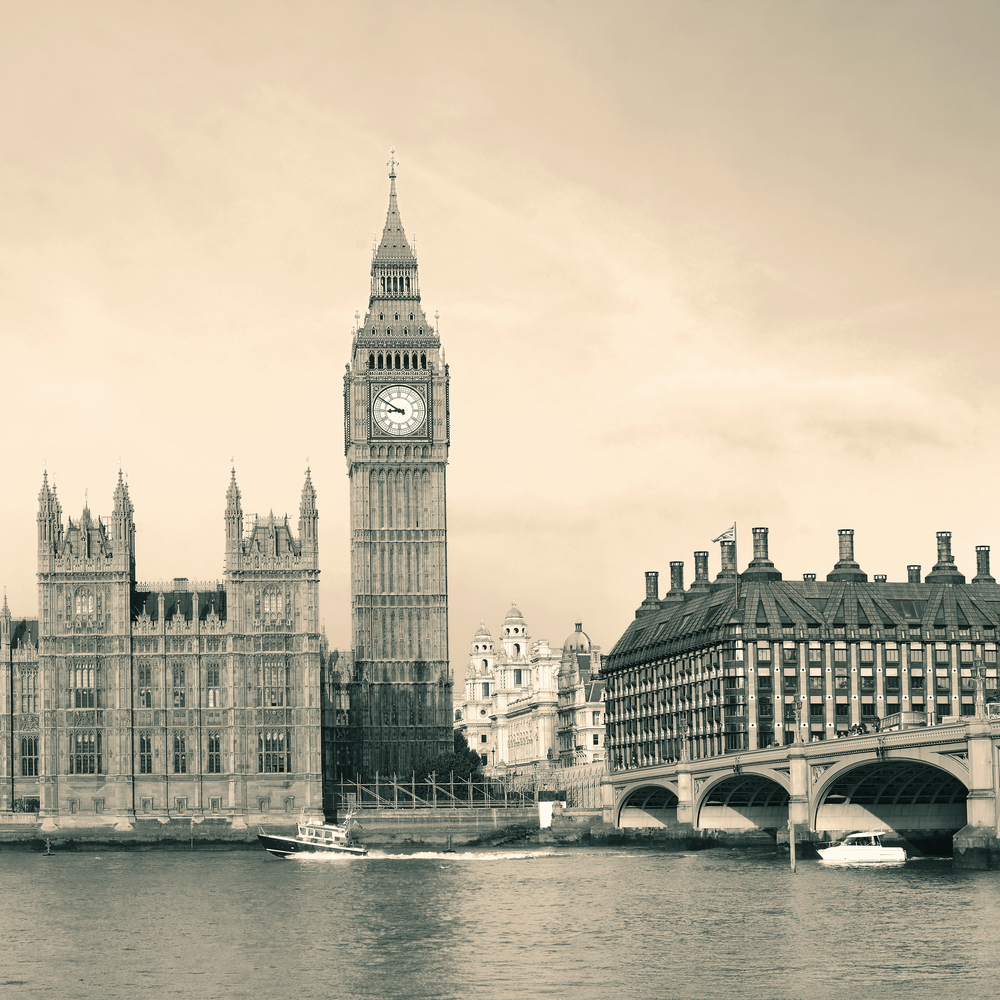 What if the Industrial Revolution wasn't sparked by the steam engine, but by a quiet legal revolution in how England handled property rights? Ben Southwood of Works in Progress argues that the Glorious Revolution of the 1680s unleashed British growth by empowering a Parliament composed of landowners who simplified their own tangled, inefficient property rights. Through thousands of case-by-case acts, they freed up land for investment, consolidated inefficient farm ownership, and enabled a boom in privately-built roads, canals, and navigable rivers that created national markets. Along the way you'll learn why roads once moved at 1.5 miles per hour, and how these centuries-old lessons about buying off holdouts might solve today's housing and infrastructure gridlock.